Monday, 25 January 2021
Turtles - Let Me Be @320 RE-UP
Let Me Be/Your Ma Said You Cried/It Was A Very Good Year/Love Minus Zero No Limit
Though many remember only their 1967 hit, "Happy Together," the Turtles were one of the more enjoyable American pop groups of the '60s, moving from folk-rock inspired by the Byrds to a sparkling fusion of Zombies-inspired chamber pop and straight-ahead, good-time pop reminiscent of the Lovin' Spoonful, the whole infused with beautiful vocal harmonies courtesy of dual frontmen Howard Kaylan and Mark Volman. Though they hit number one in 1967 with the infectious "Happy Together," the Turtles scored only three more Top Ten hits and broke up by the end of the '60s. Kaylan and Volman later joined Frank Zappa's Mothers of Invention during the early '70s and also recorded themselves as Flo & Eddie, but were on the oldies circuit with a revamped Turtles by the mid-'80s.
Born within two months of each other in 1947 (though on opposite coasts), Howard Kaylan (b. Howard Kaplan) and Mark Volman attended the same school, Westchester High in Los Angeles (Kaylan had moved from New York as a child). The two sang in the school's a cappella choir, where Volman soon heard about Kaylan's instrumental surf group, the Nightriders (which also included choir members Al Nichol on lead guitar, Don Murray on drums and Chuck Portz on bass). Volman joined the group just before they became the Crossfires in 1963. After high school graduation, the Crossfires continued on while its members attended area colleges (picking up rhythm guitarist Jim Tucker along the way).
The group finally got its big break in 1965 after local disc jockey and club owner Reb Foster heard them. Foster liked the Crossfires so much, he became their manager and found the group a contract with White Whale Records. The sextet changed their name to the Tyrtles (an unveiled homage to the Byrds, soon amended to the correct spelling) and recorded a Bob Dylan cover as their first single. The song's fusion of folk with glittering rock & roll was also lifted from the Byrds, and "It Ain't Me Babe" reached the Top Ten in August 1965, just three months after "Mr. Tambourine Man" had hit number one.
Moving from the songwriting talents of Dylan to the new "king of protest," producer P.F. Sloan, the Turtles hit the Top 40 twice more during 1965-1966 with "Let Me Be" and "You Baby," after which Murray and Portz left (to be replaced by John Barbata and, for a short time, bassist/producer Chip Douglas). Though the Turtles had appeared to run out of steam by the beginning of 1967, the group stormed back with a song they'd heard in a batch of demos, a surefire hit written by Gary Bonner and Alan Gordon. "Happy Together" spent three weeks at number one on the American charts, and proved to be one of the biggest hits of the year. The Turtles' next three singles were written by Bonner-Gordon, and each hit the Top 20: the number three hit "She'd Rather Be with Me" (which eclipsed even "Happy Together" in terms of international success), plus "You Know What I Mean" and "She's My Girl." Chip Douglas, who had arranged the horns on "Happy Together," left the group to work with the Monkees, and was replaced by Jim Pons (formerly with the Leaves). Original member Jim Tucker left the group as well, after a tour of dingy pubs in England caused more than a bit of disillusionment with the group's lack of success.
Like so many other pop groups in the late '60s, the Turtles felt they had to stretch artistically to keep pace with their more critically respected rivals, and beginning with "You Know What I Mean," the Turtles' revolving-door cast of producers and arrangers made their sound progressively more psychedelic, though they were still much closer to the pop/rock mainstream than to the era's premier psychedelic groups. The group asserted their rights in late 1967, and self-produced the disappointing "Sound Asleep," which was the band's first single after "Happy Together" to miss the Top 40. White Whale Records demanded an outside hand be brought to the studio, so the Turtles compromised by going back to Chip Douglas. The result, "The Story of Rock and Roll," was shut out of the Top 40 as well, prompting the career-saving "Elenore" in September 1968, which hit number six (the best placing by a single actually written by the Turtles). The inevitable concept LP came in November 1968: The Turtles Present the Battle of the Bands, on which the group attempted to sound like (and even dress up as) 11 distinct bands -- one for each song on the LP. It was an interesting concept, and a measured success, with "Elenore" to its credit as well as another number six hit, "You Showed Me" (originally written and recorded by the Byrds). Drummer John Seiter joined the Turtles after the recording of Battle of the Bands, replacing Barbata (who had left to work with Crosby, Stills & Nash).
After White Whale attempted to record Monkees-style, with the vocals of Kaylan and Volman added to a generic studio backing track, the duo rebelled and attempted to get back to the band aesthetic. Inspired by the Kinks' then-recent Village Green Preservation Society LP, the Turtles recruited frontman Ray Davies to serve as producer for their 1969 LP, Turtle Soup. Two singles from the album, "You Don't Have to Walk in the Rain" and "Love in the City," both failed to reach the Top 40. Kaylan and Volman formed their own label, Blimp Records, and signed a few acts, including folksinger Judee Sill, who wrote the Turtles' last recording, "Lady-O." More wrangles with White Whale, on top of the lack of chart success, had destroyed the Turtles by 1970, though. White Whale continued to raid the vaults during the year, releasing old singles, a second hits compilation, and an album of rarities (Wooden Head).
Before the end of 1970, though, Kaylan, Volman, and Pons had joined Frank Zappa's early-'70s edition of the Mothers of Invention. (The use of the Turtles' name or even their own names in a musical context was illegal according to an earlier contract, so Kaylan and Volman appeared as the Phlorescent Leech & Eddie.) Besides touring with Zappa, the trio appeared on four of his albums from 1970 to 1972: Chunga's Revenge, 200 Motels, Live at the Fillmore, and Just Another Band from L.A. After Zappa was injured in an on-stage altercation, though, the re-christened Flo & Eddie toured with several of the Mothers for awhile, and recorded five LPs for themselves between 1975 and 1981. The duo also did session work, composed music for children's' movies (The Care Bears, Strawberry Shortcake) and broadcast their own radio show on L.A.'s KROQ and later New York's WXRK. By 1984, the Turtles' name had reverted back to the group, and Volman and Kaylan began touring with a new lineup as the Turtles...Featuring Flo & Eddie.
Box Tops - 1967 - The Letter @320 RE-UP
The Letter/Trains And Boats And Planes/Neon Rainbow/Cry Like a Baby
The Box Tops were an American rock band, formed in Memphis in 1963. They are best known for the hits "The Letter", "Cry Like a Baby", and "Soul Deep" and are considered a major blue-eyed soul group of the period. They performed a mixture of current soul music songs by artists such as James & Bobby Purify and Clifford Curry, pop tunes such as "A Whiter Shade of Pale" by Keith Reid, Gary Brooker and Matthew Fisher of Procol Harum, and songs written by their producers, Dan Penn, Spooner Oldham, and Chips Moman. Vocalist Alex Chilton went on to front the power pop band Big Star and to launch a career as a solo artist, during which he occasionally performed songs he had sung with the Box Tops.
The Box Tops' music combined elements of soul music and light pop. Their records are prime examples of the styles made popular by Moman and Penn at American Sound Studio in Memphis. Many of their lesser known Top 40 hits, including "Neon Rainbow", "I Met Her in Church", and "Sweet Cream Ladies, Forward March", are considered minor classics. As rock critic Lester Bangs wrote in a review of the group's Super Hits album, "A song like 'Soul Deep' is obvious enough, a patented commercial sound, yet within these strictures it communicates with a depth and sincerity of feeling that holds the attention and brings you back often."
"The Letter" is a popular song, written and composed by Wayne Carson Thompson, Realeased July 1967 it reached #1 that September. Retaining the #1 position for a total of four weeks, Billboard ranked the record as the No. 2 song for 1967. The track also gave the Box Tops an international hit charting in Australia (#4 for six weeks), Austria (#9), Belgium (Flemish Region) (#2), Chile (#1), Denmark (#7), France (#2), Germany (#5), Greece (#2 foreign release), Ireland (#11), Israel (#1), Malaysia (#4), New Zealand (#4), the Netherlands (#3), Norway (#1), Poland (#1), South Africa (#4), Spain (#9) and Sweden (#2). The Box Tops also reached #5 in the UK,
"Neon Rainbow" is a song written by Wayne Carson Thompson and made famous by Memphis blue-eyed soul band The Box Tops. The single charted at U.S. #24, Australia #30 and Canada #17
"Cry Like a Baby" is a 1968 song written by Dan Penn and Spooner Oldham, and performed by The Box Tops. The song reached #2 in April 1968 on the Billboard Hot 100 chart, a position which it held for two weeks. It was kept out of the top spot by Bobby Goldsboro's "Honey", which stayed at #1 for five weeks. "Cry Like a Baby" also reached #2 on Cashbox for one week. It stayed on the Hot 100 for 15 weeks and Cashbox for 14 weeks. It was awarded a gold disc for selling over one million copies in the United States. the single charted at #2 in the States #46 in Australa #3 in canada and #15 in the UK.
Sunday, 24 January 2021
Moody Blues - 1965 - The Moody Blues @320 RE-UP
Go Now/Lose Your MoneyI Don't Want to Go on Without You/Steal Your Heart Away
Although they're best known today for their lush, lyrically and musically profound (some would say bombastic) psychedelic-era albums, the Moody Blues started out as one of the better R&B-based combos of the British Invasion. The group's history began in Birmingham, England with Ray Thomas (harmonica, vocals) and Mike Pinder (keyboards, vocals), who had played together in El Riot & the Rebels and the Krew Cats. They began recruiting members of some of the best rival groups working in Birmingham, including Denny Laine (vocals, guitar), Graeme Edge (drums), and Clint Warwick (bass, vocals).
The Moody Blues, as they came to be known, made their debut in Birmingham in May of 1964, and quickly earned the notice and later the services of manager Tony Secunda. A major tour was quickly booked, and the band landed an engagement at the Marquee Club, which resulted in a contract with England's Decca Records less than six months after their formation. The group's first single, "Steal Your Heart Away," released in September of 1964, didn't touch the British charts. But their second single, "Go Now," released in November of 1964 -- a cover of a nearly identical American single by R&B singer Bessie Banks, heavily featuring Laine's mournful lead vocal -- fulfilled every expectation and more, reaching number one in England and earning them a berth in some of the nation's top performing venues (including the New Musical Express Poll Winners Concert, appearing with some of the top acts of the period); its number ten chart placement in America also earned them a place as a support act for the Beatles on one tour, and the release of a follow-up LP (Magnificent Moodies in England, Go Now in America) on both sides of the Atlantic.
It was coming up with a follow-up hit to "Go Now," however, that proved their undoing. Despite their fledgling songwriting efforts and the access they had to American demos, this version of the Moody Blues never came up with another single success. By the end of the spring of 1965, the frustration was palpable within the band. The group decided to make their fourth single, "From the Bottom of My Heart," an experiment with a different, much more subtly soulful sound, and it was one of the most extraordinary records of the entire British Invasion, with haunting performances all around. Unfortunately, the single only reached number 22 on the British charts following its release in May of 1965, and barely brushed the Top 100 in America. Ultimately, the grind of touring, coupled with the strains facing the group, became too much for Warwick, who exited in the spring of 1966; and by August of 1966 Laine had left as well. The group soldiered on, however, Warwick succeeded by John Lodge, an ex-bandmate of Ray Thomas, and in late 1966 singer/guitarist Justin Hayward joined.
Sh0ck!ng Blue - 1970 - Never M@rry A R@ilro@d M@n @320 RE-POST
Never Marry A Railroad Man/Love Machine/California Here I Come/Roll Engine Roll
Shocking Blue was founded in 1967 by Robbie van Leeuwen. The group had a minor hit in 1968 with "Lucy Brown is Back in Town". After Mariska Veres took over the vocals, the group charted a world-wide hit with the song "Venus", which peaked at No. 3 in the Netherlands in 1969. The song reached No. 1 on the U.S. Billboard Hot 100 in February 1970. It subsequently sold 350,000 copies in Germany, and topped the U.S. chart for three weeks, the first song from the Netherlands to do so. It sold over one million copies there by January 1970, and received a gold record awarded by the Recording Industry Association of America. Global sales exceeded five million copies. The song was based on "The Banjo Song" (1963) by The Big 3.
Other
hits include "Send Me a Postcard" in 1968/69 and "Long and Lonesome
Road" (often mistakenly named as "Long Lonesome Road") in 1969. Shocking
Blue's songs also received quite a large amount of radio airplay on
Dutch channels."Venus" was followed by "Mighty Joe" (flip-side "Wild Wind") in 1969 and "Never Marry a Railroad Man" (flip-side "Roll Engine Roll") in 1970, which both sold over a million records. Later songs – including "Hello Darkness" (1970), "Shocking You", "Blossom Lady" and "Out of Sight, Out of Mind" (1971), "Inkpot", "Rock in the Sea" and "Eve and the Apple" (1972) and "Oh Lord" (1973) were successful in Europe, Latin America and Asia, but failed to chart in the U.S..
In 1974 Mariska Veres left the group to start a solo career until 1982. Her singles "Take Me High" (1975) and "Lovin' You" (1976) were mainly popular in the Netherlands, Belgium and Germany. Other known singles were "Tell It Like It Is" (1975), Dusty Springfield's "Little By Little" (1976), and "Too Young" (1978). Most of these songs today are rare.
Shocking Blue made a comeback in 1979, and recorded "Louise" as their first single since their breakup back in 1974. However, the song was never released for unknown reasons. They did however, perform live with their earliest songs such as "Venus" and "Never Marry a Railroad Man" in 1980. They made another comeback in 1984, and later recorded "Jury and the Judge" with "I Am Hanging on to Love" on B-side, and yet another unreleased song "Time Is a Jetplane" in 1986.
Mariska Veres died of cancer on 2 December 2006.
Middle Of The Road - 1973 - Middle Of The Road @320 RE-POST
Soley Soley/Chirpy Chirpy Cheep Cheep/Sacramento/Tweedle Dee, Tweedle Dum
Middle of the Road is a Scottish pop group who enjoyed success across Europe and Latin America in the early 1970s. Four of their singles sold over one million copies each, and received a gold disc. The tracks were "Chirpy Chirpy Cheep Cheep" (which went on to sell over 10 million), "Sacramento", "Tweedle Dee, Tweedle Dum" and "Soley Soley". By early 1972 the group had sold over five million records.
Lead singer Sally Carr, drummer Ken Andrew, guitarist Ian McCredie and his bassist brother Eric McCredie, founded the band on 1 April 1970 in Glasgow, Scotland. They already played together under the name Part Four since 1967 and later in Latin American style under the name Los Caracas.
Under the name Los Caracas they won the UK TV talent show Opportunity Knocks. They moved to Italy in 1970 because they had not found success in the United Kingdom. There they met the Italian music producer Giacomo Tosti, who gave the band their distinctive sound and gave them their international break.
The band had their first and biggest hit record in the United Kingdom with debut UK single, "Chirpy Chirpy Cheep Cheep" to reach #1 in the UK Singles Chart in June 1971 and keep it for four more weeks. In all, Middle of the Road had five hit singles in the UK during 1971-1972. The band had especially strong success in Germany, where they achieved eleven Top 40 hits in 1971-1974. As an example of this, Frank Valdor was fast to adapt Sacramento as his "party records". Chirpy Chirpy Cheep Cheep and Sacramento were played a lot on Scandinavian radio.
In 1974 early Bay City Rollers member Neil Henderson joined the band on guitar. He wrote and co-wrote songs for Middle of the Road (including the singles "Rockin' Soul" and "Everybody Loves a Winner" and 1974 albums, You Pays Yer Money and You Takes Yer Chance and Postcard, all released in Germany via Ariola like their first German LP, Music Music), but their commercial success could not keep pace with that of earlier songs.
Slade - 1972 - Get Down And Get With It WAVE RE-POST
Get Down And Get With It/Look Wat You Dun/Coz I Luv You/Take Me Bak 'ome
Slade may have never truly caught on with American audiences (often narrow-mindedly deemed "too British-sounding"), but the group became a sensation in their homeland with their anthemic brand of glam rock in the early '70s, as they scored a staggering 11 Top Five hits in a four-year span from 1971 to 1974 (five of which topped the charts). Comprised of singer/guitarist Noddy Holder (born Neville Holder, June 15, 1946 in Walsall, West Midlands, England), guitarist Dave Hill (born April 4, 1946, in Fleet Castle, Devon, England), bassist Jimmy Lea (born June 14, 1949, Wolverhampton, West Midlands, England), and drummer Don Powell (born September 10, 1946, Bilston, West Midlands, England), the group originally formed in the spring of 1966 under the name the In-Be-Tweens, playing out regularly with a mixture of soul and rock tracks. But besides a lone obscure single, "You Better Run" (penned by future Runaways svengali Kim Fowley), the band never issued any other recordings. By the end of '60s, the group had changed their name to Ambrose Slade and signed on with the Fontana label. Soon after, the quartet hooked up with Animals bass player-turned-manager Chas Chandler (who had discovered Jimi Hendrix a few years prior), who promptly suggested the group shorten the name to just Slade and assume a "skinhead" look (Dr. Martin boots, shaved heads) as a gimmick.
After several albums featuring few original compositions from the quartet came and went (1969's Beginnings, 1970's Play It Loud), the group began to write their own tunes, grew their hair long, and assumed the look of the then-burgeoning glam movement, joining the same cause championed by such fellow Brits as David Bowie and T. Rex. This new direction paid off in 1971 with the number 16 U.K. single "Get Down and Get With It," which soon touched off a string of classic singles and led to Slade becoming one of the most beloved party bands back home. Slade also utilized another gimmick, humorously misspelled song titles, as evidenced by such singles as "Coz I Luv You," "Look Wot You Dun," "Take Me Bak 'Ome," "Mama Weer All Crazee Now," "Gudbuy t'Jane," "Cum on Feel the Noize," "Skweeze Me, Pleeze Me," and "Merry Xmas Everybody" (the latter of which re-entered the charts every holiday season for years afterward). Several attempts at cracking the U.S. market came up empty (with track listings between their U.K. and U.S. full-lengths differing), although such albums as Slade Alive! and Slayed? are considered to be some of the finest albums of the glam era.
Slade continued to score further hit singles back home, including such correctly spelled tracks as "My Friend Stan," "Everyday," "Bangin' Man," "Far Far Away," "How Does it Feel," and "In for a Penny," but with glam rock's dissolution and punk's emergence by the mid-'70s, the hits eventually dried up for the quartet. Despite the change in musical climate, Slade stuck to their guns and kept touring and releasing albums, as the title to their 1977 album, Whatever Happened to Slade?, proved that the group's humor remained intact despite their fall from the top of the charts. A large, dedicated following still supported the group as they offered a performance at the 1980 Reading Festival that was considered one of the day's best, resulting in sudden renewed interest in the group back home and Slade scored their first true hit singles in six years with 1981's "We'll Bring the House Down" and "Lock up Your Daughters."
Slade received a boost stateside around this time as well, courtesy of the U.S. pop-metal outfit Quiet Riot, who made a smash hit out of "Cum on Feel the Noize" in 1983 that resulted in a strong chart showing for Slade's 1984 release Keep Your Hands Off My Power Supply (issued as The Amazing Kamikaze Syndrome in the U.K. a year earlier). Slade then enjoyed a pair of U.S. MTV/radio hits, "Run Runaway" and "My Oh My." Holder and Lea also tried their hand at producing another artist around this time as well, as they manned the boards for Girlschool's 1983 release Play Dirty. Despite another all-new studio release, Rogues Gallery, and Quiet Riot covering another classic Slade tune ("Mama Weer All Crazee Now"), Slade was unable to retain their newfound American audience or rekindled British following and they eventually faded from sight once more, this time without a comeback waiting around the corner. During the '90s, a truncated version of the group dubbed Slade II was formed (without Holder or Lea in attendance), while Holder became a popular U.K. television personality as well as the host of his own '70s rock radio show. A 21-track singles compilation, Feel the Noize: The Very Best of Slade, was issued in 1997 (re-released under the simple title of Greatest Hits a couple of years later), which proved to be a popular release in England.
Jefferson Airplane - White Rabbit FLAC RE-UP
White Rabbit/Watch Her Ride/Plastic Fantastic Lover/Martha
Best known as the hippie revolutionaries who produced Sixties pop nuggets like "White Rabbit" and "Somebody to Love," Jefferson Airplane survived myriad personnel shifts, including the 1984 departure of founder/guiding light Paul Kantner, several name changes. Over its subsequent years, the band morphed from psychedelic rockers to an MOR pop powerhouse and back again.
At the start, the Jefferson Airplane epitomized the burgeoning Haight-Ashbury culture and provided its soundtrack. The band began in 1965 when singer Marty Balin (b. Martyn Jerel Buchwald, Jan. 30, 1942, Cincinnati, OH), formerly with the acoustic group the Town Criers, met guitarist Paul Kantner (b. Mar. 17, 1941, San Francisco, CA) at the Drinking Gourd, a San Francisco club. They were first a folk-rock group, rounded out by lead guitarist Jorma Kaukonen, drummer Skip Spence, singer Signe Anderson, and bassist Bob Harvey , who was soon replaced by Jack Casady. Their first major show was on August 13, christening the Matrix Club, which later became a major outlet for new Bay Area bands. RCA signed the group and Jefferson Airplane Takes Off (Number 128, 1966) went gold.
Anderson left to have a baby and was replaced by Grace Slick (b. Grace Barnett Wing, Oct. 30, 1939, Chicago, IL), a former model and member of the Great Society, a group formed in 1965. The Great Society, which included her husband at the time, Jerry Slick, and brother-in-law Darby, had completed two albums for Columbia that weren't released until after Slick became a star with the Airplane. Spence left the Airplane to form Moby Grape and was replaced by a former jazz drummer, Spencer Dryden (b. Apr. 7, 1944, New York, NY), completing the Airplane's most inventive lineup.
Slick's vocals were stronger and more expressive than Anderson's; she later claimed that she tried to imitate the yowl of the lead guitar. She brought two Great Society songs to the Airplane's second album, Surrealistic Pillow — "Somebody to Love" (Number Five, 1967), co-written by Darby Slick, and her own "White Rabbit" (Number Eight, 1967), which was banned in some areas as a pro-drug song. The album (Number Three, 1967), sold half a million copies. After Bathing at Baxter's (Number 17, 1967) included a nine-minute psychedelic jam-collage, "Spayre Change," and occasioned the group's first battle with RCA over obscene language: The word "shit" was deleted from the lyric sheet. Baxter's had no hit singles and didn't sell well, but the Airplane recouped with the gold Crown of Creation (Number Six, 1968), which included Slick's "Lather" and David Crosby's "Triad," a song about a ménage à trois that had been rejected by Crosby's current group, the Byrds.
The band's ego conflicts already were beginning, however, as Slick stole media attention from Balin (the band's founder), and the songwriting became increasingly divergent. Live, Slick and Balin traded vocals in battles that became increasingly feverish, and the volatile sound of the band in concert was captured on Bless Its Pointed Little Head (Number 17, 1969). By the time the sextet recorded 1969's Volunteers, the Airplane's contract allowed it total "artistic control," which meant that the "Up against the wall, motherfuckers" chorus of "We Can Be Together" appeared intact. The Airplane performed at the Woodstock and Altamont festivals but then had its second major shakeup. Dryden left in 1970 to join the New Riders of the Purple Sage (he was replaced by Joey Covington), and the band stopped touring when Slick became pregnant by Kantner. Anxious to perform, Kaukonen and Casady formed Hot Tuna [see entry] (originally Hot Shit), which later seceded from the Airplane, although, like most band members, they would return.
In the meantime, Kantner and the housebound Slick recorded Blows Against the Empire (Number 20, 1970). Billed as Paul Kantner and Jefferson Starship (the debut of the name), the album featured Jerry Garcia, David Crosby, Graham Nash, and other friends. It became the first musical work nominated for the science-fiction writers' Hugo Award. At the same time, a greatest-hits package entitled The Worst of the Jefferson Airplane (Number 12, 1970) was released. On January 25, 1971, Slick and Kantner's daughter, China, was born; that spring, Balin, who had nothing to do with Blows and contributed only one cowritten composition to Volunteers, left. He formed a short-lived band, Bodacious D.F.
In August the Airplane formed its own label, Grunt, distributed by RCA. The band's reunited effort, Bark (Number 11, 1971), saw them with Covington and all of Hot Tuna, including violinist Papa John Creach, who had first performed with Hot Tuna at a Winterland show in 1970. The band had grown apart, though, and Hot Tuna and Kantner-Slick were each writing for their own offshoot projects. In December 1971 Slick and Kantner released Sunfighter (Number 89, 1971) under both their names, with baby China as cover girl. (China grew up to become an MTV VJ and an actor.)
In July 1972 this version of the Airplane recorded its last studio album, Long John Silver (Number 20), with some drumming from ex-Turtle John Barbata. In August 1972 at a free concert in New York's Central Park, the band introduced ex–Quicksilver Messenger Service bassist, keyboardist, and vocalist David Freiberg to the ranks. The Airplane unofficially retired at that point. By that September, Casady and Kaukonen had decided to go full-time with Hot Tuna, though they appeared on the live album Thirty Seconds Over Winterland (Number 52, 1973), which came out in April 1973. Slick, Kantner, and Freiberg recorded Baron Von Tollbooth and the Chrome Nun (Number 120, 1973), one of the band's least popular efforts. Slick's equally disappointing solo debut, Manhole (Number 127), appeared in January 1974. By then, she had developed a serious drinking problem, and the band was hoping that the Tuna players would return. They did not.
Finally, in February 1974 Slick and Kantner officially formed the Jefferson Starship (no strict relation to the group on Blows), with Freiberg, Creach, Barbata, and 19-year-old lead guitarist Craig Chaquico. Chaquico had played with the Grunt band Steelwind with his high school English teacher Jack Traylor, and on Slick and Kantner's collaborative albums beginning with Sunfighter. The new group also included Peter Kangaroo (Jorma's brother), though in June he was replaced by Pete Sears, a British sessionman who had played on Rod Stewart's records and had been a member of Copperhead. On Dragon Fly (Number 11, 1974), Balin made a guest appearance on his and Kantner's song "Caroline." The album went gold.
Balin tentatively rejoined the band in January 1975, and the group's next big breakthrough came with Red Octopus, its first Number One album, hitting that position several times during the year and selling 4 million copies. Balin's ballad "Miracles" was a Number Three single. The band was more popular than ever, but in Slick's opinion the music had become bland and corporate, and her rivalry with Balin had not diminished. The group's followup album, 1976's Spitfire, went Number Three and platinum, its first album to do so. But after the successful Earth (Number Five, 1978; also platinum), both Slick and Balin left.
By then, Slick and Kantner's romance had ended; in November 1976, she married the band's 24-year-old lighting director, Skip Johnson. Her alcoholism forced her to quit the band in the middle of a European tour, leading to a crowd riot in Germany when she did not appear. Her solo albums were neither great critical nor great commercial successes, although throughout the years, her distinctive singing style never changed. In 1980 Balin produced a rock opera entitled Rock Justice in San Francisco. He did a solo album of MOR love songs and in 1981 had a hit single with "Hearts."
With its two lead singers gone, the group's future again seemed in question, but in 1979 Mickey Thomas, best known as lead vocalist on the Elvin Bishop hit "Fooled Around and Fell in Love," joined, and Barbata was replaced by Aynsley Dunbar, a former Frank Zappa and David Bowie sideman who had just left Journey. The new lineup's Freedom at Point Zero (Number Ten, 1979) went gold on the strength of its Number 14 hit, "Jane."
The group's momentum ground to a halt in 1980 after Kantner suffered a brain hemorrhage that, despite its severity, left no permanent damage. The next year came Modern Times (Number 26, 1981), which featured Slick on one track; she rejoined the band in February 1981, and the Jefferson Starship again ascended with a string of Top 40 hits: "Be My Lady" (Number 28, 1982), "Winds of Change" (Number 38, 1983), and "No Way Out" (Number 23, 1984).
Professing his disdain for the group's more commercial direction, Kantner left in 1984, taking with him the "Jefferson" part of its name. Then known simply as Starship, the group enjoyed even greater commercial success. From the platinum Number Seven Knee Deep in the Hoopla came "We Built This City" (Number One, 1985), "Sara" (Number One, 1986), and "Tomorrow Doesn't Matter Tonight" (Number 26, 1986).
No Protection (Number 12, 1987) included the group's third Number One hit, 1987's "Nothing's Gonna Stop Us Now," and "It's Not Over ('Til It's Over)" (Number Nine, 1987), which was later adopted as the theme song of Major League Baseball. The group's last Top 40 single, "It's Not Enough," appeared in 1989. The core trio of Thomas, Chaquico, and Baldwin, abetted by Brett Bloomfield and Mark Morgan, attempted to keep the ship aloft, but in 1990 the group called it quits. Thomas formed yet another band, Starship With Mickey Thomas, whose only links to the original dynasty were himself and latecomer Bloomfield.
In the meantime, in 1989, Kantner, Slick, Balin, Casady, and Kaukonen revived the early Jefferson Airplane lineup and released Jefferson Airplane (Number 85, 1989). Before that, Kantner, Balin, and Casady had formed the KBC Band; its self-titled LP went to Number 75 in 1986.
With Starship now disbanded, Kantner reclaimed the Jefferson Starship moniker and put together a new lineup in 1991, which included Airplane/Starship stalwarts Casady and Creach as well as Tim Gorman (who had worked with the Who and the Jefferson Airplane), ex-Tube Prairie Prince, former KBC member Slick Aguilar, and lead singer Darby Gould, whom Kantner discovered fronting her band World Entertainment War. Gould was joined by vocalist Diana Mangano. The next year, Balin joined. This group, dubbed by Kantner Jefferson Starship - The Next Generation, toured in the early Nineties to positive reviews. With Slick (who had by then retired from performing) guesting on several songs, the band recorded the live Deep Space/Virgin Sky, which consisted of new material as well as "covers" of classic Airplane and Starship tracks. The album Windows of Heaven first came out in Germany in 1998 but was remixed for its American release in 1999.
In 2000 Balin, Kantner, and Casady started touring as Jefferson Airplane's Volunteers and were promptly sued by Jefferson Airplane manager and shareholder of Jefferson Airplane Inc., Bill Thompson, for using the name without permission. Adding to the confusion, Mickey Thomas has been touring as Starship Featuring Mickey Thomas since 1992. The Kantner/Freiberg/Aguilar version of Jefferson Starship continued touring in the 2000s, with yet another female vocalist, Cathy Richardson, and other revolving-door members and famous guests including early Grateful Dead keyboardist Tom Constanten. In 2008 the group released Jefferson's Tree of Liberty, an album of mostly protest folk cover songs including Woody Guthrie's "Pastures of Plenty," Phil Ochs' "I Ain't Marchin' Anymore" and Bob Dylan's "Chimes of Freedom."
Slick has remained true to her vow not to perform anymore and now dedicates herself to painting. Invoking health reasons, she declined to appear with Jefferson Airplane when it performed at its induction into the Rock And Roll Hall of Fame in January 1996 (though she guested on ex–4 Non Blondes singer Linda Perry's album In Flight later that same year). In 1998 she published her autobiography, Somebody to Love?
Skip Spence, Jefferson Airplane's original drummer died of lung cancer on April 16, 1999. Six years later, his successor and former Slick boyfriend Spencer Dryden succumbed to colon cancer on January 10, 2005.
Traffic - 1967 - Here We Go Round The Mulberry Bush FLAC RE-UP
Here We Go Round The Mulberry Bush/Coloured Rain/A House For Everyone/Berkshire Poppies
"Here We Go Round the Mulberry Bush" is a single by Traffic. It is the title song to the film Here We Go Round the Mulberry Bush, and features all four members of Traffic singing a joint lead, though the bridge and parts of the chorus have Steve Winwood singing unaccompanied. The single uses an edited version of the song, with the intro removed. When released in late 1967, the single cracked the UK Top 10. Footage of the band acting out the song was commissioned by The Beatles for possible inclusion in the film Magical Mystery Tour but was not used in the final edit. It is now included in the special features of the 2012 DVD/Blu-ray edition of the film.
Though it ultimately must be considered an interim vehicle for singer/songwriter/keyboardist/guitarist Steve Winwood, Traffic was a successful group that followed its own individual course through the rock music scene of the late '60s and early '70s. Beginning in the psychedelic year of 1967 and influenced by the Beatles, the band turned out eclectic pop singles in its native Great Britain, though by the end of its first year of existence it had developed a pop/rock hybrid tied to its unusual instrumentation: At a time when electric guitars ruled rock, Traffic emphasized Winwood's organ and the reed instruments played by Chris Wood, especially flute. After Dave Mason, who had provided the band with an alternate folk-pop sound, departed for good, Traffic leaned toward extended songs that gave its players room to improvise in a jazz-like manner, even as the rhythms maintained a rock structure. The result was international success that ended only when Winwood finally decided he was ready to strike out on his own.
Tuesday, 10 November 2020
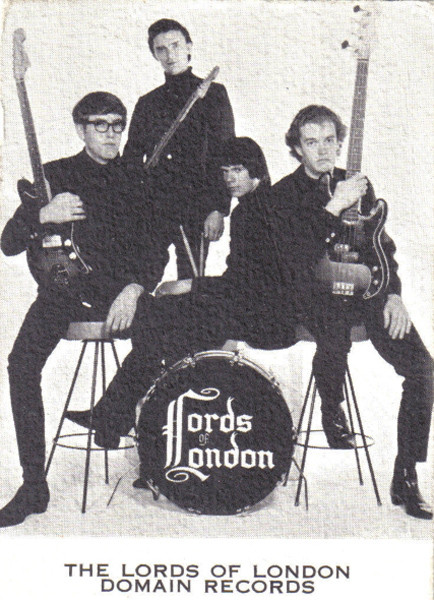
Lords Of London - 1968 - Introducing The Lords Of London @320
Cornflakes And Ice Cream/Time Waits For No One/21000 Dreams/The Popcorn Man
The Lords of London were Canada's #1 teen chart toppers in 1967. As their only hit "Cornflakes And Icecream", a commerial teeny bopper record was played in regular rotation across the country, it's B sde, the best song ever released by the Lords "Time Waits For No One" was ignored. Easily one of the best Canadian releases of the year, "Time Waits For No One", was however reviewed in Billboard Magazine while "Cornflakes" was omitted. Somebody had their thinking cap on!
The Lords Of London began in 1965 when Danny Taylor, Hughie Leggat, John Richardson and Greg Fitzpatrick; four teens from North York, Ontario (a suburb of Toronto), decided to form a Rolling Stones cover band. Danny, Hughie and John had been playing together since the 8th grade in their instrumenal band, Danny Taylor and the Phantoms. They adapted the name Lords of London and entered the Earle Grey Collegiate Battle Of The Bands in October 1965. Their big competition were the Hogs and 15 year old Greg Fitzpatrick's Mysterions who were based in Etobicoke (another subdivision west of the city). The Mysterions won and netted the twenty five dollar prize money. Danny knew Greg becasue Greg had once dated Danny's cousin. Greg lived in the Lords neighborhood even though his band was from across town. He was getting tired of travelling two hour round trips three times a week for practise and had considered looking for another group. Danny asked if Greg would play bass, (he had been a guitar player in the Mysterions). He said yes, and that night he found himself playing bass before a crowd of thirteen hundred teenagers...and he had never played bass before! The band swung that show, and Greg was asked to remain with the band. The Lords manager even went out and bought Greg a new Bill Wyman model bass!
Sebastian Angello went to school with Danny, John, Hughie and Greg and had been well aware of their band. He wanted to join a group that was already established. Sebastian was critical of the Lords Of London, and thought that the only reason Danny was even allowed in a band was because he owned a drum kit! So Sebastian joined a band called D.K. And The Lords who were from East York and were quite a bit older than him. But in 1966, Greg went away for the summer, and the Lords Of London recruited Sebastian as a fill-in. At the time Danny and Sebastian were 13, Greg a and Hughie were 15 and John was 16! They had steady bookings and played their own original r'n b styled material. Gigs were at teen dances, school gym's and rural barns that had been converted in to dance halls. Soon they were able to tour on the weekends, and the boys began to miss school on Friday and Monday. This, and long hair caused Sebastian to be thrown out of school at 13! During the school year the rest of the Lords followed suit and the band began to play full-time.
One weekend of touring took the band to Kirkland Lake in Northern Ontario. They were warned in advance that they had better learn some top forty tunes, since the small town teens would appreciate that more than hearing originals. "Wooly Bully" went over big, and the show was a huge success. Greg, the main song writer, decided to head away from r 'n b and do more pop songs. The management agreed that the adult audiences were not taking the band seriously, and they should aim at the teen pop crowd exclusively, and go for a new image. It was around this time that Sebastian began blacking out one front tooth!
Late in 1966 the Lords went to RCA studios in Toronto to record their first single for Apex "Corn Flakes And Ice Cream/Time Waits For No One" on a 4 track unit. Their established teen fanclub requested "Cornflakes" so often that it shot to #1 in Toronto and soon followed suit in the rest of Canada. It was also number one in Boston, Georgia, and Australia where it had been released on Decca. In efforts to capitolize on their popularity, the group toured across Canada opening for bigger acts and appeared on CTV's After Four in Toronto, It's Happening, In Person and Up Beat in Cleveland, Ohio.
A follow up single was quickly recorded but "Popcorn Man/21,000 Dreams" promptly flopped. By this time the boys were a little older and were playing the Yorkville clubs in Toronto. Of course their favorite local group were the Ugly Ducklings who had a residency at the Hawks Nest. After many attempts, the Lords finally got a show at the Hawks Nest and showed off in front of their heros. Sebastian reports that the Duckies enjoyed their set! The band was still able to tour regularly, and were recieving more offers than they could commit to, so the band hired a camera man from the CTV Network to produce a short film of three songs "Popcorn Man", "21,000" and "Cornflakes And Ice Cream". The idea was that they would hire out the film while they played in another city!
In 1967 the Lords of London made it to various US cities, and were set to make the trip to California (written up in the Go! magazine). Sebastian recalls one night in New York were the band was doing some publicity work. The boys were lolling about in their hotel room, bored, when they decided to break into their managers room and steal some alcohol. To their delight they found bottles of champaign chilling in the tub! The boys promptly got rolling drunk, and when the manager returned to his room with a hooker, he found Danny passed out. John was still concious and ran off with the hooker (who's fee had already been paid)!
In 1968 the band recorded a third single, but they were not progressing past the teenybopper market, which was waining as they grew older. It was about this time that Sebastian left, and began working solo. The rest of the Lords decided to disband from their name, and re-formed under the name Neucleus an played progressive rock.
Monday, 9 November 2020
Del Shannon - 1963 - Del Shannon FLAC
Two Kinds Of Teardrops/Runaround Sue/Hey! Little Girl/Runaway
Charles Weedon Westover (December 30, 1934 – February 8, 1990), better known by his stage name Del Shannon, was an American rock and roll country musician, singer and songwriter, best known for his 1961 number 1 Billboard hit "Runaway".
"Two Kinds of Teardrops" is a song by Del Shannon, which he released in 1963 as a single and on the album Little Town Flirt. The song spent 13 weeks on the UK's Record Retailer chart, peaking at No. 5, while spending nine weeks on the Billboard Hot 100 chart, peaking at No. 50, and reaching No. 6 in both Ireland and Hong Kong.
"Hey! Little Girl" is a song by the American musician Del Shannon. It was recorded in October 1961 and was released later that year. In the lyrics, the narrator professes his love to a girl that he only barely knows. The girl has recently been dumped by her boyfriend, but the narrator proposes to begin a relationship with her and thus make her feel better. As such, the song is more optimistic than some of Shannon's other songs, such as "Runaway" and "Keep Searchin' (We'll Follow the Sun)". The background music involves both string and brass instruments. "Hey! Little Girl" reached No. 38 in the US Billboard Hot 100 chart, but was a much bigger hit in the United Kingdom, where it reached No. 2.
"Runaway" is a number-one Billboard Hot 100 song made famous by Del Shannon in 1961. It was written by Shannon and keyboardist Max Crook, and became a major international hit. It is No. 472 on Rolling Stone's list of the 500 Greatest Songs of All Time, compiled in 2010.
Mitch Ryder And The Detroit Wheels - 1967 - Ridin FLAC
Jenny Take A Ride!/Devil With A Blue Dress On & Good Golly Miss Molly/Sock It To Me - Baby!/Too Many Fish In The Sea & Three Little Fishes
The band had its origins in Detroit in the early 1960s. At this time, a young white singer by the name of William Levise, Jr., who was singing at a black soul club called The Village, met a rock & roll group which included McCarty, bassist Earl Elliot, and Badanjek. Levise decided to join the group and took the stage name of Billy Lee, and the band became Billy Lee and the Rivieras. After attracting attention from producer Bob Crewe while working as a support act to The Dave Clark Five, the group moved to New York to start recording. However, since another band had already recorded as The Rivieras, the band decided to change its name again. With the help of a phone book, Levise took the new stage name of Mitch Ryder, and Mitch Ryder & The Detroit Wheels were born. The group's live performances are said to have had an "explosive quality" and their style has been described as "revved up...R&B".
Mitch Ryder & The Detroit Wheels had their first big hit in 1965 with "Jenny Take a Ride", which reached #10 on national charts, and #1 on the R&B chart – the first time a self-contained rock group had achieved the latter distinction. It sold over one million copies, and was awarded a gold disc by the RIAA. Crewe had originally planned to release the track as a B side, but changed his mind after seeing the reactions of Brian Jones and Keith Richards, of The Rolling Stones, who were in the Stei-Philips studio in New York City as it was being recorded.
Ryder and the Detroit Wheels followed up with another top twenty hit, "Little Latin Lupe Lu," which peaked at #17. After a couple of misses, the group had its biggest hit with the "Devil with a Blue Dress On"/"Good Golly Miss Molly" medley which reached #4. Around this period they also recorded a number of albums, largely composed of reworked R&B classics, along with a smattering of original compositions.
In 1967 Ryder had another top ten hit with "Sock It to Me, Baby!", which was banned by some stations as too sexually suggestive. The band had its last hit with the brassy "Too Many Fish in the Sea"/"Three Little Fishes" single, which reached #24. Crewe then persuaded Ryder to quit the group and embark on a solo career.
After Ryder's departure, Badanjek fronted a short-lived band of the same name which recorded several tracks, most notably "Linda Sue Dixon", a song glorifying the illicit hallucinogenic drug LSD, which charted worldwide in 1968. They also recorded "Think (About the Good Things)/For the Love of a Stranger". The band's line-up during this time is uncertain.
Yardbirds - 1965 - 5 Yardbirds FLLAC
For Your Love/Good Morning Little Schoolgirl/I Wish You Would/Heart Full Of Soul
English rock band the Yardbirds recorded "I Wish You Would" for their debut single in 1964. This studio recording lacks the Bo Diddley-style beat and is considerably shorter than live versions performed by the Yardbirds around this time. The single did not enter the record charts in the UK or US.
When the Yardbirds were looking for a song to follow up to their first single, "I Wish You Would", they chose the Don and Bob tune. The group's guitarist Eric Clapton explained in an early interview: The Yardbirds were working about every single night of the week. Trouble was finding new material for a disc. We remembered this 'Good Morning Little School Girl' from a rather obscure R and B artiste—a friend of ours had it on a long-player. So we rushed in and recorded it.
The single was released on October 20, 1964, in the UK, where it reached number 49 in the singles chart, the band's first chart hit. Epic Records, the Yardbirds' American label, did not issue the single in the US, but in 1965 included the song on their first American album, For Your Love.
"For Your Love" is a rock song written by Graham Gouldman and recorded by English group the Yardbirds. Released in March 1965, it was their first top ten hit in both the UK and the US. The song was a departure from the group's blues roots in favour of a commercial pop rock sound. Guitarist Eric Clapton disapproved of the change and it influenced him to leave the group
"Heart Full of Soul" is a song recorded by English rock group the Yardbirds in 1965. Written by Graham Gouldman, it was the Yardbirds' first single after Jeff Beck replaced Eric Clapton as lead guitarist. Released only three months after "For Your Love", "Heart Full of Soul" reached the Top 10 on the singles charts in the UK, US, and several other countries.
Tuesday, 27 October 2020
The Spotnicks - 1963 - On Air FLAC
Orange Blossom Special/Moonshot/The Rocket Man/Amapola
The Spotnicks was an instrumental rock group from Sweden that formed in 1961. Together with the Shadows and the Ventures, they were considered one of the most famous instrumental bands of the 1960s.[citation needed] They were famous for wearing "space suit" costumes on stage, and for their innovative electronic guitar sound. They released 43 albums, and sold more than 18 million records.
The Spotnicks originated from a duo, "The Rebels" (1956), formed by Bo Starander (11 March 1942 – 3 May 2020 rhythm guitar, vocals), and Björn Thelin (27 June 1942 – 24 January 2017; bass guitar). They were joined by lead guitarist Bo Winberg (born in Gothenburg, Sweden; 27 March 1939 – 3 January 2020), and became "Rock-Teddy and the Blue Caps" in 1957 in Gothenburg. In 1958 they added Ove Johansson (drums) (born 30 March 1940), changed their name to "The Frazers", and began playing regularly in local clubs. They signed a recording contract in 1961, and changed their name to "The Spotnicks", a play on the Russian satellite Sputnik as suggested by their manager, Roland Ferneborg. Starander was later known as Bob Lander.
They soon became the first Swedish group to have significant international success, in a similar style to The Shadows and The Ventures. They toured Europe, and one of their early records, "Orange Blossom Special", became their first big international hit, making the Top 30 in the UK Singles Chart in 1962 on the Oriole label, and reaching #1 in Australia. Around this time they began wearing their trademark "space suits" on stage. They recorded their first album, The Spotnicks in London, Out-a Space, in 1962. Further hits included "Rocket Man" (based on the Soviet/Russian folk march "Polyushko-polye"), and "Hava Nagila" (their biggest UK hit, where it made #13). Winberg also recorded solo, credited as 'The Shy Ones'.
In 1963, "Amapola" became one of their most successful singles in their home country, staying at #1 in Sweden for eight weeks. They appeared in the film Just for Fun, continued to tour widely, and recorded their second album, The Spotnicks in Paris. That year, drummer Ove Johansson left and was replaced by an Englishman, Derek Skinner (born 5 March 1944, London). Two years later, Skinner was replaced briefly by Jimmie Nicol, who had drummed with The Beatles on the Danish, Dutch and Australian leg of their 1964 tour, while Ringo Starr recovered from having his tonsils removed.
In 1964 and 1965, The Spotnicks expanded their popularity in Germany and Japan, reaching #1 in Japan in 1966 with "Karelia". Elsewhere, however, they became less successful as popular music tastes changed. In 1965 the band was joined by organist, vocalist Peter Winsnes (born 9 March 1944, Molndal, Sweden). Nicol left in February 1967 and was replaced by Tommy Tausis (born 22 March 1946). Thelin also left in 1967 and was replaced by Magnus Hellsberg (born 6 November 1944). Winsnes left in 1968 and organist Goran Samuelsson joined in 1969. The group, having undergone many personnel changes, split up in 1970 after releasing their fifteenth album, The Spotnicks Back in the Race. Yet the band was still popular in Japan, and it soon reformed under Winberg's control in 1971 at the request of a Japanese record label.
Winberg continued to lead versions of The Spotnicks, occasionally including Lander and/or Thelin, on tour and in recordings. In 2013, Winberg and Lander announced that they would be undertaking a final tour, finishing in May 2014. The Spotnicks played their very last concert on 30 March 2019, at Musikens Hus, Gothenburg. Winberg died on 3 January 2020. Lander died on 3 May 2020.
Monday, 5 October 2020
Elvis Presley - 1969 - Tell Me Why FLAC
Tell Me Why/Puppet On A String/ I'm Yours/Long Lonely Highway
By the start of 1966, Elvis’s single record releases had found their final resting places well back in the Hot 100’s top 20. (The only top 10 Presley record in the previous two years was “Crying in the Chapel.”) Released in late 1965, “Puppet on a String” was typical of Presley chart action at that time, peaking at #14. Its follow-up, “Tell Me Why,” performed so poorly that it stopped dead at #33 on Billboard’s chart, making it the lowest rated A-side single in Elvis’s career to that point. Its drop of 19 chart spots below its predecessor also was a career high for Presley at that time. “Tell Me Why” deserved its fate. Recorded in 1957 and rejected for release then, it was dusted off by RCA nine years later and palmed off on the record-buying public, which justly ignored it.
"I'm Yours" is 1961 song recorded by Elvis Presley which appeared on the Pot Luck with Elvis album. The recording was released as a single in 1965. It was written by Don Robertson and Hal Blair. The song was recorded by Elvis Presley on June 26, 1961, at RCA's Nashville studios, and released on the album, Pot Luck with Elvis, on June 5, 1962. It was published by Elvis Presley's publishing company Gladys Music, Inc. The single was also released in Canada, France, and New Zealand. It was not released as a single until three years later when it was featured in Presley's film Tickle Me (1965). "I'm Yours" peaked at number 11 on the U.S. Billboard Hot 100 in October 1965. "I'm Yours" reached the top of the Billboard Easy Listening chart to become Presley's third consecutive number-one single on the chart.
May 26, 1963 - Elvis goes to RCA's Studio B in Nashville working on what will eventually become 14 recorded masters. The songs are intended to make up an album and a single with 'Devil In Disguise' selected as the A-side. The album however is never released with the songs parceled out over the next few years as singles or soundtrack album 'bonus selections'.(It's A) Long Lonely Highway Recorded: May 27, 1963 first released on Kissin' Cousins. Didn't make Billboard's Hot 100, but listed as "bubbling under" at #112 #96 on Cash Box Top 100.
Tuesday, 29 September 2020
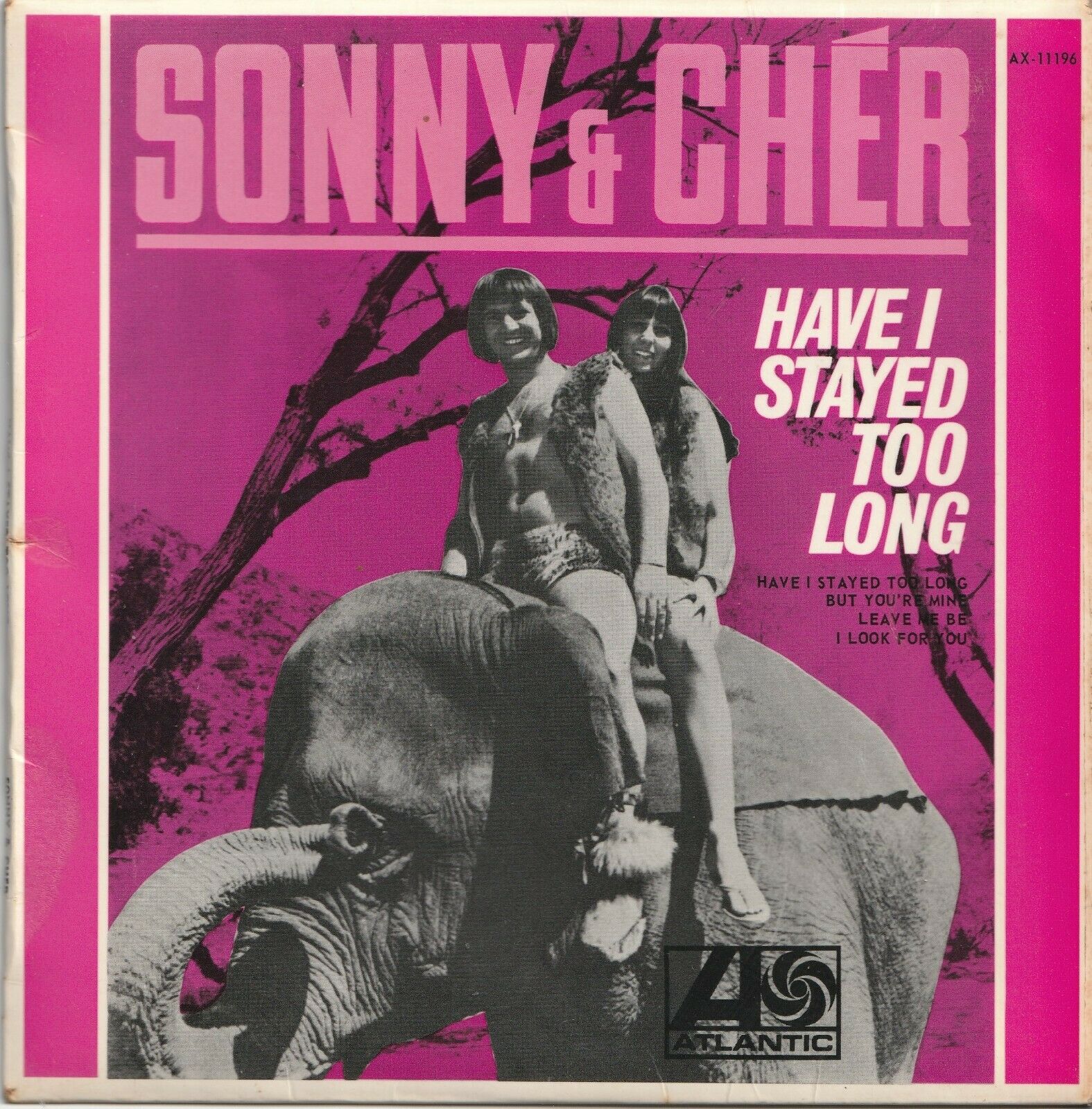
Sonny And Cher - 1966 - Have I Stayed Too Long FLAC
Have I Stayed Too Long/Leave Me Be/But You're Mine/ I Look for You
Sonny & Cher proved one of the magical musical combinations of the mid-'60s and one of the better rock-influenced MOR acts of the early '70s, their wisecracking repartee providing counterpoint to a series of adoring hit duets. Salvatore "Sonny" Bono (born February 16, 1935) started out at Los Angeles-based Specialty Records as a songwriter in the late '50s, responsible for "Koko Joe" by Don & Dewey and "She Said Yeah" for Larry Williams, which was later covered by the Rolling Stones and the Righteous Brothers. Bono became a protégé of Phil Spector, managing to write a handful of successful songs, most notably "Needles and Pins" in collaboration with his protégé Jack Nitzsche, which became a success for Jackie DeShannon and a huge international hit for the Searchers. In 1964, while working sessions with Phil Spector, he met an 18-year-old would-be singer named Cherilyn Lapierre (born May 20, 1946), and the two were later married. They formed a professional duet, initially as Caesar & Cleo for Vault Records and later Reprise, but it was only after they were signed to Atlantic Records as Sonny & Cher that success came their way. The couple embarked on parallel careers, with Cher later signed to Liberty/Imperial Records as a solo act.
They were a strange duet in the sense that neither had a great voice and, indeed, their voices were so similar that Atlantic's president Ahmet Ertegun was convinced that Sonny had come close to breaking a contract by turning up singing with her on her solo hit "All I Really Want to Do" and her other Imperial hits. The latter song, however, also demonstrated their ability to spot a hit, as well as good material for themselves: they'd heard the Byrds performing the Dylan song at a club in Los Angeles and got Cher's recording out before the Byrds' own was in stores, beating the folk-rock group at its own game of popularizing Dylan songs. She subsequently hit with "Bang Bang (My Baby Shot Me Down)" while Sonny charted with "Laugh at Me" on Atco, but their biggest success was as a duet on Atco, with "I Got You Babe" and "The Beat Goes On."
For a time, from 1965 until 1967, they were rock & roll's hottest couple, so much so that in some conservative communities, they were considered almost morally subversive; parents locked up their kids when Sonny & Cher were passing through for a concert appearance. They were popular enough, and sufficiently well-known that the Rolling Stones impersonated them on the British television music showcase Ready Steady Go, miming to "I Got You Babe" with Brian Jones subbing for Sonny.
And then nothing. The hits stopped coming, and the couple made some daringly creative but unsuccessful commercial missteps, even a movie (Good Times, directed by William Friedkin in his debut) that was, like the Monkees' Head, too far ahead of its time for critics and all but the most advanced fans to appreciate. A further film effort, Chastity, a name shared by their daughter, also bombed, and the sudden confrontation of a $200,000 income tax debt forced the couple to continue working. Further, they were unable to record because of a dispute with Atlantic over Sonny's objections to the way that Cher's solo career was being handled.
They were playing supper clubs and Las Vegas nightclubs, opening for people like Pat Boone, when Johnny Musso, a friend of the couple's, was jumping from an executive position at Atlantic to run Decca Records' Kapp label subsidiary, and brought the duo with him. At around the same time, their stage act -- which had evolved into a kind of "with it" domestic comedy routine nearly as prominent as the music, with the tall, wry-witted Cher cutting up on the seemingly dim-witted Sonny -- was spotted by Fred Silverman, who was then the head of programming for CBS. They ended up with a summer replacement try-out show that did so well that Sonny & Cher were given a regular spot in the CBS lineup in January 1972 with a comedy-variety series.
The couple's recording career was initially revived by a live album cut in one night at Las Vegas, featuring new versions of their early hits as well as parts of their then-current repertory; the album went gold. The first couple of singles by Cher and Sonny & Cher failed, but then producer Snuff Garrett, who had been at Liberty when Cher was there but had never worked with her, was brought in, and the result was "Gypsies, Tramps and Thieves," a career-reviving number one hit. After that, "The Way of Love," "All I Ever Need Is You" (which became the theme for their TV show), "A Cowboy's Work Is Never Done," "Half Breed," and "Dark Lady" kept either Cher or the couple in the Top Ten at various times through 1974. By then, however, their marriage had fallen apart, and with it, the success of their TV show.