Monday, 9 May 2016

The @n1m@ls - 1966 - @nim@l Tr@cks


How You've Changed/I Believe To My Soul/Let The Good Times Roll/Worried Life Blues


The Animals were part of the budding, homegrown U.K. blues scene of the early Sixties and one of the most noteworthy bands of the British Invasion. Formed in Newcastle-on-Tyne, a port city and coal-mining hub in northeast England, the Animals reflected their upbringing with brawling, blues-based rock and roll. The group derived its inspiration - and much of its early repertoire - from American blues and R&B sources, adapting them to their native British working-class sensibility. Eric Burdon was among the best white R&B singers of the Sixties. His gruff, soulful vocals brought out the anguish in such anthems as “It’s My Life” and “We Gotta Get Out of This Place.” The band’s sound was also heavily defined by Alan Price’s organ playing, which provided dramatic accents and a blues-jazz atmosphere. The other founding members - guitarist Hilton Valentine, bassist Chas Chandler and drummer John Steel – balanced Burdon’s earthiness and Price’s melodic finesse.


Originally known as the Alan Price Combo, the group changed its name to the Animals when Burdon joined in 1962. In 1963, they performed a monthlong residency (much like the Beatles did) in Hamburg, Germany. They also served as the U.K. backing band for visiting bluesmen, including John Lee Hooker and Sonny Boy Williamson. Their career took off with their move to London in January 1964. Less than a year later, on September 5, 1964, “House of the Rising Sun” became the Number One single in America. Their brooding arrangement of “House of the Rising Sun” - a traditional folk song recorded by Josh White and Bob Dylan - became an early milestone in the British Invasion. Despite the song's unconventional lyrics (it was about a house of prostitution in New Orleans), “House of the Rising Sun” topped the American and British charts. In fact, it stayed at Number One in the U.S. for three weeks.

 The Animals followed “House of the Rising Sun” with seven more Top 40 hits (and six more Top 40 hits as Eric Burdon and the Animals), at least four of which – “Don’t Let Me Be Misunderstood” (Number 15), “We Gotta Get Out of This Place” (Number 13), “It’s My Life” (Number 23) and “Don’t Bring Me Down” (Number 12) – are bonafide classics of the British Invasion era. The keys to these and other Animals tracks is their passionate intensity and strong sense of identification with working-class travails, which would become hallmarks of such later rock and rollers as Bruce Springsteen and David Johansen – both of whom were professed Animals fans. Basically, the group was steeped in the blues and R&B sounds that filtered over from America. Many of the Animals earliest recordings were solid remakes of favorites by such revered artists as John Lee Hooker (“Boom Boom”), Sam Cooke (“Bring It On Home to Me”), Chuck Berry (“Around and Around”), Ray Charles (“Hallelujah, I Love Her So”) and Bo Diddley (“Road Runner”). At the same time, the Animals had great success interpreting the works of American pop songwriters such as Gerry Goffin and Carole King (“Don’t Bring Me Down”) and Barry Mann and Cynthia Weil (“We Gotta Get Out of This Place”).

The Animals’ original membership released only three albums (The Animals, The Animals On Tour, Animal Tracks) during their 1964-65 heyday. The Best of the Animals was issued in February 1966, as the group was disbanding. This hit-filled collection was one of the stronger LPs of its time, and it reached Number 6 and hung on the charts for over two years. The Animals’ disintegration began with Price’s departure in mid-1965 due to fear of flying and incompatibility with Burdon. Drummer John Steel was the next to leave (in March 1966), and the others followed suit in September.  Burdon continued with new recruits, and the reconfigured band - now billed as Eric Burdon and the Animals - enjoyed several late-Sixties hits in a more psychedelic vein, such as “When I Was Young,” “Monterey” and “San Franciscan Nights.” Burdon became an innovative album artist. The double album Love Is, released in 1968, was a landmark of Sixties psychedelia, featuring the guitar work of one Andy Somers (later Andy Summers of the Police). The Animals’ last Top Forty hit was “Sky Pilot (Part One).”

 Burdon entered the Seventies as frontman with War, a black funk group from Long Beach. Eric Burdon and War recorded a hit single ("Spill the Wine") and two albums. War graduated to a successful career without Burdon, who continued as a solo artist. He was recorded intermittently and toured constantly in the decades since; he also has written two books about his experiences as a rock and roller. As for the other original members of the Animals, Alan Price enjoyed a successful solo career in Britain and won acclaim for his 1973 film soundtrack O Lucky Man!. Bassist Chas Chandler discovered an unknown Jimi Hendrix performing in New York’s Greenwich Village, and wound up managing the Jimi Hendrix Experience and Slade.

The original Animals reunited in 1977, recording the album Before We Were So Rudely Interrupted, and 1983, which resulted in the albums Ark and Rip It to Shreds – The Animals Greatest Hits Live!. The reunions were as contentious as had been the group’s first tour of duty, as a certain degree of tension seemed to be an inevitable part of what the Animals were all about – and why their music had such a powerful edge.

The $weet - 1980 - The $weet


Fox On The Run/Hell Raiser/Blockbuster/Ballroom Blitz


The Sweet (also referred to as Sweet, and originally called Sweetshop) are a British/American glam rock band that rose to worldwide fame in the 1970s with their most prolific line-up: lead vocalist Brian Connolly, bass player, Steve Priest, guitarist Andy Scott, and drummer Mick Tucker.

The band were formed in 1968 and achieved their first hit "Funny Funny" in 1971 after teaming up with songwriters Nicky Chinn and Mike Chapman and record producer Phil Wainman. During 1971 and 1972, their musical style followed a marked progression from the Archies-like bubblegum style of "Funny Funny" to a Who-influenced hard rock style supplemented by a striking use of high-pitched backing vocals.

 
The band achieved notable success in the UK charts, with thirteen Top 20 hits during the 1970s alone, with "Block Buster!" (1973) topping the chart, followed by three consecutive number two hits in "Hell Raiser" (1973), "The Ballroom Blitz" (1973) and "Teenage Rampage" (1974). The band turned to more hard rock style with their mid-career singles like 1974's "Turn It Down". Their first self-written and produced single, "Fox on the Run" (1975), also reached number two on the UK charts. These results were topped in West Germany and other countries on the European mainland, where the band was very popular. They also achieved success and popularity in the United States with the top ten hits Little Willy, The Ballroom Blitz, and Fox on the Run.


 The Sweet had their last Top 10 hit in 1978 with "Love Is Like Oxygen". Connolly left the group in 1979 to start a solo career and the remaining members continued as a threesome until disbanding in 1981.

From the mid-1980s, Scott, Connolly and Priest each played with their own versions of Sweet at different times. Connolly died in 1997 and Tucker in 2002. The two surviving members are still active in their respective versions of the band; Scott's is based in England and Priest's in Los Angeles.

J0n And R0b!n - 1967 - Here's J0n And R0b!n


Do It Again A Little Bit Slower/If I Need Someone It's You/Drums/You Don't Care


The male-female duo Jon & Robin are thought of as a one-hit wonder for their playful 1967 #18 hit "Do It Again a Little Bit Slower." Actually, however, they recorded quite a bit in the mid-to-late '60s, with an engaging if somewhat lightweight style craftily mixing AM radio mid-'60s pop/rock with a little psychedelia and Southern soul. "Do It Again a Little Bit Slower" was certainly the best of their discs, with its likable male-female vocal tradeoffs, a "Cool Jerk"-like soul piano riff at strategic points, and an effective fadeout that languorously stretched out the suggestive title phrase. But their two LPs and a bunch of 1965-1969 singles included some enjoyable material as well, devised with help from some fine songwriters and some of the best production and backup musician talent in their Dallas base. 

 The male half of the duo, Jon Abdnor, had recorded some solo singles for his millionaire father's Abnak label before hooking up with teenage singer Javonne Braga, who was billed as "Robin" on the records the pair made together. Their one national hit, "Do It Again a Little Bit Slower" came from the pen of Wayne Carson Thompson, most famous for writing the Boxtops' "The Letter." The duo also recorded several other Thompson compositions, including the fairly gritty soul-popper "Dr. Jon (The Medicine Man)," which was a big hit in Texas, although it didn't break nationally. Jon & Robin themselves wrote little original material, although they did benefit from production by ex-rockabilly star Dale Hawkins and Mike Rabon of the Five Americans, a fellow Abnak act. Indeed, several of the Five Americans played on some Jon & Robin sessions, and another Abnak artist, soul singer Bobby Patterson, also helped out with some of their recordings. By the end of the 1960s, however, Jon & Robin had split, though Jon Abdnor did put out a 1969 solo LP, Intro to Change, billed to John Howard Abdnor & the Involvement.

J0hn Fred @nd H!s Pl@yb0y B@nd - 1968 - Judy !n D!gu!se (W!th Gl@sses)


Judy In Disguise/When The Lights Go Out/No Good To Cry/Sometimes You Just Can't Win


John Fred & His Playboy Band had a regional following in the South and broke through with a number one hit early in 1968, although it proved to be the band's only top forty entry.

John Fred Gourrier was born in 1941 in Baton Rouge, Louisiana. His father, Fred Gourrier, had played professional baseball with the Detroit Tigers organization. In 1956 John formed a band that he called John Fred and the Playboys, a white group that played primarily rhythm and blues music. While still in high school, they cut their first record in late 1958 with Fats Domino's band. The song was titled Shirley and John Fred and the Playboys saw their song rise as high as number 82 on the national record charts. The group also cut other singles that were not as successful, working at times with Mac Rebennack and with the Jordanaires. John Fred attended Southeastern Louisiana University from 1960 to 1963 and spent some time as a college basketball player.

He formed a new band and began to cut singles on the Jewel and N-Joy labels. The band was very popular regionally. Eventually they became known as John Fred & His Playboy Band and signed with the Paula label. After six singles that met with little success nationally, they recorded a parody of the popular Beatles' song Lucy In The Sky With Diamonds which they called Judy In Disguise [With Glasses]. A song with a snappy beat and well orchestrated, it entered the charts on December 16, 1967 and by January 20 it had supplanted another Beatles' song, Hello Goodbye, as the number one record on the U.S. charts. It remained there for two weeks. 

 John Fred & His Playboy Band continued doing pop songs and soul songs, recording material that had been done by Wilson Pickett, James Brown, Otis Redding and other well-known soul artists of the day. They toured through Europe, at one point playing with the supergroup Traffic in Hamburg. They recorded an album Permanently Stated that was psychedelic in nature, in keeping with the times. Before breaking up the group had one more single that was a hit regionally, Hey, Hey Bunny in 1968.

John Fred put together another group that recorded more records from 1969 to 1976, but never again had a hit that even came near the success of Judy In Disguise [With Glasses]. He went on to become vice president of RCS in Baton Rouge, where he worked as a record producer. According to band member Bill Dunnam, many members of John Fred & His Playboy Band went on to successful careers in business. John Fred has worked as a high school baseball coach.

John Fred suffered from kidney problems and died at Tulane Hospital in New Orleans on April 15, 2005.

Fleetw00d M@c - 1969 - Fleetw00d M@c


Albatross/Jigsaw Puzzle Blues/Merry Go Round/Hellhound On My Trail


Fleetwood Mac were formed in July 1967 in London when Peter Green left the British blues band John Mayall & the Bluesbreakers. Green had replaced guitarist Eric Clapton in the Bluesbreakers, and received critical acclaim for his work on their album A Hard Road. After he had been in the Bluesbreakers for some time, Green asked if drummer Mick Fleetwood could replace Aynsley Dunbar. Green had been in two bands with Fleetwood—Peter B's Looners and the subsequent Shotgun Express (which featured a young Rod Stewart as vocalist). John Mayall agreed and Fleetwood became a member of the band.

The Bluesbreakers now consisted of Green, Fleetwood, John McVie and Mayall. Mayall gave Green free recording time as a gift, in which Fleetwood, McVie and Green recorded five songs. The fifth song was an instrumental which Green named after the rhythm section, "Fleetwood Mac".

Soon after, Green contacted Fleetwood to form a new band. The pair wanted McVie on bass guitar and even named the band 'Fleetwood Mac' as a way to entice him. However, McVie opted to keep his steady income with Mayall rather than take a risk with a new band. In the meantime Peter Green and Mick Fleetwood teamed up with slide guitarist Jeremy Spencer and bassist Bob Brunning, who was in the band on the understanding that he would leave if McVie agreed to join. The Green, Fleetwood, Spencer, Brunning version of the band made its debut on 13 August 1967 at the Windsor Jazz and Blues Festival as Peter Green's Fleetwood Mac featuring Jeremy Spencer. Brunning merely played at a handful of gigs with Fleetwood Mac. Within weeks of this show, John McVie agreed to join the band as permanent bassist.

Fleetwood Mac's first album, Fleetwood Mac, was a no-frills blues album and was released on the Blue Horizon label in February 1968. In fact there were no other players on the album (except for the song "Long Grey Mare", which was recorded with Brunning on bass). The album was successful in the UK, hitting No. 4, though it did not have any singles on it. The band soon released two singles "Black Magic Woman" (later a big hit for Santana) and "Need Your Love So Bad".

The band's second album, Mr. Wonderful, was released in August 1968. Like the first it was an all-blues album, but this time they made a few changes. The album was recorded live in the studio with miked amplifiers and PA system, rather than plugged into the board. This method provided the ideal environment for producing this style of music, and gave it an authentically vintage sound. They also added horns and featured a friend of the band on keyboards, Christine Perfect of Chicken Shack prior to her marriage to John McVie. 

Shortly after the release of their second album Fleetwood Mac added guitarist Danny Kirwan, then just eighteen years old, to their line-up, recruited from the South London blues trio Boilerhouse, consisting of Kirwan on guitar with Trevor Stevens on bass and Dave Terrey on drums. Green and Fleetwood had been to watch Boilerhouse rehearse in a basement boiler-room and Green was so impressed, he invited the band to play support slots for Fleetwood Mac. Green wanted Boilerhouse to become a professional band but Stevens and Terrey were not prepared to turn professional at the time, so Green sought to find another rhythm section by placing an ad in Melody Maker. There were over 300 applicants, but when Green and Fleetwood ran auditions at the Nag's Head in Battersea (home of the Mike Vernon Blue Horizon Club), the hard to please Green could not find anyone good enough to replace the pair, so he invited Kirwan to join Fleetwood Mac as their third guitarist.

Green had been frustrated that Jeremy Spencer had little desire to contribute to Green's songs. A mature and accomplished self-taught guitarist, Kirwan's signature vibrato and unique style added a new dimension to an already complete band. With Kirwan the band released their first number one single in Europe, "Albatross". Around this time they released their second American album, English Rose, which contained half of Mr. Wonderful, new songs from Kirwan, and their third European album called The Pious Bird of Good Omen, which was a collection of singles, B-sides, and a selection of some work the band did with Eddie Boyd.

 When the band went to the United States in January 1969 they recorded many songs at the soon-to-close Chess Records Studio, with some blues legends of Chicago including Willie Dixon, Buddy Guy and Otis Spann. These would prove, however, to be Fleetwood Mac's last all-blues recordings. Along with their change of style the band was also going through some label changes. Up until this point they had been on Blue Horizon. With Kirwan in the band, however, the musical possibilities were too great for them to stay on a blues-only label. The band signed with the Immediate Records label and released "Man of the World", another British and European hit single. For the B-side Spencer fronted Fleetwood Mac as "Earl Vince and the Valiants" and recorded "Somebody's Gonna Get Their Head Kicked In Tonite", typifying the more raucous rock 'n' roll side of the band. Immediate Records was in bad shape and the band shopped around for a new deal. Even though The Beatles wanted the band on Apple Records (Mick Fleetwood and George Harrison were brothers-in-law), the band's manager Clifford Davis decided to go with Warner Bros. Records (through Reprise Records, a Frank Sinatra-founded label), the label they have stayed with ever since.

Fleetwood Mac's first album for Reprise, released in September 1969, was the well-regarded Then Play On. Although the initial pressing of the American release of this album was the same as the British version, it was altered to contain the song "Oh Well", featured consistently in live performances from the time of its release through 1997 and then again starting in 2009. Then Play On, which was the band's first rock album, featured only the songs of Kirwan and Green. Jeremy Spencer, meanwhile, recorded a solo album (he was backed by the rest of the band) which consisted of many 1950s-style rock and roll songs.
 
 Green's last hit with Fleetwood Mac was "The Green Manalishi (With the Two-Prong Crown)" (first recorded at the Boston Tea Party in February 1970 and later recorded by Judas Priest). This recording was released as Green's mental stability deteriorated, and he wanted to give all of the band's money to charity. Other members of the band did not agree, and subsequently Green decided to leave the band. His last show with Fleetwood Mac was on 20 May 1970. During that show, the band went past their allotted time and the power was shut off, although Mick Fleetwood kept drumming. 

The C0ws!lls - 1970 - Indi@n L@ke


 Indian Lake/Hair/Silver Threads And Golden Needles/The Path of Love


The Cowsills is an American singing group from Newport, Rhode Island. They specialized in harmonies and the ability to sing and play music at an early age. The band was formed in the spring of 1965 by brothers Bill, Bob, and Barry Cowsill; they shortly thereafter added their brother John. Originally Bill and Bob played guitar and Barry was on drums. When John learned how to play drums and joined the band, Barry went to bass. After their initial success, the brothers were joined by their siblings Susan and Paul and their mother Barbara. Bob's twin brother Richard was the road manager. When the group expanded to its full family membership by 1967, the six siblings ranged in age from 8 to 19. Joined by their mother, Barbara Cowsill (née Russell), the group was the inspiration for the 1970s television show The Partridge Family.

The Cowsills' musical interest started while their father Bud Cowsill was stationed in Canton, Ohio, in the late 1950s as a US Navy recruiter. Billy and Bob taught themselves how to play the guitar. The boys developed their musical talent and harmonized vocals, and they performed at school church dances in Stark County, Ohio. The boys' first television appearance was on the Gene Carroll Show on WEWS in Cleveland.

After Bud retired from the Navy, he and his wife managed their children's career.

 
 In late 1965, the Cowsills were hired as a regular act on Bannisters Wharf in Newport, where they sang Beatles songs hour after hour. A handful of singles were released on JODA Records and Philips Records in 1965 and 1966, to only modest success.[2] After Leonard Stogel took over management of the band, he got them signed to MGM Records in 1967. Barbara, who would become known to their fans affectionately as "Mini-Mom" due to her diminutive stature, joined the group just in time to record the band's first album, including the hit single "The Rain, The Park & Other Things" with Bill on lead vocals. It sold over one million copies and was awarded a gold record. Shortly thereafter the band was expanded, yet again, to include siblings Susan and Paul.

With the success of "The Rain...", the band quickly became a popular act in the U.S., and achieved significant airplay in England and other parts of Europe. "The Rain, The Park and Other Things" reached No.2 on the Billboard Hot 100. In 1968, the band scored another million-selling hit with the song "Indian Lake" which reached No.10 on the US charts. In 1969, the band had another No.2 US hit and million seller with their version of the title song from the musical Hair. From 1968 through 1972, the band played an average of 200 performance dates per year, and were among the most popular acts on the American concert

Monday, 25 April 2016

D0ug H@rrell - 1957 - Exsanguination Blues and Hospitality Blues


Exsanguination Blues/Hospitality Blues


 In May of 1955 a group of Medical Students at the University of North Carolina Medical School were preparing skits for the annual Student-Faculty Day program.
A 3rd year student (now an M.D.) by the name of Doug Harrellwrote and presented with the aid of his fellow students a monolouge entitled "Exsanguination Blues." Harrell had the show recorded and it caused such a favourable comment that a recording company became interested.
The company asked Harrell to come up with another monolouge and he wrote "Hospitality Blues" The recording was issued in 1956 and became an instantaneous  sucess.

 The record was put out by Colonial Records, which had a lot of success with comedy records. Doug also released an L.P. in 1960 entitled "Laugh a Spell with Doug Harrell". 

Buddy H0!!y - 1961 - Buddy H0!!y


 (You're So Square) Baby I Don't Care/Valley of Tears/Rave On/Ready Teddy


Charles Hardin Holley (September 7, 1936 – February 3, 1959), known as Buddy Holly, was an American musician and singer-songwriter who was a central figure of mid-1950s rock and roll. Holly was born in Lubbock, Texas, to a musical family during the Great Depression; he learned to play guitar and to sing alongside his siblings. His style was influenced by gospel music, country music and rhythm and blues acts, and he performed in Lubbock with his friends from high school. He made his first appearance on local television in 1952, and the following year he formed the group "Buddy and Bob" with his friend Bob Montgomery. In 1955, after opening for Elvis Presley, Holly decided to pursue a career in music. He opened for Presley three times that year; his band's style shifted from country and western to entirely rock and roll. In October that year, when he opened for Bill Haley & His Comets, Holly was spotted by Nashville scout Eddie Crandall, who helped him get a contract with Decca Records.
  

Holly's recording sessions at Decca were produced by Owen Bradley. Unhappy with Bradley's control in the studio and with the sound he achieved there, Holly went to producer Norman Petty in Clovis, New Mexico, and recorded a demo of "That'll Be the Day", among other songs. Petty became the band's manager and sent the demo to Brunswick Records, which released it as a single credited to "The Crickets", which became the name of Holly's band. In September 1957, as the band toured, "That'll Be the Day" topped the US "Best Sellers in Stores" chart and the UK Singles Chart. Its success was followed in October by another major hit, "Peggy Sue".

The album Chirping Crickets, released in November 1957, reached number five on the UK Albums Chart. Holly made his second appearance on The Ed Sullivan Show in January 1958 and soon after, toured Australia and then the UK. In early 1959, Holly assembled a new band, consisting of future country music star Waylon Jennings (bass) and Tommy Allsup (guitar), and embarked on a tour of the midwestern U.S. After a show in Clear Lake, Iowa, Holly chartered an airplane to travel to his next show, in Moorhead, Minnesota. Soon after takeoff, the plane crashed, killing Holly, Ritchie Valens, the Big Bopper, and the pilot, in a tragedy later elegized by Don McLean as "The Day the Music Died".


During his short career, Holly wrote, recorded, and produced his own material. He is often regarded as the artist who defined the traditional rock-and-roll lineup of two guitars, bass, and drums. Holly was a major influence on later popular music artists, including the Beatles, the Rolling Stones, Eric Clapton, and Elton John. He was among the first artists inducted into the Rock and Roll Hall of Fame, in 1986. Rolling Stone magazine ranked him number 13 in its list of "100 Greatest Artists".

Herb @lpert - 1968 - C@baret


Cabaret/Slick/Flea Bag/Cowboys and Indians


Herbert "Herb" Alpert (born March 31, 1935) is an American musician most associated with the group variously known as Herb Alpert & the Tijuana Brass, Herb Alpert's Tijuana Brass, or TJB. Alpert is also a recording industry executive, the "A" of A&M Records, a recording label he and business partner Jerry Moss founded and eventually sold to PolyGram. Alpert also has created abstract expressionist paintings and sculpture over two decades, which are publicly displayed on occasion. Alpert and wife, Lani Hall, are substantial philanthropists through the operation of the Herb Alpert Foundation.


Alpert's musical accomplishments include five No. 1 albums and 28 albums total on the Billboard Album chart, nine Grammy Awards, fourteen platinum albums, and fifteen gold albums. As of 1996, Alpert had sold 72 million albums worldwide. Alpert is the only recording artist to hit No. 1 on the U.S. Billboard Hot 100 pop chart as both a vocalist ("This Guy's in Love with You", 1968), and an instrumentalist ("Rise", 1979).

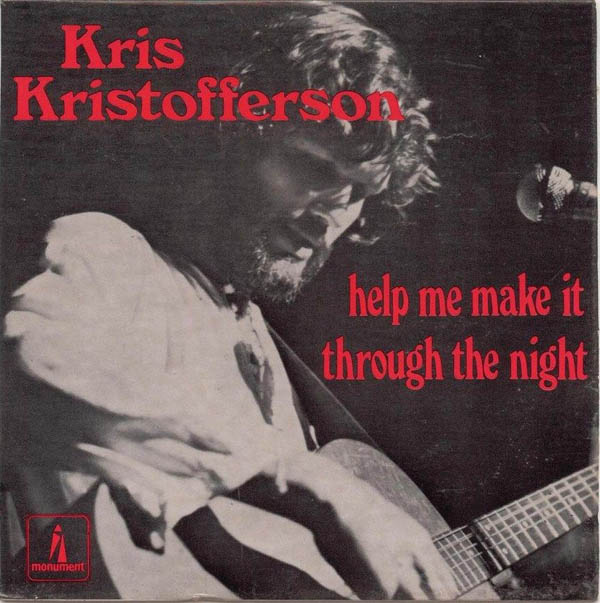
Kr!s Kr!st0ffers0n - 1972 - Help Me Make !t Thr0ugh The N!ght


Help Me Make It Through The Night/Just The Other Side Of Nowhere/Duvalier's Dream/Darby's Castle


Kristoffer Kristofferson (born June 22, 1936) is an American singer, songwriter, musician, actor, and U.S. Army veteran. He is known for writing and recording such hits as "Me and Bobby McGee," "For the Good Times," "Sunday Mornin' Comin' Down" and "Help Me Make It Through the Night." Kristofferson is the sole writer of most of his songs, and he has collaborated with various other figures of the Nashville scene such as Shel Silverstein.[1] In 1985, Kristofferson joined fellow country artists Waylon Jennings, Willie Nelson and Johnny Cash in forming the country music supergroup The Highwaymen. In 2004, Kristofferson was inducted into the Country Music Hall of Fame. He is also known for his acting work, including starring roles in Alice Doesn't Live Here Anymore and A Star Is Born, the latter for which he won a Golden Globe Award for Best Actor.

R@sc@ls - 1968 - H0w C@n ! Be Sure


How Can I Be Sure/I'm So Happy Now/I Don't Love You Anymore/You Better Run


The Rascals, along with the Righteous Brothers, Mitch Ryder, and precious few others, were the pinnacle of '60s blue-eyed soul. The Rascals' talents, however, would have to rate above their rivals, if for nothing else than the simple fact that they, unlike many other blue-eyed soulsters, penned much of their own material. They also proved more adept at changing with the fast-moving times, drawing much of their inspiration from British Invasion bands, psychedelic rock, gospel, and even a bit of jazz and Latin music. They were at their best on classic singles like "Good Lovin'," "How Can I Be Sure," "Groovin'," and "People Got to Be Free." When they tried to stretch their talents beyond the impositions of the three-minute 45, they couldn't pull it off, a failure which -- along with crucial personnel losses -- effectively finished the band as a major force by the 1970s.

The roots of the Rascals were in New York-area twist and bar bands. Keyboardist/singer Felix Cavaliere, the guiding force of the group, had played with Joey Dee & the Starliters, where he met Canadian guitarist Gene Cornish and singer Eddie Brigati. Brigati would split the lead vocals with Cavaliere and also write much of the band's material with him. With the addition of drummer Dino Danelli, they became the Rascals. Over their objections, manager Sid Bernstein (who had promoted the famous Beatles concerts at Carnegie Hall and Shea Stadium) dubbed them the Young Rascals, although the "Young" was permanently dropped from the billing in a couple of years.


 After a small hit with "I Ain't Gonna Eat Out My Heart Anymore" in 1965, the group hit number one with "Good Lovin'," a cover of an R&B tune by the Olympics, in 1966. This was the model for the Rascals' early sound: a mixture of hard R&B and British Invasion energy, with tight harmony vocals and arrangements highlighting Cavaliere's Hammond organ. After several smaller hits in the same vein, the group began to mature at a rapid rate in 1967, particularly as songwriters. "Groovin'," "Beautiful Morning," "It's Wonderful," and "How Can I Be Sure?" married increasingly introspective and philosophical lyrics to increasingly sophisticated arrangements and production, without watering down the band's most soulful qualities. They were also big hits, compiled for the 1968 LP release Time Piece: The Rascals' Greatest Hits, and provided some of the era's most satisfying blends of commercial and artistic appeal.

During the summer of 1968, almost as if to prove they could shake 'em down as hard as any soul revue, the Rascals made number one with one of their best songs, "People Got to Be Free." An infectious summons to unity and tolerance in the midst of a very turbulent year for American society, it also reflected the Rascals' own integrationist goals. Not only did they blend white and black in their music; they also, unlike many acts of the time, refused to tour on bills that weren't integrated as well.
 

 "People Got to Be Free," surprisingly, was the group's last Top 20 hit, although they would have several other small chart entries over the next few years, often in a more explicitly gospel-influenced style. The problem wasn't bad timing or shifting commercial taste; the problem was the material itself, which wasn't up to the level of their best smashes. More worrisome were their increasingly ambitious albums, such as the 1969 releases Freedom Suite and See, which found Cavaliere in particular trying to expand into jazz, instrumentals, and Eastern philosophy. Not that this couldn't have worked well, but it didn't. They had never been an album-oriented group, but unlike other some other great mid-'60s bands, they were unable to satisfactorily expand their talents into full-length formats.

A more serious problem was the departure of Brigati, the band's primary lyricist, in 1970. Cornish was also gone a year later, although Cavaliere and Danelli kept the Rascals going a little longer with other musicians. The band broke up in 1972, with none of the members going on to notable commercial or artistic success on his own, though Cavaliere remained the most active

Bl@ck S@bb@th - 1972 - P@r@n0id


Paranoid/Black Sabbath/Tomorrow's Dream /Changes


Black Sabbath are an English rock band, formed in Birmingham in 1968, by guitarist and main songwriter Tony Iommi, bassist and main lyricist Geezer Butler, singer Ozzy Osbourne, and drummer Bill Ward. The band have since experienced multiple line-up changes, with guitarist Iommi being the only constant presence in the band through the years. Originally formed in 1968 as a blues rock band, the group soon adopted the Black Sabbath moniker and began incorporating occult themes with horror-inspired lyrics and tuned-down guitars. Despite an association with these two themes, Black Sabbath also composed songs dealing with social instability, political corruption, the dangers of drug abuse and apocalyptic prophecies of the horrors of war.


Osbourne's regular abuse of alcohol and other drugs led to his dismissal from the band in 1979. He was replaced by former Rainbow vocalist Ronnie James Dio. Following two albums with Dio, Black Sabbath endured countless personnel changes in the 1980s and 1990s that included vocalists Ian Gillan, Glenn Hughes, Ray Gillen and Tony Martin, as well as several drummers and bassists. In 1992, Iommi and Butler rejoined Dio and drummer Vinny Appice to record Dehumanizer. The original line-up reunited with Osbourne in 1997 and released a live album Reunion. Black Sabbath's 19th studio album, 13, which features all of the original members but Ward, was released in June 2013.


Black Sabbath are often cited as pioneers of heavy metal music. The band helped define the genre with releases such as Black Sabbath (1970), Paranoid (1970) and Master of Reality (1971). They were ranked by MTV as the "Greatest Metal Band" of all time, and placed second in VH1's "100 Greatest Artists of Hard Rock" list. Rolling Stone magazine ranked them number 85 in their "100 Greatest Artists of All Time". They have sold over 70 million records worldwide. Black Sabbath were inducted into the UK Music Hall of Fame in 2005 and the Rock and Roll Hall of Fame in 2006. They have also won two Grammy Awards for Best Metal Performance.

Monday, 4 April 2016

(her - 1967 - The H!ts Of (her


All I Really Want To Do/Where Do You Go/Alfie/Bang Bang


 Cher born Cherilyn Sarkisian, May 20, 1946) is an American singer and actress. Described as embodying female autonomy in a male-dominated industry, she is known for her distinctive contralto singing voice and for having worked in numerous areas of entertainment, as well as adopting a variety of styles and appearances during her five-decade-long career, which has led to her being nicknamed the Goddess of Pop.

Cher gained popularity in 1965 as one-half of the folk rock husband-wife duo Sonny & Cher after their song "I Got You Babe" reached number one on the American and British charts. She began her solo career simultaneously, releasing in 1966 her first million-seller song, "Bang Bang (My Baby Shot Me Down)". She became a television personality in the 1970s with her shows The Sonny & Cher Comedy Hour, watched by over 30 million viewers weekly during its three-year run, and Cher. She emerged as a fashion trendsetter by wearing elaborate outfits on her television shows. While working on television, she established herself as a solo artist with the U.S. Billboard Hot 100 chart-topping singles "Gypsys, Tramps & Thieves", "Half-Breed", and "Dark Lady". After her divorce from Sonny Bono in 1975, Cher launched a comeback in 1979 with the disco-oriented album Take Me Home and earned $300,000 a week for her 1980–82 residency show in Las Vegas.

 In 1982, Cher made her Broadway debut in the play Come Back to the Five and Dime, Jimmy Dean, Jimmy Dean and starred in the film adaptation of the same title. She subsequently earned critical acclaim for her performances in films such as Silkwood (1983), Mask (1985), and Moonstruck (1987), for which she won the Academy Award for Best Actress. She then revived her musical career by recording the rock-inflected albums Cher (1987), Heart of Stone (1989), and Love Hurts (1991), all of which yielded several successful singles. She reached a new commercial peak in 1998 with the album Believe, whose title track became the biggest-selling single of all time by a female artist in the UK; it features the pioneering use of Auto-Tune, also known as the "Cher effect". Her 2002–05 Living Proof: The Farewell Tour became one of the highest-grossing concert tours of all time, earning $250 million. In 2008, she signed a $180 million deal to headline the Colosseum at Caesars Palace in Las Vegas for three years. After seven years of absence, she returned to film in the 2010 musical Burlesque. Cher's first studio album in 12 years, Closer to the Truth (2013), became her highest-charting solo album in the U.S. to date at number three.


Cher has won an Academy Award, a Grammy Award, an Emmy Award, a special CFDA Fashion Award, three Golden Globe Awards, and a Cannes Film Festival Award, among several other honors. Throughout her career, she has sold 200 million records worldwide. She is the only artist to date to have a number-one single on a Billboard chart in each decade from the 1960s to the 2010s. Outside of her music and acting, she is noted for her political views, philanthropic endeavors and social activism, including LGBT rights and HIV/AIDS prevention.


P@ul J0nes – 1968 – S0ns And L0vers


High Time/Thinking Ain’t For Me/I’ve Been A Bad Bad Boy/Sons And Lovers


Paul Jones was born as Paul Pond in Portsmouth, Hampshire. As “P.P. Jones” he performed duets with Elmo Lewis (better known as future founder member of the Rolling Stones, Brian Jones) at the Ealing Club, home of Alexis Korner’s Blues Incorporated, whose singers included Long John Baldry and Mick Jagger. He was asked by Keith Richards and Brian Jones to be the lead singer of a group they were forming, but he turned them down. He went on to be the vocalist and harmonica player of the successful 1960s group Manfred Mann. Paul Jones had several Top Ten hits with Manfred Mann before going solo in July 1966. He remained with His Master’s Voice.

He was less successful without the band than they were with his replacement, Mike d’Abo, but did have a few hits, notably with “High Time” (1966) (UK No 4), “I’ve Been a Bad, Bad Boy” (1967) (UK No 5) and “Thinkin’ Ain’t for Me” (1967) (UK No 32) before branching into acting. While his solo career in the UK was mildly successful, he sold few records in the US. He had enough hits in Sweden to have a greatest hits album released there on EMI. Subsequent single releases in Britain in the late 1960s on the Columbia label, as a result of EMI transferring their remaining pop acts from His Master’s Voice[citation needed], included “Aquarius”, from the musical “Hair”, and a cover version of a Bee Gees song, “And the Sun Will Shine”.

Jethr0 T#ll - 1972 - Th!s !s Jethr0 T#ll


Living In The Past/Locomotive Breath/Hymn 43/Song For Jeffrey


Jethro Tull were a British rock group, formed in Luton, Bedfordshire, in December 1967. Initially playing blues rock, the band soon developed its sound to incorporate elements of British folk music and hard rock to forge a progressive rock signature. The band was led by vocalist/flautist/guitarist Ian Anderson, and have included other significant members such as guitarist Martin Barre, keyboardist John Evan, drummers Clive Bunker, Doane Perry, and Barriemore Barlow, and bassists Glenn Cornick, Jeffrey Hammond, and Dave Pegg.

The group first achieved commercial success in 1969, with the folk-tinged blues album Stand Up, which reached No. 1 in the UK charts, and they toured regularly in the UK and the US. Their musical style shifted in the direction of progressive rock with the albums Aqualung, Thick as a Brick and A Passion Play, and shifted again to hard rock mixed with folk rock with Songs from the Wood and Heavy Horses. Jethro Tull have sold over 60 million albums worldwide, with 11 gold and five platinum albums among them. They have been described by Rolling Stone as "one of the most commercially successful and eccentric progressive rock bands".


The last works released as a group were in 2003, though the band continued to tour until 2011. In April 2014, as he was concentrating on his solo career, Anderson said that Jethro Tull were finished.

@n!mals - 1964 - The @n!mals


I'm in Love Again/I'm Mad Again/Bury My Body/She Said Yeah


One of the most important bands originating from England's R&B scene during the early '60s, the Animals were second only to the Rolling Stones in influence among R&B-based bands in the first wave of the British Invasion. The Animals had their origins in a Newcastle-based group called the Kansas City Five, whose membership included pianist Alan Price, drummer John Steel, and vocalist Eric Burdon. Price exited to join the Kontours in 1962, while Burdon went off to London. The Kontours, whose membership included Bryan "Chas" Chandler, eventually were transmuted into the Alan Price R&B Combo, with John Steel joining on drums. Burdon's return to Newcastle in early 1963 heralded his return to the lineup. The final member of the combo, guitarist Hilton Valentine, joined just in time for the recording of a self-produced EP under the band's new name, the Animals. That record alerted Graham Bond to the Animals he was likely responsible for pointing impresario Giorgio Gomelsky to the group. 

Gomelsky booked the band into his Crawdaddy Club in London, and they were subsequently signed by Mickie Most, an independent producer who secured a contract with EMI's Columbia imprint. A studio session in February 1964 yielded their Columbia debut single, "Baby Let Me Take You Home" (adapted from "Baby Let Me Follow You Down"), which rose to number 21 on the British charts. For years, it was rumored incorrectly that the Animals got their next single, "House of the Rising Sun," from Bob Dylan's first album, but it has been revealed that, like "Baby Let Me Take You Home," the song came to them courtesy of Josh White. In any event, the song -- given a new guitar riff by Valentine and a soulful organ accompaniment devised by Price -- shot to the top of the U.K. and U.S. charts early that summer. This success led to a follow-up session that summer, yielding their first long-playing record, The Animals. Their third single, "I'm Crying," rose to number eight on the British charts. The group compiled an enviable record of Top Ten successes, including "Don't Let Me Be Misunderstood" and "We've Gotta Get Out of This Place," along with a second album, Animal Tracks. 

 In May of 1965, immediately after recording "We've Gotta Get Out of This Place," Alan Price left the band, citing fear of flying as the reason; subsequent biographies of the band have indicated that the reasons were less psychological. When "House of the Rising Sun" was recorded, using what was essentially a group arrangement, the management persuaded the band to put one person's name down as arranger. Price came up the lucky one, supposedly with the intention that the money from the arranger credit would be divided later on. The money was never divided, however, and as soon as it began rolling in, Price suddenly developed his fear of flying and exited the band. Others cite the increasing contentiousness between Burdon and Price over leadership of the group as the latter's reason for leaving. In any case, a replacement was recruited in the person of Dave Rowberry. 


In the meantime, the group was growing increasingly unhappy with the material they were being given to record by manager Mickie Most. Not only were the majority of these songs much too commercial for their taste, but they represented a false image of the band, even if many were successful. "It's My Life," a number seven British hit and a similar smash in America, caused the Animals to terminate their association with Most and with EMI Records. They moved over to Decca/London Records and came up with a more forceful, powerful sound on their first album for the new label, Animalisms. The lineup shifts continued, however: Steel exited in 1966, after recording Animalisms, and was replaced by Barry Jenkins, formerly of the Nashville Teens. Chandler left in mid-1966 after recording "Don't Bring Me Down," and Valentine remained until the end of 1966, but essentially "Don't Bring Me Down" marked the end of the original Animals.

R@y $tevens - 1968 - Mr. Bus!nessm@n


Mr. Businessman/Face the Music/Talk To The Animals/Hey There


Stevens was born Harold Ray Ragsdale on January 24, 1939, in the small town of Clarkdale, GA. He started piano lessons at age six and formed a band at 15 called the Barons, which played at local venues and social events. At 17, he moved to Atlanta and caught on with radioman Bill Lowery's music publishing company; one of his songs, "Silver Bracelet," got him a shot at recording for Capitol subsidiary Prep, but the single never hit outside of Atlanta. Stevens enrolled at Georgia State University to study classical piano and music theory and in the meantime continued to record for Lowery's NRC label. One of his earliest novelty songs, 1960's "Sgt. Preston of the Yukon," was building a national buzz until a copyright infringement suit took it off the racks. Stevens began performing regularly on a radio show called The Georgia Jubilee, which helped lead to a job with Mercury Records as a session musician, arranger, and A&R assistant. Meanwhile, in 1961, he landed his first Top 40 hit with the novelty (obviously) song "Jeremiah Peabody's Poly Unsaturated Quick Dissolving Fast Acting Pleasant Tasting Green and Purple Pills." 
 
 Once Stevens joined the Mercury staff, he recorded several more novelty singles. "Ahab the Arab," released in early 1962, was a smash hit, reaching the Top Five on the pop charts and even crossing over to the Top Ten on the R&B side. The follow-up, "Santa Claus Is Watching You," just missed the Top 40, but 1963's "Harry the Hairy Ape" returned him to the Top 20. Still, Stevens wasn't planning on a singing career; he concentrated more on learning the ropes in the studio. He worked with artists like Brenda Lee, Patti Page, and Brook Benton and sometimes sang as a substitute vocalist with the Jordanaires. In 1963, he played with Elvis Presley himself on the sessions for the Fun in Acapulco soundtrack. With no hits of his own on the way, however, Stevens wound up moving to the Monument label, where he signed on as a producer and arranger. There he worked with a young Dolly Parton and B.J. Thomas, among others, and formed a friendship with producer Bill Justis (best known for his Sun Records classic "Raunchy"). 

 Stevens began recording again for Monument in 1968, delving into surprisingly pointed social commentary with the Top 30 pop hit "Mr. Businessman." Comedy was still in his blood, though, and Justis gave him an idea for a song called "Gitarzan." Stevens wrote the lyrics and voiced the characters, and in 1969 "Gitarzan" became his first Top Ten pop hit in seven years. His follow-up, a version of the Coasters' "Along Came Jones," reached the Top 30. Stevens also recorded "Sunday Mornin' Comin' Down," a song by a young up-and-comer named Kris Kristofferson. He was so pleased with the result that he turned down a chance to record Burt Bacharach's "Raindrops Keep Falling on My Head," which of course hit number one for Thomas. Unfortunately, Stevens' version of "Sunday Mornin' Comin' Down" flopped, but his instincts were right on, as Johnny Cash scored a major hit with it not long after.

An appearance on Andy Williams' variety show led to Stevens signing with the singer's Barnaby label in 1970. He hit immediately with a straight pop song, the relentlessly cheery "Everything Is Beautiful," which displayed his heretofore unseen sentimental streak. "Everything Is Beautiful" was an enormous hit, climbing to number one on the pop charts and winning Stevens a Grammy. Follow-ups included the serious-minded pop song "America, Communicate With Me" (1970), the novelty song "Bridget the Midget (Queen of the Blues)" (1971), and the gospel-styled "Turn Your Radio On" (1972), the latter of which was his first Top 20 country hit. It was, of course, a novelty song that would give Stevens his next big success. "The Streak," a 1974 ditty about the new fad of (what else?) streaking, zoomed up the charts to become Stevens' second number one pop hit and also made the country Top Five. 

 In the years that followed, Stevens' singles began to chart higher on the country side. His bluegrass-style rearrangement of "Misty" made the pop Top 20 in 1975, but it was a number three country hit and won him another Grammy. His country Top 40 hits over the next several years included "Indian Love Call," "Honky Tonk Waltz," and a version of the pop perennial "You Are So Beautiful"; during this period, he switched over to Warner Brothers. In 1977, he took a breather from country music to record an utterly bizarre version of Glenn Miller's swing classic "In the Mood," clucking all the instrumental parts like a choir of chickens (the single was credited to the Henhouse Five Plus Too). 1979's "I Need Your Help Barry Manilow," a takeoff on the MOR superstar's trademark style, was his last charting pop single.

Stevens switched labels again, this time to RCA, and promptly had a Top Ten country hit with the humorous "Shriner's Convention" in 1980. Several more singles failed to duplicate its success, and in 1984 he departed RCA for the greener pastures of MCA. Over the next few years, he enjoyed a period of renewed popularity. Songs like "It's Me Again, Margaret" (about an obscene phone caller), "The Mississippi Squirrel Revival," "The Haircut Song," "Would Jesus Wear a Rolex," and "I Saw Elvis in a U.F.O." may not have been his highest-charting (only "Squirrel" made it to the country Top 20), but they all became audience favorites and signature songs. Moreover, his albums sold better than they ever had before; 1985's He Thinks He's Ray Stevens reached number three on the country charts, and the 1986 follow-up, I Have Returned, actually hit number one. Both went gold, as did 1987's Crackin' Up, and Stevens issued several other albums for MCA up through 1991, when he charted for what appeared to be the last time with "Working for the Japanese." 

 In 1991, Stevens opened his own theater in Branson, MO, and played regularly there until 1993, when he sold the building to take a break. In 1992, he assembled a video collection of some of his best-known material and began a direct marketing campaign via television; the tape wound up selling over three million copies, and Stevens has since released other videos through his own company. He also recorded new material occasionally, returning in 1997 with Hum It and the holiday album Ray Stevens Christmas: Through a Different Window. In the wake of the September 11 attacks, Stevens returned with the new single "Osama-Yo' Mama," which became his first charting country single in ten years, reaching the Top 50. It was followed in early 2002 by Osama-Yo' Mama: The Album, which climbed into the country Top 30. In 2005, Stevens launched a television-only campaign to promote his three-disc Box Set, then handed the collection over to Curb for street release in 2006. Laughter Is the Best Medicine appeared in 2009 as did Sings Sinatra...Say What?, which featured Stevens' versions of several songs made famous by Frank Sinatra.

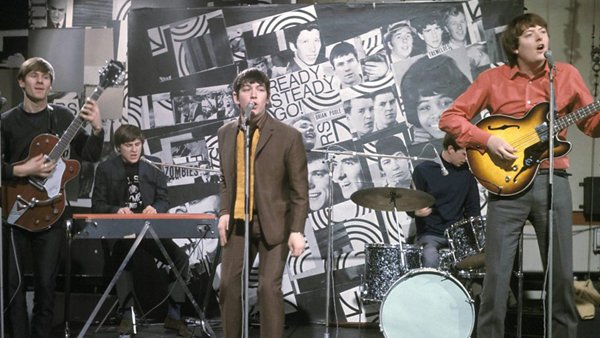
Alice C00per – Sch00l’s Out


Caught In A Dream/Be My Lover/School’s Out/Elected


Alice Cooper (born Vincent Damon Furnier; February 4, 1948) is an American singer, songwriter, musician and occasional actor whose career spans five decades. With a stage show that features guillotines, electric chairs, fake blood, boa constrictors, baby dolls, and dueling swords, Cooper is considered by music journalists and peers alike to be “The Godfather of Shock Rock”; he has drawn equally from horror movies, vaudeville, and garage rock to pioneer a macabre, theatrical brand of rock designed to shock people. Cooper is also known for his distinctive raspy voice.

Originating in Phoenix in the late 1960s after he moved from Detroit, Alice Cooper was originally a band consisting of Furnier on vocals and harmonica, lead guitarist Glen Buxton, Michael Bruce on rhythm guitar, Dennis Dunaway on bass guitar, and drummer Neal Smith. The original Alice Cooper band broke into the international music mainstream with the 1971 hit “I’m Eighteen” from the album Love It to Death, which was followed by the even bigger single “School’s Out” in 1972. The band reached their commercial peak with the 1973 album Billion Dollar Babies.

Furnier adopted the band’s name as his own name in the 1970s and began a solo career with the 1975 concept album Welcome to My Nightmare. In 2011 he released Welcome 2 My Nightmare, his 19th album as a solo artist, and his 26th album in total. Expanding from his Detroit rock roots, in his career Cooper has experimented with a number of musical styles, including art rock, hard rock, heavy metal, new wave, pop rock, experimental rock and industrial rock.

 Alice Cooper is known for his social and witty persona offstage, with The Rolling Stone Album Guide calling him the world’s most “beloved heavy metal entertainer”. He is credited with helping to shape the sound and look of heavy metal, and has been described as the artist who “first introduced horror imagery to rock’n’roll, and whose stagecraft and showmanship have permanently transformed the genre”. Away from music, Cooper is a film actor, a golfing celebrity, a restaurateur, and, since 2004, a popular radio DJ with his classic rock show Nights with Alice Cooper.

In 2011, the original Alice Cooper band was inducted into the Rock and Roll Hall of Fame.

Friday, 11 March 2016

T0m J0nes - 1967 - Green, Greeen Gr@ss 0f H0me


Not Responsible/Detroit City/Funny Familiar Forgotten Feelings/Green, Greeen Grass Of Home


Sir Thomas Jones Woodward OBE (born 7 June 1940) is a Welsh singer and actor known by his stage name Tom Jones. He became one of the most popular vocalists to emerge from the mid-1960s. Since then, he has sung many forms of popular music – pop, rock, R&B, show tunes, country, dance, soul, and gospel – and sold over 100 million records.

Jones has had thirty-six Top 40 hits in the United Kingdom and nineteen in the United States; some of his notable songs include "It's Not Unusual", "What's New Pussycat", "Delilah", "Green, Green Grass of Home", "She's a Lady", "Kiss", and "Sex Bomb".

Jones was awarded an OBE in 1999 and received a knighthood from Queen Elizabeth II for "services to music" in 2006. He has received many other awards throughout his career, including the Grammy Award for Best New Artist in 1966, an MTV Video Music Award in 1989, and two Brit Awards, winning Best British Male in 2000 and Outstanding Contribution to Music in 2003. From 2012 to 2015 Jones was one of the four coaches on the BBC television talent show The Voice UK.