Saturday, 16 May 2020

Eddie Cochran - 1962 - C'mon Everybody FLAC


C'mon Everybody/Sittin' In The Balcony/Summertime Blues/Twenty-Flight Rock


Ray Edward Cochran (October 3, 1938 – April 17, 1960) was a mid-20th-century American rock and roll musician. Cochran's songs, such as "Twenty Flight Rock", "Summertime Blues", "C'mon Everybody" and "Somethin' Else", captured teenage frustration and desire in the mid-1950s and early 1960s. He experimented with multitrack recording, distortion techniques, and overdubbing even on his earliest singles. He played the guitar, piano, bass, and drums. His image as a sharply dressed and attractive young man with a rebellious attitude epitomized the stance of the 1950s rocker, and in death he achieved iconic status.
 Cochran was involved with music from an early age, playing in the school band and teaching himself to play blues guitar. In 1954, he formed a duet with the guitarist Hank Cochran (no relation). When they split the following year, Eddie began a songwriting career with Jerry Capehart. His first success came when he performed the song "Twenty Flight Rock" in the film The Girl Can't Help It, starring Jayne Mansfield. Soon afterward, he signed a recording contract with Liberty Records.

Cochran died at age 21 after a road accident, while traveling in a taxi in Chippenham, Wiltshire, during his British tour in April 1960. He had just performed at Bristol's Hippodrome theatre. Though his best-known songs were released during his lifetime, more of his songs were released posthumously. In 1987, Cochran was inducted into the Rock and Roll Hall of Fame. His songs have been recorded by a wide variety of recording artists. 

 "C'mon Everybody" is a 1958 song by Eddie Cochran and Jerry Capehart, originally released as a B-side. In 1959 it peaked in the UK (where Cochran had major success and where he died in 1960) at number six in the singles chart, and, thirty years later, in 1988, the track was re-issued there and became a number 14 hit. In the United States the song got to number 35 on the Billboard Hot 100. "C'mon Everybody" is ranked number 403 on the Rolling Stone magazine's list of The 500 Greatest Songs of All Time.

When Cochran recorded his lead vocal for the song, he also created an alternate version of the song called "Let's Get Together". The only change to the lyrics was exactly that: the phrase "Let's get together" in place of "C'mon everybody". This alternate version was eventually released on a compilation album in the 1960s. 

 "Sittin' in the Balcony" is a song performed by Eddie Cochran and released on single by Liberty Records in January 1957. It rose to number 18 on the Billboard charts.

"Summertime Blues" is a song co-written and recorded by American rockabilly artist Eddie Cochran. It was written by Cochran and his manager Jerry Capehart. Originally a single B-side, it was released in August 1958 and peaked at number 8 on the Billboard Hot 100 on September 29, 1958 and number 18 on the UK Singles Chart. It has been covered by many artists, including being a number-one hit for country music artist Alan Jackson, and scoring notable hits in versions by Blue Cheer, The Who, and Brian Setzer, the last of whom recorded his version for the 1987 film La Bamba, where he portrayed Cochran. Jimi Hendrix performed it in concert.


"Twenty Flight Rock" is a song originally performed by Eddie Cochran in the 1956 film comedy The Girl Can't Help It, and released as a single the following year. The song was published in 1957 as written by Ned Fairchild and Eddie Cochran, by American Music Incorporated and Campbell, Connelly and Company. Cochran's contribution was primarily on the music. His version is rockabilly-flavored, but artists of many genres have covered the song.

Friday, 15 May 2020

Tommy Sands - 1957 - Teen-Age Crush FLAC


Teen-Age Crush/Ring-A-Ding-A-Ding/My Love Song/Hep Dee Hootie (Cutie Wootie)


The multi-talented Tommy Sands was born August 27, 1937, in Chicago, IL, to show-business parents. His entry into the business was no mistake, surprise, or happenstance, but genetic and inevitable. His father played piano and his mother sang. He took guitar lessons when he was eight years old and became an adequate axeman. By this time the Sands had moved to Houston, TX, where Sands got the acting bug. He moved to Los Angeles after high school and landed a job on Cliffie Stone's country & western television show. The exposure led to regular appearances on Tennessee Ernie Ford's weekly televison program and nightclub gigs.

He got a big break in 1957 when he got the lead role in The Singin' Idol, a television drama on rock & roll. The producer's first choice was Elvis Presley but he wasn't available, so a search went on and Sands won. A single from the show Teenage Crush on Capitol Records went to number two on Billboard's pop chart and Sands became an overnight sensation. He appeared on many Kraft Theater shows and nearly every network variety show on television. No one-hit wonder, he also hit the charts with "Goin' Steady," "The Worryin' Kind," "Blue Ribbon Baby," "Sing Boy Sing," "The Old Oaken Bucket," and "The Parent Trap." The release of "I'll Be Seeing You," marked a new musical direction for Sands. He cut two albums with Nelson Riddle and continue to release singles for a variety of labels, but none in the teen rock format that made him famous.

From the late '50s to the '70s he appeared in more than 150 television programs, and many movies including Sing Boy Sing (his first), Babes in Toyland, The Longest Day, Ensign Pulver, None but the Brave, Mardi Gras, and The Violent One. He married Nancy Sinatra in 1960; the union lasted five years. Where is he now? Still performing and thrilling fans all over the world. What else? It's in his genes.

Thursday, 14 May 2020

The Hollies - 1964 - Just One Look FLAC


Just One Look/ Keep Off That Friend Of Mine/Talkin' 'bout You/Lucille


Just One Look is the title of the second EP by The Hollies. It was put out by Parlophone in mono with the catalogue number GEP 8911 and released in the UK in late June 1964. The EP entered the British charts on 27 June 1964 and peaked at #8 on the Record Retailer chart after ten weeks. All songs on this EP were previously released at the time. Side A consisted of the A and B-side to the band's "Just One Look" single released in February 1964. Side B contained two tracks from the band's debut album, Stay with the Hollies.

Wednesday, 13 May 2020

The Young Rascals - 1967 - A Girl Like You FLAC


A Girl Like You/It's Love /Love Is A Beautiful Thing/Land Of 1000 Dances


The Rascals, along with the Righteous Brothers, Mitch Ryder, and precious few others, were the pinnacle of '60s blue-eyed soul. The Rascals' talents, however, would have to rate above their rivals, if for nothing else than the simple fact that they, unlike many other blue-eyed soulsters, penned much of their own material. They also proved more adept at changing with the fast-moving times, drawing much of their inspiration from British Invasion bands, psychedelic rock, gospel, and even a bit of jazz and Latin music. They were at their best on classic singles like "Good Lovin'," "How Can I Be Sure," "Groovin'," and "People Got to Be Free." When they tried to stretch their talents beyond the impositions of the three-minute 45, they couldn't pull it off, a failure which -- along with crucial personnel losses -- effectively finished the band as a major force by the 1970s. 

The roots of the Rascals were in New York-area twist and bar bands. Keyboardist/singer Felix Cavaliere, the guiding force of the group, had played with Joey Dee & the Starliters, where he met Canadian guitarist Gene Cornish and singer Eddie Brigati. Brigati would split the lead vocals with Cavaliere and also write much of the band's material with him. With the addition of drummer Dino Danelli, they became the Rascals. Over their objections, manager Sid Bernstein (who had promoted the famous Beatles concerts at Carnegie Hall and Shea Stadium) dubbed them the Young Rascals, although the "Young" was permanently dropped from the billing in a couple of years.

After a small hit with "I Ain't Gonna Eat Out My Heart Anymore" in 1965, the group hit number one with "Good Lovin'," a cover of an R&B tune by the Olympics, in 1966. This was the model for the Rascals' early sound: a mixture of hard R&B and British Invasion energy, with tight harmony vocals and arrangements highlighting Cavaliere's Hammond organ. After several smaller hits in the same vein, the group began to mature at a rapid rate in 1967, particularly as songwriters. "Groovin'," "Beautiful Morning," "It's Wonderful," and "How Can I Be Sure?" married increasingly introspective and philosophical lyrics to increasingly sophisticated arrangements and production, without watering down the band's most soulful qualities. They were also big hits, compiled for the 1968 LP release Time Piece: The Rascals' Greatest Hits, and provided some of the era's most satisfying blends of commercial and artistic appeal.

During the summer of 1968, almost as if to prove they could shake 'em down as hard as any soul revue, the Rascals made number one with one of their best songs, "People Got to Be Free." An infectious summons to unity and tolerance in the midst of a very turbulent year for American society, it also reflected the Rascals' own integrationist goals. Not only did they blend white and black in their music; they also, unlike many acts of the time, refused to tour on bills that weren't integrated as well.

 "People Got to Be Free," surprisingly, was the group's last Top 20 hit, although they would have several other small chart entries over the next few years, often in a more explicitly gospel-influenced style. The problem wasn't bad timing or shifting commercial taste; the problem was the material itself, which wasn't up to the level of their best smashes. More worrisome were their increasingly ambitious albums, such as the 1969 releases Freedom Suite and See, which found Cavaliere in particular trying to expand into jazz, instrumentals, and Eastern philosophy. Not that this couldn't have worked well, but it didn't. They had never been an album-oriented group, but unlike other some other great mid-'60s bands, they were unable to satisfactorily expand their talents into full-length formats.

 A more serious problem was the departure of Brigati, the band's primary lyricist, in 1970. Cornish was also gone a year later, although Cavaliere and Danelli kept the Rascals going a little longer with other musicians. The band broke up in 1972, with none of the members going on to notable commercial or artistic success on his own, though Cavaliere remained the most active.

Saturday, 9 May 2020

Millie Small - 1965 - Millie FLAC


 I'm In Love Again/Don't You Know/I Love The Way You Love/See You Later, Alligator

 R.I.P. Millie


Jamaican teenager Millie Small stunned the music business by reaching number two in both the U.S. and the U.K. with "My Boy Lollipop" in 1964.

Born Millicent Small in Clarendon, she was the daughter of an overseer on a sugar plantation (her reported date of birth varies from 1942 to 1948), and she was one of the very few female singers in the early ska era in Clarendon. She was already recording in her teens for Sir Coxsone Dodd's Studio One label with Roy Panton (as Roy & Millie), with a hit behind her in that capacity ("We'll Meet"), when Chris Blackwell discovered her and brought her to England in late 1963. Her fourth recording, "My Boy Lollipop," cut in London by a group of session musicians that included guitarist Ernest Ranglin (and, according to some accounts, Rod Stewart on harmonica) and featuring her childlike, extremely high-pitched vocals, was the first (and indeed, one of the few) international ska hits. It remains one of the biggest-selling reggae or ska discs of all time, with more than seven million sales.

Small, who was known as "the Blue Beat Girl" on her album, was perceived as a one-shot novelty artist from the start because of her unusual, high-register vocals (which actually owed a lot to Shirley Goodman of the '50s New Orleans R&B duo Shirley & Lee), and she only made the Top 40 one more time, with the "My Boy Lollipop" sound-alike "Sweet William." She did cut an entire album around the two hits (and video clips exist of Small miming to "My Boy Lollipop" and another single, "Henry"), which also includes the first of several of her covers of Fats Domino material ("I'm in Love Again"), with whom she later recorded an album.

After her contract with Island ran its course, Small recorded for Trojan Records; her first single for the label was an interpretation of Nick Drake's "Mayfair," but it was the B-side, "Enoch Power," that received the most attention for its potent criticism of the anti-immigration stance of British right-wing politician Enoch Powell. Small retired from music in the early 1970s and died on May 5, 2020, following a stroke.


Thursday, 7 May 2020

Johnny Rivers - 1967 - The Tracks Of My Tears FLAC


The Tracks Of My Tears/Baby I Need Your Lovin'/For Emily, Wherever I May Find Her/ Rosecrans Boulevard


Johnny Rivers (born John Henry Ramistella; November 7, 1942) is an American musician, singer, songwriter, and record producer. His repertoire includes pop, folk, blues, and old-time rock 'n' roll. Rivers charted during the 1960s and 1970s but remains best known for a string of hit singles between 1964 and 1968, among them "Memphis" (a Chuck Berry cover), "Mountain of Love" (a Harold Dorman cover), "The Seventh Son" (a Willie Mabon cover), "Secret Agent Man", "Poor Side of Town" (a US #1), "Baby I Need Your Lovin'" (a 1967 cover of the Four Tops single from 1964), and "Summer Rain"

"The Tracks of My Tears" is a song written by Smokey Robinson, Pete Moore, and Marv Tarplin. It is a multiple award-winning 1965 hit R&B song originally recorded by their group, The Miracles, on Motown's Tamla label. In 1967, Johnny Rivers covered the song and his version was a number 10 hit on the Billboard Hot 100.

Howard Keel & London Cast - 1957 - Vocal Gems From Oklahoma FLAC


Oh, What A Beautiful Mornin'/The Surrey With The Fringe On Top/Out Of My Dreams/Kansas City/I Cain't Say No/People Will Say We're In Love/The Farmer Dance/Pore Jud Is Daid/Many A New Day/All Er Nothin'/Oklahoma


 Harold Clifford Keel (April 13, 1919 – November 7, 2004), known professionally as Howard Keel, was an American actor and singer with a rich bass-baritone singing voice. He starred in a number of MGM musicals in the 1950s and in the CBS television series Dallas from 1981–1991.

Keel was born in Gillespie, Illinois, United States, to Navyman-turned-coalminer Homer Keel (1885-1930), and his wife, Grace Margaret (née Osterkamp) Keel (1887-1971). It was falsely stated—by the MGM publicity department of the 1950s—that Keel's birth name was Harold Leek. Harry had an elder brother, Frederick William Keel (1913-1982); they were so poor that a teacher would often provide Keel with lunch.

After his father's death in 1930, Keel and his mother moved to California, where he graduated from Fallbrook High School at age 17. He worked various odd jobs until settling at Douglas Aircraft Company as a traveling representative. At age 20, Keel was overheard singing by his landlady, Mom Rider, and was encouraged to take vocal lessons. One of his music heroes was the great baritone Lawrence Tibbett. Keel later remarked that learning that his own voice was a basso cantante was one of the greatest disappointments of his life. Nevertheless, his first public performance occurred in the summer of 1941, when he played the role of Samuel the Prophet in Handel's oratorio Saul (singing a duet with bass-baritone George London).

 In 1945, he briefly understudied for John Raitt in the Broadway hit Carousel before being assigned to Oklahoma!, both written by Richard Rodgers and Oscar Hammerstein II. While performing in Oklahoma, Keel accomplished a feat that has never been duplicated on Broadway; he once performed the leads in both shows on the same day. In 1947, Oklahoma! became the first American postwar musical to travel to London, England, and Keel joined the production. On April 30, 1947, at the Drury Lane Theatre, the capacity audience (which included the future Queen Elizabeth II) demanded fourteen encores.

Keel made his film debut as Harold Keel at the British Lion studio in Elstree, in The Small Voice (1948), released in the United States as The Hideout. He played an escaped convict holding a playwright and his wife hostage in their English country cottage. Additional Broadway credits include Saratoga, No Strings, and Ambassador. He appeared at The Muny in St. Louis as Adam in Seven Brides for Seven Brothers (1978); Emile de Becque in South Pacific (1992); Henry Higgins in My Fair Lady (1996); and as General Waverly in White Christmas (2000).

Bob Dylan - 1965 - Bob Dylan FLAC


Pretty Peggy-O/Song To Woody/Freight Train Blues/Talkin' New York


 Bob Dylan (born Robert Allen Zimmerman; May 24, 1941) is an American singer-songwriter, author, and visual artist who has been a major figure in popular culture for more than 50 years. Much of his most celebrated work dates from the 1960s, when songs such as "Blowin' in the Wind" (1963) and "The Times They Are a-Changin'" (1964) became anthems for the civil rights and anti-war movements. His lyrics during this period incorporated a range of political, social, philosophical, and literary influences, defied pop music conventions and appealed to the burgeoning counterculture.


Following his self-titled debut album in 1962, which mainly comprised traditional folk songs, Dylan made his breakthrough as a songwriter with the release of The Freewheelin' Bob Dylan the following year. The album featured "Blowin' in the Wind" and the thematically complex "A Hard Rain's a-Gonna Fall". For many of these songs, he adapted the tunes and phraseology of older folk songs. He went on to release the politically charged The Times They Are a-Changin' and the more lyrically abstract and introspective Another Side of Bob Dylan in 1964. In 1965 and 1966, Dylan drew controversy when he adopted electrically amplified rock instrumentation, and in the space of 15 months recorded three of the most important and influential rock albums of the 1960s: Bringing It All Back Home (1965), Highway 61 Revisited (1965) and Blonde on Blonde (1966). Commenting on the six-minute single "Like a Rolling Stone" (1965), Rolling Stone wrote: "No other pop song has so thoroughly challenged and transformed the commercial laws and artistic conventions of its time, for all time."

 In July 1966, Dylan withdrew from touring after a motorcycle accident. During this period, he recorded a large body of songs with members of the Band, who had previously backed him on tour. These recordings were released as the collaborative album The Basement Tapes in 1975. In the late 1960s and early 1970s, Dylan explored country music and rural themes in John Wesley Harding (1967), Nashville Skyline (1969), and New Morning (1970). In 1975, he released Blood on the Tracks, which many saw as a return to form. In the late 1970s, he became a born-again Christian and released a series of albums of contemporary gospel music before returning to his more familiar rock-based idiom in the early 1980s. The major works of his later career include Time Out of Mind (1997), Love and Theft (2001), Modern Times (2006) and Tempest (2012). In the 2010s, he recorded a series of three albums comprising versions of traditional American standards, especially songs recorded by Frank Sinatra. Dylan released his first original song in eight years in 2020, "Murder Most Foul", which addresses the assassination of President Kennedy. Backed by a changing lineup of musicians, he has toured steadily since the late 1980s on what has been dubbed the Never Ending Tour.


Friday, 7 February 2020

Peter And Gordon - 1965 - Nobody I Know FLAC


Nobody I Know/ Lucille/Tell Me How/Long Time Gone


 Nobody I Know is a song written by Paul McCartney (attributed to Lennon–McCartney) which Peter and Gordon recorded in an April 1964 Abbey Road Studio session: Peter and Gordon had had a UK/US #1 hit with the McCartney composition "A World Without Love" and McCartney wrote "Nobody I Know" with the specific intent of providing a follow-up hit for the duo. The track reached #10 UK and #12 US.

Cliff Richard and the Shadows - 1966 - Thunderbirds Are Go FLAC


Shooting Star/Lady Penelope/Thunderbirds Theme/Zero X Theme


Thunderbirds Are Go is a 1966 British science-fiction puppet film based on Thunderbirds, a Supermarionation television series created by Gerry and Sylvia Anderson and produced by their company AP Films (APF; renamed "Century 21 Productions" prior to the film's release). Written by the Andersons and directed by David Lane, Thunderbirds Are Go concerns spacecraft Zero-X and its manned mission to Mars. When Zero-X suffers a malfunction during re-entry, it is up to life-saving organisation International Rescue, supported by its technologically-advanced Thunderbird machines, to activate the trapped crew's escape pod before the spacecraft hits the ground.

Filmed between March and June 1966 at APF's studios on the Slough Trading Estate and on location in Portugal, Thunderbirds Are Go features guest appearances by puppet versions of Cliff Richard and The Shadows, who also contributed to the film's score. It was the first film to be shot using an early form of video assist called "Add-a-Vision". The film's special effects sequences, directed by Derek Meddings, took six months to complete.

Tuesday, 14 January 2020

New Vaudeville Band - 1967 - Winchester Cathedral FLAC


Winchester Cathedral/Whispering/Nightingale Sang In Berkeley Square/Tap Your Feet


 The New Vaudeville Band was a group created by songwriter Geoff Stephens in 1966 to record his novelty composition "Winchester Cathedral", a song inspired by the dance bands of the 1920s and a Rudy Vallee megaphone-style vocal. To his surprise, the song became a transatlantic hit that autumn, reaching the Top 10 in the United Kingdom and rising to #1 in the United States. Initially a studio group composed of session players, Stephens quickly assembled a permanent group to continue recording and to play live shows. The New Vaudeville Band placed several singles in the US and UK top 40 through 1967 before dissolving. The group has been periodically revived since, without Stephens' participation.

 The original version of the New Vaudeville Band was an assemblage of studio musicians, specifically gathered by Geoff Stephens to record the song "Winchester Cathedral" which he both wrote and produced. The record sold over three million copies worldwide, earning the RIAA certification of gold disc status. The track also won a Grammy Award for Best Contemporary Song in 1967. The lead vocal was sung by John Carter, formerly of The Ivy League, who had sung on the demo of the song, which Stephens decided to keep for the commercial release.

Assembling the continuing band (1966) When Stephens received several requests for the New Vaudeville Band to tour and to record a full-length album, he had to put together a group, for the song had been recorded by session musicians hired only for the recording. He contacted the Bonzo Dog Doo-Dah Band, which played similar music at the time. Only Bob Kerr from that group was interested, so he left the Bonzos in order to help Stephens form a touring version of The New Vaudeville Band, which included original session drummer Henri Harrison. Meanwhile, John Carter had no interest in continuing with the group as a singer, though he still co-wrote the occasional song with Stephens for use by the group. The new lead singer of the group was Alan Klein, who was billed as 'Tristam - Seventh Earl of Cricklewood'. Klein also wrote some of the group's material. Mick Wilsher, on guitars, also sang occasional lead vocals. The official line-up as of late 1966 was:

     Tristam, Seventh Earl of Cricklewood: vocals
    'Moody' Mick Wilsher: guitar, vocals
    Stan Haywood (aka Stanley K. Wood): piano
    'Mad' Henri Harrison: drums, spoons, washboard, percussion and effects
    Robert 'Pops' Kerr: trumpet, multiple instruments
    Neil Korner: bass
    Hugh 'Shuggy' Watts: trombone

Stephens was not officially part of the group, but produced and arranged their recordings, wrote or co-wrote much of the original material, and selected the cover tunes that the group played.

An initial long-playing album by this line-up was issued in late 1966 by Fontana Records, also titled Winchester Cathedral. This album contained the Geoff Stephens/Les Reed composition "

A little later in 1967, the New Vaudeville Band released the Finchley Central album, which was rejigged slightly and retitled On Tour in the US. (The albums shared 9 tracks; the US version dropped 3 tracks and added two others.) Both albums contained the single "Peek-A-Boo", which made the Billboard chart that February and reached No. 7 in the UK Singles Chart. The line-up fluctuated somewhat around this time, as Chris Eedy (on bass and tuba) replaced Korner, and trombonist Watts was replaced by a trombonist allegedly named Charles Obscure.


A further UK and US hit followed with "Finchley Central" (No. 11 UK, No 24 US), and then the UK-only hit "Green Street Green" (No. 37), both based on locations in London. "Green Street Green" also scraped the lowest rungs of the Australian chart at #92, tracked as a two-sided hit with the charting B-side being a cover of "Thoroughly Modern Millie".

The New Vaudeville Band was managed by Peter Grant. Kerr left the group following disputes with Grant; he then formed his own group, Bob Kerr's Whoopee Band. "Green Street Green" was the band's final hit. A further single ("The Bonnie and Clyde") was issued in 1968, but flopped. The band quietly broke up shortly thereafter.


There's A Kind Of Hush", which was quickly covered by Herman's Hermits who had a huge hit with the song in most of the world in early 1967. However, the New Vaudeville Band version of the tune was issued as a single in Australia and South Africa, and became a significant chart hit in both those territories.


New Vaudeville Band - 1968 - New Vaudeville Band FLAC


Finchley Central/There's A Kind Of A Hush/Peek A Boo/Rosie


"There's A Kind Of Hush" released in 1967 Reached #12 in Australia and #2 in South Africa. "Peek-A-Boo"    released in 1967 Reached #7 in the UK #10 in Australia    #53 in Canada and #16 in The USA. "Finchley Central"/"Rosie" also released in 1967 reached #11 in the UK #42 in Australia #14 in South Africa and #24 in the USA.   

Count Basie Small Band - 1957 - Basie's Back In Town FLAC


April In Paris (Vocal - Ella Fitzgerald)/Basie's Back In Town (Vocal - Ella Fitzgerald)/Every Day I Have The Blues  (Vocal - Ella Fitzgerald, Joe Williams)/Party Blues (Vocal - Ella Fitzgerald, Joe Williams)


William James "Count" Basie August 21, 1904 – April 26, 1984) was an American jazz pianist, organist, bandleader, and composer. In 1935, Basie formed his own jazz orchestra, the Count Basie Orchestra, and in 1936 took them to Chicago for a long engagement and their first recording. He led the group for almost 50 years, creating innovations like the use of two "split" tenor saxophones, emphasizing the rhythm section, riffing with a big band, using arrangers to broaden their sound, and others. Many musicians came to prominence under his direction, including the tenor saxophonists Lester Young and Herschel Evans, the guitarist Freddie Green, trumpeters Buck Clayton and Harry "Sweets" Edison and singers Jimmy Rushing, Helen Humes, Thelma Carpenter, and Joe Williams. Thanks to Sunny.

Beet!ess - 1972 - He!p (Mono) FLAC


Help [With Film Introduction]/I Need You/Ticket To Ride/The Night Before


"Help!" is a song by the English rock band the Beatles that served as the title song for the 1965 film and its soundtrack album. It was released as a single in July 1965, and was number one for three weeks in the United States and the United Kingdom it also reached #1 in Australia. Credited to Lennon–McCartney, "Help!" was written by John Lennon with some assistance from Paul McCartney. During an interview with Playboy in 1980, Lennon recounted: "The whole Beatles thing was just beyond comprehension. I was subconsciously crying out for help". It was ranked at number 29 on Rolling Stone's 500 Greatest Songs of All Time. This EP was produced in Mexico. Thanks to Sunny.

Wednesday, 9 October 2019

Fats Domino -1957 - Here Comes Fats FLAC


The Rooster Song/My Happiness/As Time Goes By/Hey! La Bas Boogie


Fats Domino, byname of Antoine Domino, Jr., (born February 26, 1928, New Orleans, Louisiana, U.S.—died October 24, 2017, Harvey, Louisiana), American singer and pianist, a rhythm-and-blues star who became one of the first rock-and-roll stars and who helped define the New Orleans sound. Altogether his relaxed, stylized recordings of the 1950s and ’60s sold some 65 million copies, making him one of the most popular performers of the early rock era.

From a musical family, Domino received early training from his brother-in-law, guitarist Harrison Verrett. He began performing in clubs in his teens and in 1949 was discovered by Dave Bartholomew—the bandleader, songwriter, and record producer who helped bring New Orleans’s J&M Studio to prominence and who became Domino’s exclusive arranger. Domino’s first recording, “The Fat Man” (1950), became the first of a series of rhythm-and-blues hits that sold 500,000 to 1,000,000 copies. His piano playing consisted of simple rhythmic figures, often only triad chords over a boogie pattern, forcefully played and joined by simple saxophone riffs and drum afterbeats (accents in a measure of music that follow the downbeat). These accompanied the smooth, gently swinging vocals he delivered in a small, middle baritone range, with even dynamics and a slight New Orleans accent, all of which made Domino one of the most distinctive rock-and-roll stylists.

With “Ain’t That a Shame” (1955) Domino became a favourite of white as well as black audiences. “Blueberry Hill” (1956), his most popular recording, was one of several rock-and-roll adaptations of standard songs. The piano-oriented Domino-Bartholomew style was modified somewhat in hits such as “I’m Walkin’” (1957) and “Walking to New Orleans” (1960). He appeared in the 1956 film The Girl Can’t Help It. One of his last hits was a version of the Beatles’ “Lady Madonna” (1968). Domino was inducted into the Rock and Roll Hall of Fame in 1986.

Sunday, 6 October 2019

Otis Redding - 1968 - The Happy Song FLAC


The Happy Song (Dum-Dum-De-De-De-Dum-Dum)/Open The Door/Good To Me/Scratch My Back


Otis Ray Redding, Jr. was born on September 9, 1941 in Dawson, Georgia. His father was a sharecropper and part-time preacher who also worked at Robins Air Force Base near Macon. When Otis was three, his family moved to Macon, settling into the Tindall Heights housing project. He got his first experience as a musician singing in the choir at Macon's Vineville Baptist Church, and as a pre-teen, he learned to play guitar, piano, and drums. By the time Redding was in high school, he was a member of the school band, and was regularly performing as part of a Sunday Morning gospel broadcast on Macon's WIBB-AM. When he was 17, Redding signed up to compete in a weekly teen talent show at Macon's Douglass Theater; he ended up winning the $5.00 grand prize 15 times in a row before he was barred from competition. Around the same time, Redding dropped out of school and joined the Upsetters, the band that had backed up Little Richard before the flamboyant piano man quit rock & roll to sing the gospel. Hoping to advance his career, Redding moved to Los Angeles in 1960, where he honed his songwriting chops and hooked up with a band called the Shooters. "She's Alright," credited to the Shooters featuring Otis, was Redding's first single release, but he soon returned to Macon, where he teamed up with guitarist Johnny Jenkins and his group the Pinetoppers; Redding sang lead with the group and also served as Jenkins' chauffeur, since the guitarist lacked a license to drive.


In early 1962, Otis Redding & the Pinetoppers issued a small label single, "Fat Gal" b/w "Shout Bamalama," and a few months later, Jenkins was invited to record some material for Stax Records, the up-and-coming R&B label based in Memphis, Tennessee. Redding drove Jenkins to the studio and tagged along for the session; Jenkins wasn't having a good day and ended up calling it quits early. With 40 minutes left on the session clock, Redding suggested they give one of his songs a try, and with Jenkins on guitar, Otis and the studio band quickly completed a take of "These Arms of Mine." Stax wasted no time signing Redding to their Volt Records subsidiary, and "These Arms of Mine" was released in November 1962; the single rose to number 20 on the R&B charts, and crossed over to the pop charts, peaking at number 85. Redding's follow-up, "That's What My Heart Needs," arrived the following October, and peaked at 27 on the R&B charts, but a stretch of singles released in 1964 failed to make much of impression.


 Redding's luck changed in 1965. In January of that year, he released "That's How Strong My Love Is," which hit number 2 R&B and 71 Pop, while the B-side, "Mr. Pitiful," also earned airplay, with the song going to 10 R&B and just missed hitting the Pop Top 40, stalling at 41. Redding's masterful "I've Been Loving You Too Long (To Stop Now)," issued in May 1965, shot to number 2 R&B, and became his first single to make the Pop Top 40, peaking at 21. Redding landed another crossover hit in September 1965, as his song "Respect" hit number four R&B and 35 Pop. By this time, Redding was becoming more ambitious as an artist, focusing on his songwriting skills, learning to play guitar, and becoming more involved with the arrangements and production on his sessions, helping to craft horn arrangements even though he couldn't write sheet music. He was also a tireless live performer, touring frequently and making sure he upstaged the other artists on the bill, as well as a savvy businessman, operating a successful music publishing concern and successfully investing in real estate and the stock market. In 1966, Redding also released two albums, The Great Otis Redding Sings Soul Ballads and Otis Blue: Otis Redding Sings Soul; he miraculously wrote and recorded most of the latter in a single day.

  In 1966, Redding released a bold, impassioned cover of the Rolling Stones' "Satisfaction" that was yet another R&B and Pop hit and led some to speculate that perhaps Redding was the true author of the song. That same year, he was honored by the NAACP, and played an extended engagement at the Whisky A Go Go on Hollywood's Sunset Strip; he was the first major soul artist to play the historic venue, and the buzz over his appearances helped boost his reputation with white rock & roll fans. Later that year, Redding and several other Stax and Volt Records artists were booked for a package tour of Europe and the United Kingdom, where they were greeted as conquering heroes; the Beatles famously sent a limousine to pick Redding up when he arrived at the airport for his London gig. The British music magazine Melody Maker named Redding the Best Vocalist of 1966, an honor that had previously gone to Elvis Presley for ten consecutive years. Redding released two strong and eclectic albums in 1966, The Soul Album and Complete and Unbelievable: The Otis Redding Dictionary of Soul, which found him exploring contemporary pop tunes and old standards in his trademark soulful style, and a cut from Dictionary of Soul, an impassioned interpretation of "Try a Little Tenderness," became one of his biggest hits to date and a highlight of his live shows.

 In early 1967, Redding headed into the studio with fellow soul star Carla Thomas to record a duet album, King & Queen, which spawned a pair of hits, "Tramp" and "Knock on Wood." Redding also introduced a protege, vocalist Arthur Conley, and a tune Redding produced for Conley, "Sweet Soul Music," became a million-selling hit. After the release of the Beatles' Sgt. Pepper's Lonely Hearts Club Band took psychedelia to the top of the charts and became a clarion call for the burgeoning hippie movement, Redding was inspired to write more thematically and musically ambitious material, and he solidified his reputation with what he called "the love crowd" with an electrifying performance at the Monterey Pop Festival, where he handily won over the crowd despite being the only deep soul artist on the bill. He next returned to Europe for more touring, and upon returning began work on new material, including a song he regarded as a creative breakthrough, "(Sittin' On) The Dock of the Bay." Redding recorded the song at the Stax Studio in December 1967, and a few days later he and his band set out to play a string of dates in the Midwest. On December 10, 1967, Redding and his band boarded his Beechcraft H18 airplane en route to Madison, Wisconsin for another club date; the plane struggled in bad weather and crashed into Lake Monona in Wisconsin's Dane County. The crash claimed the lives of Redding and everyone else on board, except for Ben Cauley of the Bar-Kays. Redding was only 26 when he died.
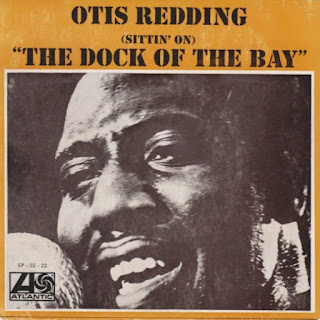


The Dock of the Bay"(Sittin' On) The Dock of the Bay" was released in January 1968 and quickly became Redding's biggest hit, topping both the Pop and R&B charts, earning two Grammy awards, and maturing into a much-covered standard. An LP collection of single sides and unreleased cuts, titled The Dock of the Bay, followed in February 1968, and it was the first of a long string of albums compiled from the material Redding cut in his seven-year recording career. In 1989, Redding was inducted into the Rock & Roll Hall of Fame, he was granted membership into the BMI Songwriters Hall of Fame in 1994, and he received the Grammy Lifetime Achievement Award in 1999.

Monday, 19 August 2019

The R0ll!ng $t0nes - 2012 - C@mden The@tre 1964 FLAC


Route 66/Cops And Robbers/You Better Move On/Mona


 On Thursday Marh 19th,1964 a few days after the Stones found out they were going on their first tour of America in June and the day after they recorded 14 tracks for Radio Luxembourgh, the band went to the Camden Theatre to record a thirty minute BBC radio show.The show itself was part of a series called Blues In  Rhythm broadcast at 9.30 on the morning of Saturday 9th May. The first half of the broadcast was given over to Georgie Fame and The Blue Flames and compered by singer Long John Baldry. He introduced the Stones as "those charming deviationists" They performed Route 66,Cops and Robbers,You Better Move On and Mona in front of an audience that had been imported from the Flamingo Jazz Club where the band had last performed in January 1963.

The Everly Brothers - 1963 - The Golden Hits Of The Everly Brothers FLAC


Cathy's Clown/ Temptation/That's Old Fashioned/Lucille


The Everly Brothers were not only among the most important and best early rock & roll stars, but also among the most influential rockers of any era. They set unmatched standards for close, two-part harmonies and infused early rock & roll with some of the best elements of country and pop music. Their legacy was and is felt enormously in all rock acts that employ harmonies as prime features, from the Beatles and Simon & Garfunkel to legions of country-rockers as well as roots rockers like Dave Edmunds and Nick Lowe (who once recorded an EP of Everlys songs together).

Don (born February 1, 1937) and Phil (born January 19, 1939) were professionals way before their teens, schooled by their accomplished guitarist father Ike, and singing with their family on radio broadcasts in Iowa. In the mid-'50s, they made a brief stab at conventional Nashville country with Columbia. When their single flopped, they were cast adrift for quite a while until they latched onto Cadence. Don invested their first single for the label, "Bye Bye Love," with a Bo Diddley beat that helped lift the song to number two in 1957.

"Bye Bye Love" began a phenomenal three-year string of classic hit singles for Cadence, including "Wake Up Little Susie," "All I Have to Do Is Dream," "Bird Dog," "('Til) I Kissed You," and "When Will I Be Loved." The Everlys sang of young love with a heart-rending yearning and compelling melodies. The harmonies owed audible debts to Appalachian country music, but were imbued with a keen modern pop sensibility that made them more accessible without sacrificing any power or beauty. They were not as raw as the wild rockabilly men from Sun Records, but they could rock hard when they wanted. Even their midtempo numbers and ballads were executed with a force missing in the straight country and pop tunes of the era. The duo enjoyed a top-notch support team of producer Archie Bleyer, great Nashville session players like Chet Atkins, and the brilliant songwriting team of Boudleaux and Felice Bryant. Don, and occasionally Phil, wrote excellent songs of their own as well.

 In 1960, the Everlys left Cadence for a lucrative contract with the then-young Warner Bros. label (though it's not often noted, the Everlys would do a lot to establish Warners as a major force in the record business). It's sometimes been written that the duo never recaptured the magic of their Cadence recordings, but actually Phil and Don peaked both commercially and artistically with their first Warners releases. "Cathy's Clown," their first Warners single, was one of their greatest songs and a number one hit. Their first two Warners LPs, employing a fuller and brasher production than their Cadence work, were not just among their best work, but two of the best rock albums of the early '60s. The hits kept coming for a couple of years, some great ("Walk Right Back," "Temptation"), some displaying a distressing, increasing tendency toward soft pop and maudlin sentiments ("Ebony Eyes," "That's Old Fashioned"). 

 Don and Phil's personal lives came under a lot of stress in the early '60s: they enlisted into the Marine Corps Reserves (together), and studied acting for six months but never made a motion picture. More seriously, Don developed an addiction to speed and almost died of an overdose in late 1962. By that time, their career as chart titans in the U.S. had ended; "That's Old Fashioned" (1962) was their last Top Ten hit. Their albums became careless, erratic affairs, which was all the more frustrating because many of their flop singles of the time were fine, even near-classic efforts that demonstrated they could still deliver the goods.

 Virtually alone among first-generation rock & roll superstars, the Everlys stuck with no-nonsense rock & roll and remained determined to keep their sound contemporary, rather than drifting toward soft pop or country like so many others. Although their mid-'60s recordings were largely ignored in America, they contained some of their finest work, including a ferocious Top 40 single in 1964 ("Gone, Gone, Gone"). They remained big stars overseas -- in 1965, "Price of Love" went to number two in the U.K. at the height of the British Invasion. They incorporated jangling Beatle/Byrdesque guitars into some of their songs and recorded a fine album with the Hollies (who were probably more blatantly influenced by the Everlys than any other British band of the time). In the late '60s, they helped pioneer country-rock with the 1968 album Roots, their most sophisticated and unified full-length statement. None of this revived their career as hitmakers, though they could always command huge audiences on international tours and hosted a network TV variety show in 1970. 

 The decades of enforced professional togetherness finally took their toll on the pair in the early '70s, which saw a few dispirited albums and, finally, an acrimonious breakup in 1973. They spent the next decade performing solo, which only proved -- as is so often the case in close-knit artistic partnerships -- how much each brother needed the other to sound his best. In 1983, enough water had flowed under the bridge for the two to resume performing and recording together. The tours, with a backup band led by guitarist Albert Lee, proved they could still sing well. The records (both live and studio) were fair efforts that, in the final estimation, were not in nearly the same league as their '50s and '60s classics, although Paul McCartney penned a small hit single for them ("On the Wings of a Nightingale"). One of the more successful and dignified reunions in the rock annals, the Everlys continued to perform live, although they didn't release albums together after the late '80s. Phil Everly died on January 3, 2014 from complications of chronic obstructive pulmonary disease; he was 74 years old.


Little Richard - 1956 - Little Richard And His Band FLAC


Rip It Up/Ready Teddy/Tutti Frutti/Long Tall Sally


Richard Wayne Penniman (born December 5, 1932), known as Little Richard, is an American musician, singer and songwriter.

An influential figure in popular music and culture for seven decades, Penniman's most celebrated work dates from the mid-1950s, when his dynamic music and charismatic showmanship laid the foundation for rock and roll. His music also played a key role in the formation of other popular music genres, including soul and funk. Penniman influenced numerous singers and musicians across musical genres from rock to hip hop; his music helped shape rhythm and blues for generations to come, and his performances and headline-making thrust his career right into the mix of American popular music.

Penniman has been honored by many institutions. He was inducted into the Rock and Roll Hall of Fame as part of its first group of inductees in 1986. He was also inducted into the Songwriters Hall of Fame. He is the recipient of a Lifetime Achievement Award from the Recording Academy and a Lifetime Achievement Award from the Rhythm and Blues Foundation. Little Richard's "Tutti Frutti" (1955) was included in the National Recording Registry of the Library of Congress in 2010, which stated that his "unique vocalizing over the irresistible beat announced a new era in music."

In 2015, the National Museum of African American Music honored Little Richard with a Rhapsody & Rhythm Award for his pivotal role in the formation of popular music genres and in helping to shatter the color line on the music charts, changing American culture significantly. Thanks to AussieRock

Monday, 5 August 2019

Tom Jones - 1968 - I'm Coming Home FLAC


I'll Never Fall In Love Again/The Lonely One/Sixteen Tons/I'm Coming Home


"I'll Never Fall in Love Again" is a song written by Lonnie Donegan and Jimmy Currie, and first released by Donegan as a single in 1962. Its most commercially successful recording was by Tom Jones in 1967.

According to Jones

"I did some shows with Lonnie and we became friends.... One night he said: ‘Look, I have this song, you’d sing the pants off it. I've recorded it, but I can't really sing it. It's a sort of a rewrite of a song from the Thirties when the Depression was going on, called 'I'm Never Going To Cease My Wandering.' I knew that song, because a lot of guys used to sing it in pubs in Wales. I went to his house in Virginia Water, and he got this record out to listen to.... With the big chorus on it, it sounded fantastic. He was singing it Lonnie Donegan style, completely different from the way I did, like somebody busking..."

On first release, Tom Jones' recording reached number 2 in the UK Singles Chart but was less successful in the United States where it peaked at number 49 on the Hot 100, and number 28 on the Adult Contemporary chart.

As the follow-up to Jones' "Love Me Tonight", "I'll Never Fall in Love Again" was reissued in 1969 in the US, reaching number six on the Hot 100 and number one on the Adult Contemporary chart.

"Sixteen Tons" was only released as a single in the US where it reached #68 on the Billboard Hot 100 it was the 3rd single of the "Green, Green Grass of Home" album.

"I'm Coming Home"/ "The Lonely One" UK #2  US #57 was a single only release and was written by Les Reed. The songwriter recalled Jones' vocal in 1000 UK #1 Hits by Jon Kutner and Spencer Leigh: "When I recorded it in the studio, he insisted on singing amongst the strings, which is very hard for the engineer but he gave such a performance on that first take that all the musicians had tears in their eyes."