Saturday, 29 October 2016
Oliver - 1970 - Jean
Jean/Let Me Kiss You With A Dream/Can't You See/The Arrangement
William Oliver Swofford (February 22, 1945 – February 12, 2000), known professionally as Oliver, was an American pop singer, best known for his 1969 song "Good Morning Starshine" from the musical Hair as well as "Jean" (the theme from the film The Prime of Miss Jean Brodie).
William Oliver Swofford was born on February 22, 1945, in North Wilkesboro, North Carolina, to Jack and Helen Swofford. . He was a recipient of the prestigious Morehead Scholarship and attended the University of North Carolina at Chapel Hill starting in 1963 and began singing as an undergraduate. He was a member of two popular music groups — The Virginians and, later, The Good Earth — and was then known as Bill Swofford.
His clean-cut good looks and soaring tenor voice were the perfect vehicle for the uptempo single entitled "Good Morning Starshine" from the pop/rock musical Hair, which reached No. 3 on the Billboard Hot 100 in July 1969, sold over one million copies, and was awarded a gold disc by the R.I.A.A. a month later. Later that fall, a softer, ballad single entitled "Jean" (the theme from the Oscar-winning film The Prime of Miss Jean Brodie) bested his previous effort by one, reaching No. 2 on the Hot 100 and No. 1 on the Billboard Easy Listening chart. Written by poet Rod McKuen, "Jean" also sold over one million copies, garnering Oliver his second gold disc in as many months. Performing both hits on a number of TV variety shows and specials in the late 1960s, including The Ed Sullivan Show, helped both songs.
Bill "Oliver" Swofford had more modest commercial success, however, with the cover of "Sunday Mornin'," which peaked at No. 35 in December 1969, and "Angelica," which stalled at No. 97 four months later. In addition, his cover of "I Can Remember," the 1968 James & Bobby Purify hit, missed the Hot 100 but climbed into the top 25 of the Billboard Easy Listening chart in the mid summer of 1970. Late that fall, Oliver also had one inspirational recording entitled "Light the Way," composed by Eric Carmen. Oliver's last single to enter the pop music charts was his 1971 cover of "Early Morning Rain" by Canadian singer-songwriter Gordon Lightfoot. The song "Bubbled Under" at No. 124 on May 1, 1971 and also reached No. 38 the Easy Listening chart a few weeks later.
Friday, 14 October 2016
Nancy And Lee - 1971 - Did You Ever
Did You Ever/Jackson/Lightning's Girl/Lady Bird
Nancy & Lee is a collaboration EP by Nancy Sinatra and Lee Hazlewood.
Sinatra was signed to her father's label, Reprise Records, in 1961. Her first single, "Cuff Links and a Tie Clip", went largely unnoticed. However, subsequent singles charted in Europe and Japan. Without a hit in the US by 1965, she was on the verge of being dropped. Her singing career received a boost with the help of songwriter/producer/arranger Lee Hazlewood, who had been making records for ten years, notably with Duane Eddy. Hazlewood became Sinatra's inspiration. He had her sing in a lower key and crafted songs for her. Bolstered by an image overhaul including bleached-blonde hair, frosted lips, heavy eye make-up and Carnaby Street fashions Sinatra made her mark on the American (and British) music scene in early 1966 with "These Boots Are Made for Walkin''", its title inspired by a line in Robert Aldrich's 1963 western comedy 4 for Texas starring her father and Dean Martin. One of her many hits written by Hazlewood, it received three Grammy Award nominations, including two for Sinatra and one for arranger Billy Strange. It sold over one million copies, and was awarded a gold disc. She appeared on TV in high boots, and with colorfully dressed go-go dancers, a craze during the late Sixties, and created a popular and enduring image of the Swinging Sixties.
The Sunshine Company - 1968 - The Sunshine Company
Back On The Street Again/ I Just Want To Be Your Friend/Happy/Blue May
The Sunshine Company was an American sunshine pop band from Los Angeles, California. Originally the duo of Mary Nance and Maury Manseau, the group signed to Imperial Records and released their debut album in 1967. They scored three hit singles on the U.S. singles chart over the next two years before disbanding after their third album, 1968's self-titled effort. Bassist Larry Sims and drummer Merle Bregante later backed Loggins and Messina.
The group was discovered by band manager of the Nitty Gritty Dirt Band, Bill McEuen. McEuen proposed they record a single, titled Up, Up and Away, which would have been released had not the 5th Dimension released their own top ten version. Their first released single, "Happy", charted at number 50 nationally, while competing with another version by The Blades of Grass, and the band put The Sunshine Company to its name. Guitarist Douglas Mark joined to form a quintet as the band released their top 40 hit, "Back On the Street Again", but the band never again achieved such success.
By the fall of 1967, the band released their debut LP under Imperial Records, titled Happy Is The Sunshine Company. It included their two charting singles and charted at number 126 on the Billboard 200. In 1968, the group released their last top 100 charting single, "Look Here Comes The Sun", charting at number 56. A further two albums were released in the year but success eluded the band. There was a proposed fourth album Think but The Sunshine Company broke up before recordings were complete.
Bregante now lives in Liberty Hill, Texas, where he has his own recording studio. Sims died in December 2014.
Members Mary Nance - vocals Maury Manseau - vocals, guitar Douglas Mark - violin, guitar Larry Sims - bass guitar Merel Bregante - drums (usually referred to as Merel Brigante) Dave Hodgkins - acoustic guitar (1968)
Album discography
Happy Is the Sunshine Company (Imperial Records, 1967) U.S. #126
The Sunshine Company (Imperial, 1968)
Sunshine & Shadows (Imperial, 1968)
Charting singles
"Happy" (15 July 1967) U.S. #50
"Back on the Street Again" (25 November 1967) U.S. #36
"Look, Here Comes the Sun" (10 February 1968) U.S. #56
"Let's Get Together" (18 May 1968) U.S. #112
"On a Beautiful Day" (27 July 1968) U.S. #106
"Willie Jean" (19 October 1968) U.S. #111
Cr0sby St!lls and N@sh - 1969 - M@rr@kesh Express
Marrakesh Express/ Lady Of The Island/Pre-Road Downs/Helplessly Hoping
The musical partnership of David Crosby, Stephen Stills, and Graham Nash, with and without Neil Young, was not only one of the most successful touring and recording acts of the late '60s, '70s, and early '80s (with the colorful, contrasting nature of the members' characters and their connection to the political and cultural upheavals of the time), it was the only American-based band to approach the overall societal impact of the Beatles.
The group was a second marriage for all the participants when it came together in 1968: Crosby had been a member of the Byrds, Nash was in the Hollies, and Stills had been part of Buffalo Springfield. The resulting trio, however, sounded like none of its predecessors and was characterized by a unique vocal blend and a musical approach that ranged from acoustic folk to melodic pop to hard rock. Crosby, Stills & Nash, released in 1969, was perfectly in tune with the times, and the group proved an instant hit. By the time of their first tour (which included the Woodstock festival), they had added Young, also a veteran of Buffalo Springfield, who maintained a solo career.
The first CSNY album, Déjà Vu, was a chart-topping hit in 1970, but the group split acrimoniously after a summer tour. Four Way Street, a live double album issued after the breakup, was another number one hit. In 1974, CSNY re-formed for a summer stadium tour without releasing a new record -- nevertheless, the compilation So Far became their third straight number one. Crosby, Stills & Nash re-formed without Young in 1977 for the album CSN, another giant hit. They followed with Daylight Again in 1982, but by then Crosby was in the throes of drug addiction and increasing legal problems. He was in jail in 1985-1986, but cleaned up and returned to action, with the result that CSNY reunited for only their second studio album, American Dream, in 1988.
CSN followed with Live It Up in 1990, and though that album was a commercial disappointment, the trio remained a popular live act; it embarked on a 25th anniversary tour in the summer of 1994 and released a new album, After the Storm. The trio again reunited with Young for 1999's Looking Forward, followed in 2000 by their CSNY2K tour. A DVD/CD set, CSN 2012, was filmed and recorded during a 2012 tour, and released that same year.
New link added. 26.11.2018
Big Brother And The Holding Company - 1967 - Big Brother And The Holding Company
Intruder/Women Is Losers/Down on Me/The Last Time
Big Brother are primarily remembered as the group that gave Janis Joplin her start. There's no denying both that Joplin was by far the band's most striking asset, and that Big Brother would never have made a significant impression if they hadn't been fortunate enough to add her to their lineup shortly after forming. But Big Brother also occupies a significant place in the history of San Francisco psychedelic rock, as one of the bands that best captured the era's loosest, reckless, and indulgent qualities in its high-energy mutations of blues and folk-rock.
Big Brother were formed in 1965 in the Haight-Ashbury; by the time Joplin joined in mid-1966, the lineup was Sam Andrew and James Gurley on guitar, Peter Albin on bass, and David Getz on drums. Joplin, a recent arrival from Texas, entered the band at the instigation of Chet Helms, who (other than Bill Graham) was the most important San Francisco rock promoter. Big Brother, like the Grateful Dead and Quicksilver Messenger Service, were not great songwriters or singers. They didn't entirely welcome Joplin's presence at first, though, and Joplin did not dominate the group right away, sharing the lead vocals with other members.
It soon became evident to both band and audience that Joplin's fiery wail mature and emotionally wrenching, even at that early stage had to be spotlighted to make Big Brother a contender. But Big Brother weren't superfluous to the effort, interpreting folk and blues with an inventive (if sometimes sloppy) eclecticism that often gave way to distorted guitar jamming, and matching Joplin's passion with a high-spirited, anything-goes ethos of their own.
Big Brother catapulted themselves into national attention with their performance at the Monterey Pop Festival in June 1967, particularly with Joplin's galvanizing interpretation of "Ball and Chain" (which was a highlight of the film of the event). High-powered management and record label bids rolled in immediately, but unfortunately Big Brother had tied themselves up in a bad contract with the small Mainstream label, at a time when they were stranded on the road and needed cash. Their one Mainstream album (released in 1967) actually isn't bad at all, containing some of their stronger cuts, such as "Down on Me" and "Coo Coo." It didn't fully capture the band's strengths, and with the help of new high-powered manager Albert Grossman (also handler of Bob Dylan, the Band, and Peter, Paul & Mary), they extricated themselves from the Mainstream deal and signed with Columbia.
The one Big Brother album for Columbia that featured Joplin, Cheap Thrills (1968), wasn't completed without problems of its own. John Simon found the band so difficult to work with that he withdrew his production credit from the final LP, which was assembled from both studio sessions and live material (recorded for an aborted concert album). Cheap Thrills nonetheless went to number one when it was finally released, and though it too was an erratic affair, it contained some of the best moments of acid rock's glory days, including "Ball and Chain," "Summertime," "Combination of the Two," and "Piece of My Heart."
Cheap Thrills made Big Brother superstars, a designation that was short-lived. By the end of 1968, Joplin had decided to go solo, a move from which neither she nor Big Brother ever fully recovered. That's putting matters too simply Joplin never found a backing band as sympathetic, but did record some excellent material in the remaining two years of her life. Big Brother, on the other hand, had the wind totally knocked out of their sails. Although they did re-form for a while in the early '70s with different singers (indeed, they continued to perform in watered-down variations into the '90s), nothing would ever be the same.
New link installed 20.11.2018.
Sunday, 9 October 2016
Nancy Sinatra - 1967 - Sugar
Sugar Town/Coastin'/All By Myself/What'll I Do
Nancy Sinatra is an American singer best known as the daughter of Frank Sinatra and for her 1966 hit single "These Boots Are Made for Walkin'."
American singer Nancy Sinatra, the daughter of legendary crooner Frank Sinatra, was born on June 8, 1940. Nancy's No. 1 hit single in 1966, "These Boots Are Made for Walkin'," forever associated go-go boots with her name. Known for her sexy girl-next-door image, she was a favorite pin-up of troops during the Vietnam War. After a brief hiatus in the 1980s to help raise her family, Sinatra returned to the music scene in 1995. She continues to work in the music industry today.
Early Life
Nancy Sinatra was born on June 8, 1940, in Jersey City, New Jersey. She was the eldest of three children born to famed crooner Frank Sinatra and his wife, Nancy Barbato Sinatra.
Sinatra started her career in 1960, debuting on The Frank Sinatra Timex Show. Within the year Reprise Records signed her, but though she was popular in Europe and Japan, none of her songs made the U.S. charts. Things turned around in 1966 when, armed with a new tough and sexy image, she hit No. 1 with her single, "These Boots Are Made for Walkin'." This success would tie go-go boots to the singer throughout her career.
Appearances on TV ensued, with roles in the films The Ghost in the Invisible Bikini (1966), Last of the Secret Agents? (1967), The Wild Angels (1967) and Speedway, alongside Elvis Presley (1968), and TV shows like The Smothers Brothers Show, The Ed Sullivan Show and The Man From U.N.C.L.E. Sinatra also conceived and produced the Emmy-winning television special Movin' With Nancy.
Though she enjoyed acting, her focus remained on singing. Most of her hits were produced by Lee Hazlewood, and from 1966 through 1967 she scored many hit singles, including "How Does That Grab You, Darlin?" (No. 7) and "Sugar Town" (No. 4). She also recorded the theme song to the James Bond film You Only Live Twice, and had a No. 1 hit record with her father, titled "Somethin' Stupid." Other popular songs included duets she recorded with Hazlewood, including "Sand," "Summer Wine" and "Some Velvet Morning."
Sinatra's popularity and looks made her a favorite pinup for GIs during the Vietnam War. Nancy in turn supported the troops by performing for them overseas.
In the 1970s she continued to record songs, but pulled out of the spotlight to raise her family. In addition to singing, Sinatra wrote two books about her famous father: Frank Sinatra, My Father (1985) and Frank Sinatra: An American Legend (1998).
In 1995 the 54-year-old Sinatra sought a comeback, recording her One More Time album, touring and posing in a Playboy pictorial.
In 2003 Sinatra partnered with Hazlewood to record the album Nancy & Lee 3, in which was released only outside of the United States. The next year the disc Nancy Sinatra debuted.
For her accomplished decades-long career, Sinatra received a star on the Hollywood Walk of Fame in 2006. The following year, she launched a weekly three-hour Sirius Satellite Radio show, Nancy for Frank, and hosted Siriusly Sinatra.
She released a digital-only project called Cherry Smiles—The Rare Singles in 2009, and today continues to record and collaborate on music projects.
Personal Life
Sinatra married teen singing idol Tommy Sands in 1960, and they divorced just a few years later. In 1970 she married Hugh Lambert and briefly stepped out of the spotlight to raise her two daughters. Lambert died from cancer in 1985.
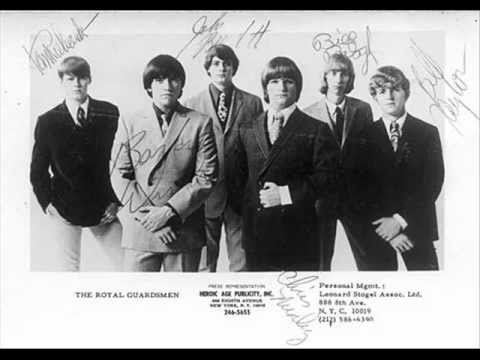
Royal Guardsmen - Snoopy's Big 4
Snoopy Versus The Red Baron/The Return Of The Red Baron/Airplane Song/Snoopy's Christmas
The Royal Guardsmen are an American rock band, best known for their 1966 hit single "Snoopy vs. the Red Baron" , "The Return of The Red Baron" and the Christmas follow up "Snoopy's Christmas". Plus their non-novelty hit "Baby Let's Wait".
Originally known as the Posmen, the Ocala, Florida-based sextet adopted their anglophile moniker during the British Invasion, led by The Beatles and other British artists. The group was originally composed of Bill Balough (bass), John Burdett (drums), Chris Nunley (vocals), Tom Richards (guitar), Billy Taylor (organ), and Barry Winslow (vocals/guitar).
Although the Guardsmen's first single, "Baby Let's Wait", failed to reach national success, this tune reached a position of no lower than #11 according to the 12 November 1966 WYND hit parade. This group's second offering, "Snoopy vs. the Red Baron", reached #2 in the Billboard Hot 100, remained in the bestsellers for 12 weeks, and was certified gold by the RIAA in February 1967.
Since the band did not ask Peanuts creator Charles M. Schulz for permission, the Canadian arm of Laurie Records refused to issue the single until the legal problems were ironed out: instead, the band recorded the thinly-disguised "Squeaky vs. the Black Knight", which was released north of the border and became a hit at least one Canadian station. Eventually, Schulz gave his okay, and "Snoopy vs. the Red Baron" was released in Canada.
Snoopy, the Red Baron, and aircraft became recurring themes in their music, though they did have some chart singles on other topics, including "Any Wednesday", "I Say Love", and the Top 40 hit "Baby Let's Wait", a re-release of their first single.
The original group split in 1969, but a band with some replacement players continued for another year. Two compilation albums and the original albums (doubled up) have been released on compact disc. Tom Richards died in 1979 and Pat Waddell became lead guitarist. Waddell with several former bands throughout Central Florida got his start as Bass guitar with a local Ocala garage band, with Corey Richards, (younger brother of Tom Richards of the Guardsmen) (lead vocals), Harold Rankin, (Rhythm guitar), Mike Driver, (Lead Guitar), Terry Walters, (Drums)
The Royal Guardsmen made a comeback in December 2006, when they released a new Snoopy song, "Snoopy vs. Osama", which became a hit on The Dr. Demento Show. Rick Cosner has been the alternate drummer since 2006, substituting for John Burdett as needed. The current band performs regularly around the United States.
New link installed 26.11.2018
Joe Tex - The Explosive Joe Tex
Show Me/A Woman Sees a Hard Time (When Her Man Is Gone)/Papa Was Too/The Truest Woman in the World
A classic Southern soul singer of the '60s and early '70s known for his ecstatic vocals and secular sermons.
Joe Tex made the first Southern soul record that also hit on the pop charts ("Hold What You've Got," in 1965, made number five in Billboard). His raspy-voiced, jackleg preacher style also laid some of the most important parts of rap's foundation. He is, arguably, the most underrated of all the '60s soul performers associated with Atlantic Records, although his records were more likely than those of most soul stars to become crossover hits.
Tex was born Joseph Arrington in Rogers, TX, in 1933, and displayed his vocal talent quickly, first in gospel, then in R&B. By 1954, he'd won a local talent contest and come to New York, where he recorded a variety of derivative (and endlessly repackaged) singles for King, some as a ballad singer, some as a Little Richard-style rocker.
Tex's career didn't take off until he began his association with Nashville song publisher Buddy Killen, after Tex wrote James Brown's 1961 song "Baby You're Right." In 1965, Killen took him to Muscle Shoals, not yet a fashionable recording center, and they came up with "Hold What You've Got," which is about as close to a straight R&B ballad as Tex ever came. It was followed by a herd more, most of which made the R&B charts, a few cracking the pop Top 40.
Tex made his mark by preaching over tough hard soul tracks, clowning at some points, swooping into a croon at others. He was perhaps the most rustic and back-country of the soul stars, a role he played to the hilt by using turns of phrase that might have been heard on any ghetto street corner, "One Monkey Don't Stop No Show" the prototype. In 1966, his "I Believe I'm Gonna Make It," an imaginary letter home from Vietnam, became the first big hit directly associated with that war. His biggest hit was "Skinny Legs and All," from a 1967 live album, his rapping pure hokum over deeply funky riffs. "Skinny Legs" might have served as a template for all the raucous, ribald hip-hop hits of pop's future.
After "Skinny Legs," Tex had nothing but minor hits for five years until "I Gotcha" took off, a grittier twist on the funk that was becoming disco. He was too down-home for the slickness of the disco era, or so it would have seemed, yet in 1977, he adapted a dance craze, the Bump, and came up with the hilarious "Ain't Gonna Bump No More (With No Big Fat Woman)," his last Top Ten R&B hit, which also crossed over to number 12 on the pop chart.
In the early '70s, Tex converted to Islam and in 1972 changed his offstage name to Joseph Hazziez. He spent much of the time after "Ain't Gonna Bump" on his Texas farm, although he did join together with Wilson Pickett, Ben E. King, and Don Covay for a reformed version of the Soul Clan in 1980. He died of a heart attack in 1982, only 49 years old. Killen, King, Covay, Pickett, and the great songwriter Percy Mayfield served as pallbearers.
New link added 26.11.2018
L3d Z3pp3l!n - 1972 - Th!s Is L{d Zepp{l!n
Whole Lotta Love/Good Times Bad Times/Immigrant Song/Hey Hey What Can I Do
What the Beatles were to the '60s, Led Zeppelin were to the '70s: a band so successful and innovative they wound up creating the prism through which their entire epoch was seen. Zeppelin ushered in the era of album rock -- they refused to release singles off their albums, even when they were garnering massive radio play -- and of arena rock, playing ever-larger stadiums as their ticket sales skyrocketed. Other bands played on a similar field but Led Zeppelin carried a unique mystique cultivated by cryptic album art, distance from the press, and, of course, their music. Drawing upon postwar electric blues, early rock & roll, and psychedelia, Zeppelin created a titanic roar in their earliest days but even then they weren't merely heavy. Underneath the wattage, there was a strong undercurrent of folk-rock and the quartet would soon thread in world music, funk, country, and synthesizers, creating an adventurous body of work that had a long, lasting influence on hard rock, heavy metal, and alternative rock.
Quite a feat for a band whose origins lie in the ashes of the pioneering British rock band the Yardbirds. Jimmy Page, a guitarist who made his reputation as a session man in the '60s, joined the band in 1966, functioning as the replacement for bassist Paul Samwell-Smith, but he soon split lead guitar duties with Jeff Beck and took over that position entirely once Beck departed. Page contributed heavily to the band's final album, 1967's Little Games, which also saw contributions from John Paul Jones, a bassist and string arranger who also ran in the same studio circles as Page; the two played on Beck's 1966 single "Beck's Bolero," which also featured Keith Moon. Under the direction of their new manager Peter Grant, the Yardbirds supported the album with a tour of the United States, but the group was in its final days. Just before the band's dissolution, Page filled the time with session work, including a spring 1968 session where he played on Jones' arrangement of Donovan's "Hurdy Gurdy Man." During the sessions, Jones requested to be part of any future project of Page's. This future project materialized quickly. In the summer of 1968, the Yardbirds' Keith Relf and James McCarty left the band, leaving Page and bassist Chris Dreja with the rights to the name, along with the obligation of fulfilling an upcoming fall tour. Page set out to find a replacement vocalist and drummer. Initially, he wanted to enlist singer Terry Reid and Procol Harum's drummer B.J. Wilson, but neither musician was able to join the group. Reid suggested that Page contact Robert Plant, who was singing with a band called Hobbstweedle.
After hearing him sing, Page asked Plant to join the band in August of 1968, the same month Chris Dreja dropped out of the new project. Following Dreja's departure, John Paul Jones joined the group as its bassist. Plant recommended that Page hire John Bonham, the drummer for Plant's old band, the Band of Joy. Bonham had to be persuaded to join the group, as he was being courted by other artists who offered the drummer considerably more money. By September, Bonham agreed to join the band. Performing under the name the New Yardbirds, the band fulfilled the Yardbirds' previously booked Scandinavian engagements in late September 1968. The following month, they recorded their debut album in just under 30 hours. Also in October, Dreja informed Page he had the rights to the New Yardbirds name for the live dates only, so the group switched its name to Led Zeppelin. Grant helped the band sign a record-setting contract with Atlantic Records in the United States before the end of the year; they were paid a reported $200,000 advance, at that date the largest sum for any new band. Early in 1969, Led Zeppelin set out on their first American tour, which helped set the stage for the January release of their eponymous debut album. Two months after its release, Led Zeppelin had climbed into the U.S. Top Ten. Throughout 1969, the band toured relentlessly, playing dates in America and England. While they were on the road, they recorded their second album, Led Zeppelin II, and that speed gave the record's loud, riff-heavy blues a palpable urgency.
Like its predecessor, Led Zeppelin II was an immediate hit upon its October 1969 release, topping the American charts two months after its release and spending seven weeks at number one. The album helped establish Led Zeppelin as an international concert attraction, and for the next year, the group continued to tour relentlessly. Led Zeppelin started to broaden their horizons with Led Zeppelin III. Recorded in a cottage in Wales and released in October of 1970, the album saw them weaving British folk into their heavy rock, a hybrid that deepened the band's sound. Led Zeppelin III reached number one in both the U.K. and U.S. but, comparatively, sales were softer for this record than the two previous blockbusters; it never earned a platinum certification in the U.K. but, over the years, it went platinum six times in the U.S., a sign of its reputation as one of band's most distinctive records. Despite Zeppelin's stated aversion to singles, they did support III with the release of "Immigrant Song" as a 7" in the States, backed with the non-LP "Hey, Hey What Can I Do," their only B-side to not appear on an album. Led Zeppelin didn't tour as heavily behind Led Zeppelin III as they did Led Zeppelin II, but they were well on their way to consolidating their status as one of the most popular attractions in rock. Their next record, an untitled record commonly referred to as Led Zeppelin IV, cemented that reputation. Released in November 1971, Led Zeppelin IV merged the heavy blues of II with the folk mysticism of III and at the crossroads of those two extremes lay "Stairway to Heaven," an eight-minute epic that encapsulated much of Zep's majesty. "Stairway to Heaven" was an immediate radio hit, eventually becoming the most played song in the history of album-oriented radio; the song was never released as a single. Despite the fact that the album never reached number one in America, Led Zeppelin IV was their biggest album ever, selling well over 37 million copies over the next four decades.
Led Zeppelin supported Led Zeppelin IV with their biggest tour to date -- biggest according to size, not dates. All around the world they made the leap into stadiums and sports arenas, pioneering a circuit that became commonplace later in the decade, leaving legends of excess along the way. After completing their 1972 tour, they retreated from the spotlight and recorded their fifth album, Houses of the Holy. Appearing in March 1973, Houses of the Holy found them weaving in touches of funk and reggae amidst their crunching rock and seven-minute epics. Once again, Zeppelin had another smash album on their hands and its success led to an American tour that broke box-office records -- most of which were previously held by the Beatles. The band's tour culminated in a three-night stand at New York's Madison Square Garden in July 1973, a stint that was filmed and released as the concert film The Song Remains the Same in 1976. Following this record-breaking tour, Led Zeppelin spent a quiet year during 1974, releasing no new material and performing no concerts. They did, however, establish their own record label, Swan Song, which released all of Led Zeppelin's subsequent albums, as well as records by Dave Edmunds, Bad Company, the Pretty Things, and several other acts. Physical Graffiti, a double album released in February of 1975, was the band's first release on Swan Song. The album was an immediate success, topping the charts in both America and England. Led Zeppelin launched an international tour with a five-night stint at London's Earls Court but on the eve of the American leg that fall, Robert Plant and his wife suffered a serious car crash while vacationing in Greece. The tour was canceled and Plant spent the rest of the year recuperating from the accident.
s Plant recovered, the band headed to Malibu to record a new album. The resulting Presence appeared in the spring of 1976 and while it debuted at number one in both the U.S. and U.K., sales lagged slightly, possibly due to the band's decision not to tour in support of the album. Instead, they released the film The Song Remains the Same, which appeared in the fall of 1976; its soundtrack peaked at number one in the U.K. and number two in the U.S. Zeppelin finally returned to the stage in the spring of 1977 with a tour of the United States (the U.K. was off limits, as the band decided to take a tax exile). The concerts raked in money but nearly three months into the tour, Plant's six-year-old son Karac died of a stomach infection. Led Zeppelin immediately canceled the tour and offered no word whether or not it would be rescheduled, causing widespread speculation about the band's future. For a while, it did appear that Led Zeppelin were finished. Robert Plant spent the latter half of 1977 and the better part of 1978 in seclusion. The group didn't begin work on a new album until late 1978, when they began recording at ABBA's Polar Studios in Sweden. A year later, the band played a short European tour, performing in Switzerland, Germany, Holland, Belgium, and Austria. In August of 1979, Led Zeppelin played two large concerts at Knebworth; the shows were their first English performances in four years and would be their last English concerts.
In Through the Out Door, the band's much-delayed eighth studio album, was finally released in September of 1979. The album entered the charts at number one in both America and England. In May of 1980, Led Zeppelin embarked on their final European tour. In September, they began rehearsing at Jimmy Page's house in preparation for an American tour. On September 25, John Bonham was found dead in his bed -- following an all-day drinking binge, he had passed out and choked on his own vomit. In December of 1980, Led Zeppelin announced they were disbanding, since they could not continue without Bonham.
New link installed.
The Dakotas - 1964 - Meet The Dakotas
Cruel Sea/Cruel Sea/Magic Carpet/Humdinger
The Dakotas is a group of British musicians, which initially convened as a backing band in Manchester, England. However, they are most closely associated with the singer Billy J. Kramer, a Liverpudlian who was the lead vocalist for the group during the 1960s. In the USA they are regarded as part of the British invasion.
The group's name arose from an engagement at the Plaza Ballroom in Oxford Street, Manchester. Their manager asked the group to return the next week dressed as Indians and called the Dakotas, founded in September 1960 by rhythm guitarist Robin MacDonald, with Bryn Jones on lead guitar; Tony Bookbinder (Elkie Brooks older brother,also known as Tony Mansfield) on drums, and Ian Fraser on bass. Ray Jones joined the band as bassist replacing Ian Fraser, and Mike Maxfield joined the band in February 1962 as lead guitarist replacing Bryn Jones after being with a Manchester band called the Coasters. The group first backed Pete MacLaine (February 1962 – January 1963). However, Brian Epstein, who was managing Billy J. Kramer, made the Dakotas an offer to become Kramer's backing band, which they accepted. Epstein insisted the name was Billy J Kramer with The Dakotas, not "and". The group and Billy J Kramer then went to Hamburg to perfect their act.
In addition to backing Kramer on his hits, the group itself is perhaps best known for their instrumental single called "The Cruel Sea", a composition of Maxfield that reached No.18 in the UK charts in July 1963. The track was re-titled "The Cruel Surf" in the U.S., and was subsequently covered by The Ventures.
The band released by "Magic Carpet" by George Martin in September 1963. It was not a hit. Their next single, "Oyeh" (November 1964), was not a chart success either.
After a row with Epstein, Ray Jones left the group in July 1964. Robin MacDonald moved to bass to make way for a new lead guitarist, Mick Green from Johnny Kidd and The Pirates, and the band continued to record with Kramer and under their own name. Maxfield left to concentrate on songwriting in 1965, leaving the Dakotas as a trio, while ex-Pirate Frank Farley replaced Mansfield on drums in 1966. However, the decline of Kramer's career through alcoholism also caused the decline of the Dakotas' career. He parted from the group in September 1967, and the band folded the following year. MacDonald, Green and Farley then joined Cliff Bennet's backing band.
The Dakotas reformed in the late 1980s and recruited vocalist Eddie Mooney and session musician Toni Baker. After original drummer Tony Mansfield left to pursue a career in finance and Mike Maxfield suffered a stroke, drummer Pete Hilton and guitarist Alan Clare were added. In recent years, the band has appeared on nostalgia 1960s package tours in their own right, as well as backing artists such as Peter Noone of Herman's Hermits, Wayne Fontana, and John Walker of the Walker Brothers. In 2004 the Dakotas worked with British comedian Peter Kay on hit TV series Phoenix Nights, and Max and Paddy. Toni Baker co-wrote all the music with Peter Kay.
In December 2007, Eddie Mooney was invited to front The Fortunes whose lead singer, Rod Allen died after a sudden illness. This led to him joining the band full-time. Since December 2010 the Dakotas gained a new bass player in Marius Jones, and a new frontman in Ronnie Ravey, taking the band back to the original formula of a 5 piece outfit.
The Dakotas still tour and record, but none of the members from the 1960s play with the group, although Mike Maxfield, the original guitarist, is still involved behind the scenes.
Thin Lizzy - 1980 - Star Trax FLAC
Jailbreak/ Johnny The Fox Meets Jimmy the Weed/The Boys Are Back In Town/Waiting For An Alibi
Despite a huge hit single in the mid-'70s ("The Boys Are Back in Town") and becoming a popular act with hard rock/heavy metal fans, Thin Lizzy are still, in the pantheon of '70s rock bands, underappreciated. Formed in the late '60s by Irish singer/songwriter/bassist Phil Lynott, Lizzy, though not the first band to do so, combined romanticized working-class sentiments with their ferocious, twin-lead guitar attack. As the band's creative force, Lynott was a more insightful and intelligent writer than many of his ilk, preferring slice-of-life working-class dramas of love and hate influenced by Bob Dylan, Bruce Springsteen, and virtually all of the Irish literary tradition. Also, as a black man, Lynott was an anomaly in the nearly all-white world of hard rock, and as such imbued much of his work with a sense of alienation; he was the outsider, the romantic guy from the other side of the tracks, a self-styled poet of the lovelorn and downtrodden. His sweeping vision and writerly impulses at times gave way to pretentious songs aspiring to clichéd notions of literary significance, but Lynott's limitless charisma made even the most misguided moments worth hearing.
After a few early records that hinted at the band's potential, Lizzy released Fighting in 1975, and the band (Lynott, guitarists Brian Robertson and Scott Gorham, and drummer Brian Downey) had molded itself into a pretty tight recording and performing unit. Lynott's thick, soulful vocals were the perfect vehicle for his tightly written melodic lines. Gorham and Robertson generally played lead lines in harmonic tandem, while Downey (a great drummer who had equal amounts of power and style) drove the engine. Lizzy's big break came with their next album, Jailbreak, and the record's first single, "The Boys Are Back in Town." A paean to the joys of working-class guys letting loose, the song resembled similar odes by Bruce Springsteen, with the exception of the Who-like power chords in the chorus. With the support of radio and every frat boy in America, "Boys" became a huge hit, enough of a hit as to ensure record contracts and media attention for the next decade ("Boys" is now used in beer advertising).
Never the toast of critics (the majority writing in the '70s hated hard rock and heavy metal), Lizzy toured relentlessly, building an unassailable reputation as a terrific live band, despite the lead guitar spot becoming a revolving door (Eric Bell, Gary Moore, Brian Robertson, Snowy White, and John Sykes all stood next to Scott Gorham). The records came fast and furious, and despite attempts to repeat the formula that worked like a charm with "Boys," Lynott began writing more ambitious songs and wrapping them up in vaguely articulated concept albums. The large fan base the band had built as a result of "Boys" turned into a smaller, yet still enthusiastic bunch of hard rockers. Adding insult to injury was the rise of punk rock, which Lynott vigorously supported, but made Lizzy look too traditional and too much like tired old rock stars.
By the mid-'80s, resembling the dinosaur that punk rock wanted to annihilate, Thin Lizzy called it a career. Lynott recorded solo records that more explicitly examined issues of class and race, published a now-out-of-print book of poetry, and sadly, became a victim of his longtime abuse of heroin, cocaine, and alcohol, dying in 1986 at age 35. Since the mega-popular alternative rock bands of the mid-'90s appropriated numerous musical messages from their '70s forebears, the work of Phil Lynott and Thin Lizzy will hopefully continue to be seen for the influential rock & roll it is.
New link installed 10.01.2022
The Young Rascals - It's Wonderful FLAC
Nineteen Fifty Six/What Is The Reason/It's Wonderful/Of Course
The Rascals (initially known as The Young Rascals) were an American rock band, formed in Garfield, New Jersey in 1965. Between 1966 and 1968 the New Jersey act reached the top 20 of the Billboard Hot 100 with nine singles, including the #1s "Good Lovin'" (1966), "Groovin'" (1967), and "People Got to Be Free" (1968), as well as big radio hits such as the much-covered "How Can I Be Sure?" (#4 1967) and "A Beautiful Morning" (#3 1968), plus another critical favorite "A Girl Like You" (#10 1967). The band were inducted into the Rock and Roll Hall of Fame in 1997.
The Rascals were inducted into the Hit Parade Hall of Fame in 2010 and also reunited in 2012 for a series of shows in New York and New Jersey. The reunion continued on in 2013 with shows on Broadway.
Eddie Brigati (vocals), Felix Cavaliere (keyboard, vocals), Gene Cornish (guitar) and Dino Danelli (drums) started the band in Brigati and Danelli's hometown of Garfield, New Jersey. Brigati, Cavaliere, and Cornish had previously been members of Joey Dee and the Starliters. Eddie's brother, David Brigati, an original Starliter, helped arrange the vocal harmonies and sang backgrounds on many of the group's recordings (informally earning the designation as the "fifth Rascal"). When Atlantic Records signed them, they discovered that another group, Borrah Minnevitch's and Johnny Puleo's 'Harmonica Rascals', objected to their release of records under the name 'The Rascals'. To avoid conflict, manager Sid Bernstein decided to rename the group 'The Young Rascals'.
The Young Rascals' first television performance was on the program Hullabaloo on 27 February 1965 where they performed their debut single "I Ain't Gonna Eat Out My Heart Anymore". The track reached #23 in Canada and touched the lower reaches of the US charts. This modest success was followed by the US/Canada #1 single "Good Lovin'" (1966, originally recorded by Lemme B. Good & The Olympics in 1965 with much different lyrics).
The band's songwriting team of Eddie Brigati and Cavaliere then began providing most of their songs, and the hits kept coming for two years. Their immediate follow-ups to "Good Lovin'", including "You Better Run" (1966; covered in 1980 by Pat Benatar) and "Come On Up" were only modest hits. "(I've Been) Lonely Too Long" (1967) did better, and "Groovin'"[3] (#1 US/Canada, 1967) returned them to the top of the charts. They reeled off a succession of top 20 US hits, including "A Girl Like You" (1967), "How Can I Be Sure" (1967), "It's Wonderful" (1968), and "A Beautiful Morning" (1968). The band were exceptionally popular in Canada where "A Girl Like You", "How Can I Be Sure?", and "A Beautiful Morning" all reached #1. But they struggled in the UK, where they only twice reached the top 75, with "Groovin'" (#8) and "A Girl Like You" (#35). The band would bill themselves as the Young Rascals for the last time with the single release of "It's Wonderful"; they were known thenceforwards as simply 'the Rascals'.
Time Peace: The Rascals' Greatest Hits, released in mid-1968, topped the U.S. album chart and became the group's best-selling album. The same year, "People Got to Be Free", a horn-punctuated plea for racial tolerance (the band was known for refusing to tour on segregated bills) in the wake of the assassinations that year of Senator Robert F. Kennedy and Reverend Martin Luther King, Jr., became their third and final U.S. #1 single, and their sixth and final Canadian #1. It was also their final U.S. Top Ten hit, although they remained a Canadian top 10 act for the next few years.
"A Ray of Hope", "Heaven", "See", and "Carry Me Back" were all modest U.S. hits for the band during late 1968 and 1969; all entered the top 40, but none higher than #24. In Canada, however, the Rascals were still major stars; all these songs went top ten, completing a run of 11 straight Canadian top ten hits for The Rascals from 1967 to 1969. December 1969's "Hold On" broke the run of top 40 US singles for the Rascals, stalling at #51, as well as the run of Canadian top tens, peaking at #22.
During their period of greatest celebrity, the band's influence on aspiring R & B-flavored white acts was without equal, especially in the northeastern U.S. Notable bands that incorporated (sometimes to the point of parody) the Rascals' full-on stage demeanor and energy as well as the intense, hyper-dramatic vocalizing, drumstick-spinning gyrations and heavy bottom-end rhythm also achieved some prominence: the Vagrants (featuring Leslie West, later of Mountain), and the epitome of over-the-top funky psychedelia, the Vanilla Fudge, all owed their styles to the Rascals' synthesis of show-biz and soul.
Brigati left the group in 1970, followed by Cornish in 1971. Their last Rascals album was Search and Nearness (#198 U.S.), which featured Brigati's lead vocals on the Cornish-penned "You Don't Know" and a cover of The Box Tops' hit "The Letter", and drummer Danelli's composition "Fortunes". The only single release from the album was the spiritually themed "Glory, Glory" (#58 U.S., #40 Canada), with backing vocals by The Sweet Inspirations. Search and Nearness would be the Rascals' last album for Atlantic Records, with Cavaliere and Danelli taking the band to Columbia Records in mid-1971.
Cavaliere shifted towards more jazz- and gospel-influenced writing for the Rascals' next two albums, Peaceful World (U.S. #122) and The Island Of Real (U.S. #180), using Robert Popwell and Buzzy Feiten on bass and guitar respectively, and new singers Annie Sutton and Molly Holt. These albums didn't sell as well as their earlier work, with none of their associated singles reaching higher than #95 on the U.S. chart. Towards the end of 1970 Danny Weis (previously with Rhinoceros and Iron Butterfly) then joined as a replacement for Feiten on guitar and Feiten then again replaced Weis before the group disbanded.
Subscribe to:
Posts (Atom)