Sunday, 9 October 2016
The Casuals - 1970 - Jesamine
Jesamine/Fool's Paradise/Adios Amour ( Goodbye My Love )/Toy
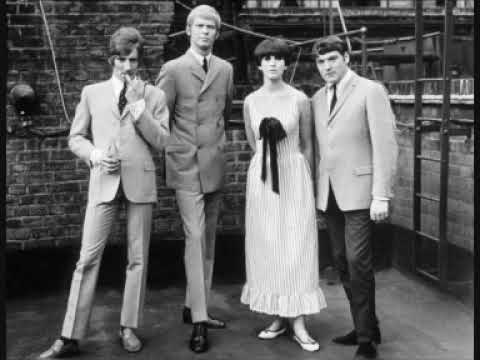
Originally formed in 1960 by John Tebb (piano and vocals) and Howard Newcombe (guitar), they added Don Fortune (drums) and Zenon Kowalski (bass), and became The Casuals in 1961. After turning professional, they moved to Italy and recorded a number of covers of well-known UK material. Fortune and Kowalski left, and were followed by a series of replacements, culminating in Mick Bray (drums) and Ian Good (bass), from other well-known Lincoln groups, The Avengers and The Sultans.
In 1965 they won the TV talent show Opportunity Knocks three times, leading to a recording contract with Fontana Records who issued their debut single "If You Walk Out", which was unsuccessful. In 1966 Alan "Plug" Taylor (bass) joined, and the band moved to Italy, where they signed with CBS in Milan to record Italian language covers of British hit singles. These included a #1 Italian single covering the Bee Gees' "Massachusetts". Good left in mid 1967, and was not replaced, but when Brey left later that year, Bob O'Brien joined on drums (ex-Glasgow group The Riot Squad).
In 1968, whilst still in Italy, The Casuals switched to Decca Records, who released the single "Jesamine" in May which - following extensive airplay on Radio One - eventually charted, so the band came back from Italy to promote the record, which reached #2 on the UK Singles Chart late in 1968. "Jesamine" was a cover version of The Bystanders' "When Jesamine Goes" issued in February 1968, and was co-written by Marty Wilde and Ronnie Scott (the Bystanders' manager, not the famous jazz musician), under the pseudonym Frere Manston and Jack Gellar. The follow-up single, "Toy" (written by Chris Andrews) also made the Top 40, peaking at #30. They were also successful in Germany, where "Jesamine" hit #9, and "Toy" went to #27, but their first and only album, Hour World, was issued too late to capitalise on these successful singles. Chris Evans stood in for Newcombe when he was ill, and when Taylor and O'Brien left in 1970, Evans became a permanent member, along with Lloyd Courtney. None of the following four singles managed to chart, and the group was dropped by Decca in 1971.
They signed to Parlophone in 1972 and released "Tara Tiger Girl", but the single went nowhere, nor did a single "American Jam" for which the band was renamed 'American Jam Band', although, as both singles had the same B-side, the link was obvious. They left Parlophone for Dawn Records in 1974, but after their final single, "Good Times", flopped, they disbanded in 1976.
Sunday, 18 September 2016
The Turtles - 1970 - Happy Together
Happy Together/It Ain't Me Babe/She'd Rather Be With Me/You Don't Have To Walk In The Rain
The Turtles are an American rock band led by vocalists Howard Kaylan and Mark Volman. The band had several Top 40 hits beginning with their cover version of Bob Dylan's "It Ain't Me Babe" in 1965. They scored their biggest and best-known hit in 1967 with the song "Happy Together". The band broke up in 1970. Kaylan and Volman later found long-lasting success as session musicians, billed as the comedic vocal duo Flo & Eddie. In 2010, a reconstituted version of the band, the Turtles Featuring Flo & Eddie, began performing live shows again.
"Happy Together" is a 1967 song from The Turtles' album of the same name. Released in February 1967, the song knocked The Beatles' "Penny Lane" out of the number one slot for three weeks on the Billboard Hot 100. It was the group's only chart-topper in the United States. "Happy Together" reached number 12 on the UK Singles Chart in April 1967 and #13 on Top 100 Singles of 1967 in Canada The song was written by Garry Bonner and Alan Gordon, former members of a band known as The Magicians. The song had been rejected a dozen times before it was offered to The Turtles, and the demo acetate was worn out.
"It Ain't Me Babe" is a song by Bob Dylan that originally appeared on his fourth album Another Side of Bob Dylan, which was released in 1964 by Columbia Records. The Turtles also had a breakthrough hit single of the song, which reached #8 in the U.S. and was then featured on their debut album of the same name.
"She'd Rather Be with Me" is a song released by The Turtles in 1967. The song spent 11 weeks on the Billboard Hot 100 chart, peaking at No. 3, while reaching No. 1 on Canada's "RPM 100", No. 1 in South Africa, No. 21 in Austrslia, No. 2 on Canada's CHUM Hit Parade, No. 3 in Denmark, and No. 3 in Ireland. The song also spent 15 weeks on the UK's Record Retailer chart, peaking at No. 4, making it The Turtles' biggest hit in the United Kingdom.
Sounds Incorporated - 1964 - Sounds Incorporated
Light Cavalry/In The Hall Of The Mountain King/Maria/William Tell
A six-man, all-instrumental rock & roll combo, Sounds Incorporated was one of the first British rock groups to do more than imitate Cliff Richard's backing band the Shadows, and wound up supporting a number of legendary artists while landing a few British hits in their own right. Formed in 1961 in their home area of northwestern Kent, the band included saxophonists/woodwind players Alan "Boots" Holmes and "Major" Griff West (born David Glyde), organist/pianist/baritone saxophonist Barrie Cameron (born Baz Elmes), guitarist John St. John (born John Gillard), bassist Wes Hunter (born Dick Thomas), and drummer Tony Newman (born Richard Anthony Newman). They gigged extensively on a local basis and occasionally played London as well, where they quickly made an impression as one of the few British rock & roll bands led by a horn section. Early on, they backed visiting American rockers like Gene Vincent, Little Richard, Jerry Lee Lewis, and Sam Cooke (among many others), learning the artists' repertoires before their arrival in the U.K. They soon got an opportunity to record with the legendary producer Joe Meek, and in 1963 released several singles on Decca. They also began traveling to Hamburg to entertain American servicemen; there they played the famous Star Club and met and befriended the Beatles. Late in 1963, Beatles manager Brian Epstein signed Sounds Incorporated to his company; the following year, the group not only became singer Cilla Black's regular backing band, but also toured the world as the Beatles' opening act, and released their self-titled debut album (plus several more singles, including an arrangement of "William Tell" that topped the charts in Australia) on Columbia.
During the mid-'60s, they augmented their own recordings with numerous gigs on the U.K. ballroom circuit and plenty of session work; they also landed a fairly sizable hit with an arrangement of "Hall of the Mountain King." A second album, also (confusingly) titled Sounds Incorporated, appeared on the Studio Two label in 1966; the following year, the Beatles invited Cameron, Holmes, and West to be the saxophone section on their Sgt. Pepper track "Good Morning, Good Morning." The same year, however, Newman left to pursue a full-time session career and was replaced by Terry Fogg, Cameron also departed to become an arranger and manager, and his place was taken by Trevor White, who gave the group its first vocalist. As the circuit for traditional-style rock & roll shifted from ballrooms to more upscale cabarets, Sounds Incorporated landed better-paying gigs and used the money to travel to Australia in 1969 and play extensively around Sydney. In 1971, they finally called it a career some remained in Sydney, while others returned to England and took low-profile, music-related jobs.
Sly and The Family Stone - Dance To The Music
Dance To The Music/Life/Fun/Hot Fun In The Summertime
Sly and the Family Stone was an American band from San Francisco. Active from 1967 to 1983, the band was pivotal in the development of funk, soul, rock, and psychedelic music. The group's core line-up was led by singer-songwriter, producer, and multi-instrumentalist Sly Stone, and featured Stone's brother and singer/guitarist Freddie Stone, sister and singer/keyboardist Rose Stone, trumpeter Cynthia Robinson, drummer Gregg Errico, saxophonist Jerry Martini, and bassist Larry Graham. The band was the first major American rock group to have an "integrated, multi-gender" lineup.
Formed in 1967, the group's music synthesized a variety of disparate musical genres to help pioneer the emerging "psychedelic soul" sound. They soon found commercial success, recording a series of Top 10 Billboard Hot 100 hits such as "Dance to the Music" (1968), "Everyday People" (1968), and "Thank You (Falettinme Be Mice Elf Agin)" (1969), as well critically acclaimed albums such as Stand! (1969), which combined pop sensibility with social commentary. In the 1970s, Sly and the Family Stone transitioned into a darker and less commercial funk sound that would result in releases such as There's a Riot Goin' On (1971) and prove as influential as their early work. By 1975, drug problems and interpersonal clashes led to the group's dissolution,[6] though Sly Stone continued to record and tour with a new rotating lineup under the name "Sly and the Family Stone" until drug problems forced his effective retirement in 1987.
The work of Sly and the Family Stone greatly influenced the sound of subsequent American pop, soul, R&B, funk, and hip hop music. Music critic Joel Selvin sums up the importance of Sly and the Family Stone's influence on African American music by stating "there are two types of black music: black music before Sly Stone, and black music after Sly Stone". In 2010, they were ranked 43rd in Rolling Stone list of "The 100 Greatest Artists of All-Time," and three of their albums are included in the Rolling Stone list of the 500 greatest albums of all time. The band was inducted into the Rock and Roll Hall of Fame in 1993. Two of the original members Jerry Martini and Greg Errico still tour today as The Family Stone without Sly. Cynthia Robinson toured with them from 2006 until her death in 2015.
"Dance to the Music" is a 1968 hit single by the influential soul/funk/rock band Sly and the Family Stone for the Epic/CBS Records label. It was the first single by the band to reach the Billboard Pop Singles Top 10, peaking at #8 and the first to popularize the band's sound, which would be emulated throughout the black music industry and dubbed "psychedelic soul". It was later ranked #223 on Rolling Stone's list of the 500 Greatest Songs of All Time.
Little Millie - 1964 - Millie And Her Boyfriends
Roy And Millie - Never Say Goodbye/Roy And Millie - We'll Meet/Jackie & Millie - Since I Met You Baby/Owen And Mille - I Don't Want You
Millicent Dolly May "Millie" Small, CD (born 6 October 1946), is a Jamaican singer-songwriter, best known for her 1964 cover version of "My Boy Lollipop".
Small was born at Gibralter in Clarendon, Jamaica, the daughter of a sugar plantation overseer. Like many Jamaican singers of the era, her career began by winning the Vere Johns Opportunity Hour talent contest at the age of twelve. Wishing to pursue a career as a singer she moved to live with relatives in Love Lane in Kingston. In her teens, she recorded a duet with Owen Gray ("Sugar Plum") in 1962 and later recorded with Roy Panton for Coxsone Dodd's Studio One record label as 'Roy and Millie'. They had a local hit with "We'll Meet".
These hits brought her to the attention of Chris Blackwell who became her manager and legal guardian, who in late 1963 took her to Forest Hill, London, where she was given intensive training in dancing and diction.[2] There she made her fourth recording, an Ernest Ranglin rearrangement of "My Boy Lollipop", a song originally released by Barbie Gaye in late 1956. Released in March 1964, Small's version was a massive hit, reaching number two both in the UK Singles Chart and in the US Billboard Hot 100, and number three in Canada. It also topped the chart in Australia. Initially it sold over 600,000 copies in the United Kingdom. Including singles sales, album usage and compilation inclusions, the song has since sold more than seven million copies worldwide. Her later recordings, "Sweet William" and "Bloodshot Eyes", also charted in the UK, at numbers 30 and 48 respectively, and "Sweet William" also peaked at number 40 in the US, her only other American chart single. "My Boy Lollipop" re-charted in the UK in 1987 at no. 46.
"My Boy Lollipop" was doubly significant in British pop history. It was the first major hit for Island Records (although it was actually released on the Fontana label because Chris Blackwell, Island's owner, did not want to overextend its then-meagre resources; in the US, the record appeared on the Smash Records subsidiary of Mercury Records), and Small was the first artist to have a hit that was recorded in the bluebeat style (she was billed as "The Blue Beat Girl" on the single's label in the US). This was a music genre that had recently emerged from Jamaica, and was a direct ancestor of reggae.
She appeared on the 1964 Beatles TV special Around The Beatles.
On 6 March 1965, Small appeared on the Australian television programme Bandstand. This was as part of a concert at the Sidney Myer Music Bowl in Kings Domain, Melbourne, part of the Moomba Festival. She performed "My Boy Lollipop", "What Am I Living For" and "See You Later, Alligator". Small continued to tour and perform up to the early 1970s.
On 6 August 2011, the 49th anniversary of Jamaica's independence, the Governor-General created Small a Commander in the Order of Distinction, for her contribution to the Jamaican music industry. The award was accepted on her behalf by former Prime Minister Edward Seaga.
In July 2012 she stated that she had been recording again and planned to perform in Jamaica for the first time in over 40 years
Crystals - 1964 - Da Doo Ron Ron
Da Doo Ron Ron/He's A Rebel/He's Sure The Boy I Love/I Love You Eddie
The Crystals are an American vocal group based in New York, considered one of the defining acts of the girl group era in the first half of the 1960s. Their 1961–1964 chart hits, including "There's No Other (Like My Baby)", "Uptown", "He's Sure the Boy I Love", "He's a Rebel", "Da Doo Ron Ron (When He Walked Me Home)" and "Then He Kissed Me", featured three successive female lead singers, and were all produced by Phil Spector.
The Crystals recorded "Da Doo Ron Ron" in March 1963 at Gold Star Studios in Los Angeles. It was produced by Phil Spector in his Wall of Sound style. Jack Nitzsche was the arranger and Larry Levine the engineer. The drummer was Hal Blaine. Dolores "LaLa" Brooks was the lead vocalist. On June 8, 1963, it reached number three on the Billboard Hot 100, and on June 22, 1963, number four on the Cash Box chart. It also reached number five in the UK.
"He's a Rebel" is a pop/rock song credited to the girl group the Crystals (although actually recorded by the Blossoms), reaching No. 1 on the Billboard Hot 100 chart in November 1962. Written by Gene Pitney and produced by Phil Spector, it is an example of the Spector-produced girl group sound. B Side was "I Love You Eddie".
"He's Sure The Boy I Love" was written by Barry Mann and Cynthia Weil and recorded by the Crystals it charted at number eleven on the U.S. charts in 1962.
The - 1970 - Elenore
Elenore/It Was A Very Good Year/Surfer Dan/Your Maw Said You Cried
Though many remember only their 1967 hit, "Happy Together," the Turtles were one of the more enjoyable American pop groups of the '60s, moving from folk-rock inspired by the Byrds to a sparkling fusion of Zombies-inspired chamber pop and straight-ahead, good-time pop reminiscent of the Lovin' Spoonful, the whole infused with beautiful vocal harmonies courtesy of dual frontmen Howard Kaylan and Mark Volman. Though they hit number one in 1967 with the infectious "Happy Together," the Turtles scored only three more Top Ten hits and broke up by the end of the '60s. Kaylan and Volman later joined Frank Zappa's Mothers of Invention during the early '70s and also recorded themselves as Flo & Eddie, but were on the oldies circuit with a revamped Turtles by the mid-'80s.
Born within two months of each other in 1947 (though on opposite coasts), Howard Kaylan (b. Howard Kaplan) and Mark Volman attended the same school, Westchester High in Los Angeles (Kaylan had moved from New York as a child). The two sang in the school's a cappella choir, where Volman soon heard about Kaylan's instrumental surf group, the Nightriders (which also included choir members Al Nichol on lead guitar, Don Murray on drums and Chuck Portz on bass). Volman joined the group just before they became the Crossfires in 1963. After high school graduation, the Crossfires continued on while its members attended area colleges (picking up rhythm guitarist Jim Tucker along the way).
The group finally got its big break in 1965 after local disc jockey and club owner Reb Foster heard them. Foster liked the Crossfires so much, he became their manager and found the group a contract with White Whale Records. The sextet changed their name to the Tyrtles (an unveiled homage to the Byrds, soon amended to the correct spelling) and recorded a Bob Dylan cover as their first single. The song's fusion of folk with glittering rock & roll was also lifted from the Byrds, and "It Ain't Me Babe" reached the Top Ten in August 1965, just three months after "Mr. Tambourine Man" had hit number one.
Moving from the songwriting talents of Dylan to the new "king of protest," producer P.F. Sloan, the Turtles hit the Top 40 twice more during 1965-1966 with "Let Me Be" and "You Baby," after which Murray and Portz left (to be replaced by John Barbata and, for a short time, bassist/producer Chip Douglas). Though the Turtles had appeared to run out of steam by the beginning of 1967, the group stormed back with a song they'd heard in a batch of demos, a surefire hit written by Gary Bonner and Alan Gordon. "Happy Together" spent three weeks at number one on the American charts, and proved to be one of the biggest hits of the year. The Turtles' next three singles were written by Bonner-Gordon, and each hit the Top 20: the number three hit "She'd Rather Be with Me" (which eclipsed even "Happy Together" in terms of international success), plus "You Know What I Mean" and "She's My Girl." Chip Douglas, who had arranged the horns on "Happy Together," left the group to work with the Monkees, and was replaced by Jim Pons (formerly with the Leaves). Original member Jim Tucker left the group as well, after a tour of dingy pubs in England caused more than a bit of disillusionment with the group's lack of success.
The Turtles Present the Battle of the Bands
Like so many other pop groups in the late '60s, the Turtles felt they had to stretch artistically to keep pace with their more critically respected rivals, and beginning with "You Know What I Mean," the Turtles' revolving-door cast of producers and arrangers made their sound progressively more psychedelic, though they were still much closer to the pop/rock mainstream than to the era's premier psychedelic groups. The group asserted their rights in late 1967, and self-produced the disappointing "Sound Asleep," which was the band's first single after "Happy Together" to miss the Top 40. White Whale Records demanded an outside hand be brought to the studio, so the Turtles compromised by going back to Chip Douglas. The result, "The Story of Rock and Roll," was shut out of the Top 40 as well, prompting the career-saving "Elenore" in September 1968, which hit number six (the best placing by a single actually written by the Turtles). The inevitable concept LP came in November 1968: The Turtles Present the Battle of the Bands, on which the group attempted to sound like (and even dress up as) 11 distinct bands -- one for each song on the LP. It was an interesting concept, and a measured success, with "Elenore" to its credit as well as another number six hit, "You Showed Me" (originally written and recorded by the Byrds). Drummer John Seiter joined the Turtles after the recording of Battle of the Bands, replacing Barbata (who had left to work with Crosby, Stills & Nash).
The Village Green Preservation Society
After White Whale attempted to record Monkees-style, with the vocals of Kaylan and Volman added to a generic studio backing track, the duo rebelled and attempted to get back to the band aesthetic. Inspired by the Kinks' then-recent Village Green Preservation Society LP, the Turtles recruited frontman Ray Davies to serve as producer for their 1969 LP, Turtle Soup. Two singles from the album, "You Don't Have to Walk in the Rain" and "Love in the City," both failed to reach the Top 40. Kaylan and Volman formed their own label, Blimp Records, and signed a few acts, including folksinger Judee Sill, who wrote the Turtles' last recording, "Lady-O." More wrangles with White Whale, on top of the lack of chart success, had destroyed the Turtles by 1970, though. White Whale continued to raid the vaults during the year, releasing old singles, a second hits compilation, and an album of rarities (Wooden Head).
Before the end of 1970, though, Kaylan, Volman, and Pons had joined Frank Zappa's early-'70s edition of the Mothers of Invention. (The use of the Turtles' name or even their own names in a musical context was illegal according to an earlier contract, so Kaylan and Volman appeared as the Phlorescent Leech & Eddie.) Besides touring with Zappa, the trio appeared on four of his albums from 1970 to 1972: Chunga's Revenge, 200 Motels, Live at the Fillmore, and Just Another Band from L.A. After Zappa was injured in an on-stage altercation, though, the re-christened Flo & Eddie toured with several of the Mothers for awhile, and recorded five LPs for themselves between 1975 and 1981. The duo also did session work, composed music for children's' movies (The Care Bears, Strawberry Shortcake) and broadcast their own radio show on L.A.'s KROQ and later New York's WXRK.
By 1984, the Turtles' name had reverted back to the group, and Volman and Kaylan began touring with a new lineup as the Turtles...Featuring Flo & Eddie. Volman and Kaylan also won back the rights to the group's master recordings and publishing, leading to numerous reissues of their catalog. Rhino Records returned the group's albums to print in the '80s, Sundazed brought out new editions in the '90s, and in 2016 Manifesto Records kicked off their Turtles reissue program with two ambitious collections. All The Singles was a two-disc set that collected all the group's seven-inches, including some unreleased sides, while The Complete Original Albums Collection brought together remastered versions of the Turtles' six LP's.
Monday, 5 September 2016
David And Jonthan - 1968 - Softly Whispering I Love You
She's Leaving Home/Michelle/Lovers Of The World Unite/Softly Whispering I Love You
David and Jonathan was a British pop duo from Bristol, England, featuring Roger Greenaway and Roger Cook. They had two top 20 hits in 1966.
They began working together in 1965 in Bristol, England, and wrote the hit songs "This Golden Ring" and "You've Got Your Troubles" for the British group the Fortunes. They teamed with George Martin to do a cover of the Beatles' "Michelle", which was a hit single in 1966 in both the UK (#11 UK Singles Chart) and the U.S. (U.S. Billboard Hot 100 #18, U.S. AC #3). They had a top 10 in the UK in 1966 with "Lovers of the World Unite", which reached number 7.
David and Jonathan sang the theme song, "Modesty Blaise", composed by Johnny Dankworth, for the spy spoof film Modesty Blaise, starring Monica Vitti, Terence Stamp and Dirk Bogarde.
After David and Jonathan had run its course, the duo continued to write successful hit singles both alone and together, for artists such as Blue Mink, the Hollies, Engelbert Humperdinck, Whistling Jack Smith and others.
J0e S0uth - 1969 - These Are N0t My Pe0ple
Birds Of A Feather/Don't It Make You Want To Go Home/These Are Not My People/Games People Play
Singer/songwriter Joe South (born Joe Souter) began his career as a country musician, performing on an Atlanta radio station and joining Pete Drake's band in 1957. The following year, he recorded a novelty single, "The Purple People Eater Meets the Witch Doctor," and became a session musician in Nashville and at Muscle Shoals. South appeared on records by Marty Robbins, Eddy Arnold, Aretha Franklin, Wilson Pickett, Bob Dylan (Blonde on Blonde), and Simon & Garfunkel ("The Sounds of Silence"). During the '60s, South began working on his songwriting, crafting hits for Deep Purple ("Hush") and several for Billy Joe Royal, including "Down in the Boondocks." South began recording his own material in 1968, scoring a hit with the Grammy-winning "Games People Play" (Song of the Year) the following year. While South produced hits like "Don't It Make You Want to Go Home" and "Walk a Mile in My Shoes," Lynn Anderson had a smash country and pop hit in 1971 with South's "(I Never Promised You A) Rose Garden."
South took several years off after his brother's suicide in 1971, moving to Maui and living in the jungles. He had proven a rather prickly character, recording a song entitled "I'm a Star"; he was also busted for drugs and, never entirely comfortable performing, was known for an antagonistic stance in concert (he once suggested that audience members start dancing around the concert hall and kiss his ass as they approached the stage). South briefly returned in 1975 with the Midnight Rainbows LP but retired from recording and performing soon afterwards. South returned in 1994 in a London concert showcasing American Southern performers and later re-entered the music publishing industry. He died from a heart attack at his home in Georgia in September of 2012; Joe South was 72 years old.
Vanity Fare - 1970 - Early In The Morning
Early In the Morning/You Made Me Love You/Hitchin' A Ride/Man Child
Vanity Fare (due to the similarity of the novel and magazine title often misspelled Vanity Fair) are a UK pop/rock group formed in 1966, best remembered for its million-selling song, "Hitchin' a Ride", which became a worldwide hit in 1970.
School friends Trevor Brice (born 12 February 1945, Rochester, Kent, England) (vocals), Tony Goulden (born Anthony Goulden, 21 November 1942, Rochester) (guitar), Dick Allix (born Richard Allix, 3 May 1945, Gravesend, Kent) (drums) and Tony Jarrett (born Anthony Jarrett, 4 September 1943, in Rochester, Kent) (bass) formed the band in Kent in 1966, originally calling themselves The Avengers. They played local clubs and were spotted by entrepreneur Roger Easterby who became their manager and producer. Having changed the name of the band to Vanity Fare after the novel Vanity Fair by William Makepeace Thackeray, they signed to Larry Page's Page One Records.
Vanity Fare achieved a UK hit single with their first release, a cover of "I Live For The Sun" (originally recorded by The Sunrays in 1965) in the summer of 1968. Following two more singles, "Summer Morning" and "Highway Of Dreams," both of which failed to make the UK Singles Chart, they released their biggest UK hit "Early in the Morning". Written by Mike Leander and Eddie Seago, it reached number 8 in that country in August 1969 and number 12 in the US in early 1970. It sold over one million copies, and was awarded a gold disc.
For their next release "Hitchin' a Ride", they added keyboardist Barry Landemen (born 25 October 1947, Woodbridge, Suffolk, England) to the group. "Hitchin' A Ride", written by Peter Callander and Mitch Murray, gave them a second million-selling hit, reaching #1 for two weeks each on Chicago radio stations WLS (May 1970) and WCFL (June 1970), #5 on the Hot 100 (June–July 1970), and #16 in the UK (January 1970).
The hit was preceded by a tour of the United States, following which both Dick Allix and Tony Goulden left the band and were replaced by guitarist and singer Eddie Wheeler and drummer Mark Ellen. Two more singles followed before the end of 1970; Mike Leander and Eddie Seago's "Come Tomorrow" and Roger Cook and Roger Greenaway's "Carolina's Coming Home" both of which failed to dent the charts on either side of the Atlantic. In addition, a belated US release of "Summer Morning" only charted to #98 for two weeks.
Over the next couple of years more singles were released including Tony Macaulay's "Better By Far" on DJM Records in 1972, but none of them entered the charts. Following this they decided to concentrate on live performances touring Europe, where they were having hit singles. Following the mid-1970s, and amid many band member changes (including the departure of Jarrett, replaced by Bernie Hagley), the group recorded only sporadically. In 1986, the band attempted to represent the UK in the Eurovision Song Contest, finishing third in the UK heat of A Song for Europe, with the song "Dreamer" featuring Jimmy Cassidy on vocals, Phil Kitto on keyboards alongside longtime members Ellen, Wheeler and Bernie Hagley. In 2007 they toured alongside P. J. Proby. In August 2015 drummer Mark Ellen retired from Vanity Fare after playing with the band for 43 years and was replaced by Howard Tibble.
They are still together today with a line-up of Hagley, Wheeler, Tibble and Steve Oakman.In his spare time, Brice sings second tenor with the City of Bath Male Choir, who reached the final of BBC One's Last Choir Standing. His son, Sebastian Brice, is part of the alt/rock band Avius.
Barry Ryan - 1972 - Eloise @320
Eloise/Love Is Love/The Colour Of My Love
Barry Ryan (born Barry Sapherson, 24 October 1948, Leeds, West Riding of Yorkshire) is an English former pop singer. He currently works as a photographer.
The son of pop singer Marion Ryan began performing with his twin brother Paul at the age of 16. In 1965 they signed a recording contract with Decca under the name of Paul & Barry Ryan. Within two years they had amassed 8 Top 50 singles in the UK. Their best sellers were "Don't Bring Me Your Heartaches", a #13 hit in 1965, "I Love Her", a #17 hit in 1966 and "Have Pity on the Boy", a #18 hit the same year.
This success took its toll on Paul, who was unable to cope any longer with the stress of show business. It was decided that Barry would now continue as a solo artist, enabling his brother to stay out of the limelight and write songs for his twin to perform. Their greatest achievement as a composer-singer duo, now for MGM Records, was "Eloise", a #2 hit in 1968. Melodramatic and heavily orchestrated, it sold over one million copies and was awarded a gold disc. "Love is Love", their next chart entry, also became a million-seller.
Ryan was also popular in Germany and France. The single "Red Man" reached #2 in the French chart in 1971. Promoted by Bravo, the German youth magazine, he recorded a number of songs in German. "Die Zeit macht nur vor dem Teufel Halt" ("Time Only Stops for the Devil") peaked at #8.
Ryan stopped performing in the early 1970s. He made a comeback in the late 1990s when a two CD set with his and his brother's old songs was released. Ryan was also part of the "Solid Silver '60s Tour" of the United Kingdom in 2003, singing "Eloise" backed by the Dakotas.
"Eloise" is a song first released in 1968 on the MGM label. It was sung by Barry Ryan, and written by his twin brother Paul Ryan. Running for a little over five minutes, it featured strong orchestration, melodramatic vocals and a brief slow interlude. It sold 3 million copies worldwide, and reached No. 2 in the UK Singles Chart as published by Record Retailer, but hit No. 1 in the NME and Melody Maker charts. It topped the chart in 17 countries, including Italy where he reached No. 1. Ryan also released an Italian-language version of the song, "Eloise (Versione Italiana)", in 1968.
B0b Dyl@n - 1965 - The T!mes They Are A -Chang!n'
When The Ship Comes In/Only A Pawn In Their Game/The Times They Are A Changin'/One Too Many Mornings
"The Times They Are a-Changin'" is a song written by Bob Dylan and released as the title track of his 1964 album of the same name. Dylan wrote the song as a deliberate attempt to create an anthem of change for the time, influenced by Irish and Scottish ballads. Released as a 45-rpm single in Britain in 1964, it reached number 9 in the British top ten.
Ever since its release the song has been influential to people's views on society, with critics noting the general yet universal lyrics as contributing to the song's lasting message of change. Dylan has occasionally performed it in concert. The song has been covered by many different artists, including Nina Simone, the Byrds, Peter, Paul, and Mary, Simon & Garfunkel, the Beach Boys, Joan Baez, Phil Collins, Billy Joel, and Bruce Springsteen. The song was ranked number 59 on Rolling Stone's 2004 list of the "500 Greatest Songs of All Time".
Saturday, 25 June 2016
N@ncy S!natr@ - 1968 - L!ghtn!ng's G!rl
Lightning's Girl/Happy/Good Time Girl/100 Years
Nancy Sandra Sinatra (born June 8, 1940) is an American singer and actress. She is the daughter of Frank Sinatra and is widely known for her 1966 signature hit "These Boots Are Made for Walkin'".
Other defining recordings include "Sugar Town", the 1967 number one "Somethin' Stupid" (a duet with her father), the title song from the James Bond film You Only Live Twice, several collaborations with Lee Hazlewood such as "Jackson", and her cover of Cher's "Bang Bang". Nancy Sinatra began her career as a singer and actress in November 1957 with an appearance on her father's ABC-TV variety series, but initially achieved success only in Europe and Japan. In early 1966 she had a transatlantic number-one hit with "These Boots Are Made for Walkin'". She appeared on TV in high boots, and with colorfully dressed go-go dancers, creating a popular and enduring image of the Swinging Sixties. The song was written by Lee Hazlewood, who wrote and produced most of her hits and sang with her on several duets, including the critical and cult favorite "Some Velvet Morning". In 1966 and 1967, Sinatra charted with 13 titles, all of which featured Billy Strange as arranger and conductor.
Sinatra also had a brief acting career in the mid-1960s including a co-starring role with Elvis Presley in the movie Speedway, and with Peter Fonda in The Wild Angels. In Marriage on the Rocks, Frank and Nancy Sinatra played a fictional father and daughter.
Sinatra was signed to her father's label, Reprise Records, in 1961. Her first single, "Cuff Links and a Tie Clip", went largely unnoticed. However, subsequent singles charted in Europe and Japan. Without a hit in the US by 1965, she was on the verge of being dropped. Her singing career received a boost with the help of songwriter/producer/arranger Lee Hazlewood, who had been making records for ten years, notably with Duane Eddy. Hazlewood became Sinatra's inspiration.[citation needed] He had her sing in a lower key and crafted songs for her. Bolstered by an image overhaul — including bleached-blonde hair, frosted lips, heavy eye make-up and Carnaby Street fashions — Sinatra made her mark on the American (and British) music scene in early 1966 with "These Boots Are Made for Walkin''", its title inspired by a line in Robert Aldrich's 1963 western comedy 4 for Texas starring her father and Dean Martin. One of her many hits written by Hazlewood, it received three Grammy Award nominations, including two for Sinatra and one for arranger Billy Strange. It sold over one million copies, and was awarded a gold disc. She appeared on TV in high boots, and with colorfully dressed go-go dancers, a craze during the late Sixties, and created a popular and enduring image of the Swinging Sixties.
A run of chart singles followed, including the two 1966 Top 10 hits "How Does That Grab You, Darlin'?" (U.S. No.7) and "Sugar Town" (U.S. No.5). "Sugar Town" became her second million seller. The ballad "Somethin' Stupid" — a duet with her father — hit No.1 in the U.S. and the U.K. in April 1967 and spent nine weeks at the top of Billboard's easy listening chart. It earned a Grammy Award nomination for Record of the Year and remains the only father-daughter duet to hit No.1 in the U.S.; it became Sinatra's third million-selling disc. Other 45s showing her forthright delivery include "Friday’s Child" (U.S. No.36, 1966), and the 1967 hits "Love Eyes" (U.S. No.15) and "Lightning’s Girl" (U.S. No.24). She rounded out 1967 with the raunchy but low-charting "Tony Rome" (U.S. No.83) — the title track from the detective film Tony Rome starring her father — while her first solo single in 1968 was the more wistful "100 Years" (U.S. No.69). In 1968 she recorded the Kenny Young song "The Highway Song" with Mickey Most producing for the U.K. and European markets. The song reached Top 20 in the U.K. and other European countries.
Sinatra enjoyed a parallel recording career cutting duets with the husky-voiced, country-and-western-inspired Hazlewood, starting with "Summer Wine" (originally the B-side of "Sugar Town"). Their biggest hit was a cover of the country song, "Jackson". The single peaked at #14 on the Billboard Hot 100 in the summer of 1967, when Johnny Cash and June Carter Cash also made the song their own. In December they released the "MOR"-psychedelic single "Some Velvet Morning", regarded as one of the more unusual singles in pop, and the peak of Sinatra and Hazlewood’s vocal collaborations. It reached No.26 in the US. The promo clip is, like the song, sui generis. The British broadsheet The Daily Telegraph placed "Some Velvet Morning" in pole position in its 2003 list of the Top 50 Best Duets Ever. ("Somethin' Stupid" ranked number 27).
In 1967, she recorded the theme song for the James Bond film You Only Live Twice. In the liner notes of the CD reissue of her 1966 album, Nancy In London, Sinatra states that she was "scared to death" of recording the song, and asked the songwriters: "Are you sure you don't want Shirley Bassey?" There are two versions of the Bond theme. The first is the lushly orchestrated track featured during the opening and closing credits of the film. The second – and more guitar-heavy — version appeared on the double A-sided single with "Jackson", though the Bond theme stalled at No.44 on the U.S. Billboard Hot 100. "Jackson"/"You Only Live Twice" was more successful in the U.K., reaching No.11 on the singles chart during a nineteen-week chart run (in the Top 50) that saw the single become the 70th best-selling single of 1967 in the U.K.
In 1966 and 1967 Sinatra traveled to Vietnam to perform for the US troops. Many US soldiers adopted her song "These Boots Are Made for Walkin'" as their anthem, as shown in Pierre Schoendoerffer's Academy Award winning documentary The Anderson Platoon (1967) and reprised in a scene in Stanley Kubrick's Full Metal Jacket (1987). Sinatra recorded several anti-war songs, including "My Buddy", featured on her album Sugar, "Home", co-written by Mac Davis, and "It's Such A Lonely Time of Year", which appeared on the 1968 LP The Sinatra Family Wish You a Merry Christmas. In 1988 Sinatra recreated her Vietnam concert appearances on an episode of the television show China Beach. Today, Sinatra still performs for charitable causes supporting US veterans who served in Vietnam, including Rolling Thunder Inc.
Cass Elliot - 1970 - Make Your Own Kind Of Music
New World Coming/It's Getting Better/Move In A Little Closer Baby/Make Your Own Kind Of Music
Cass Elliot was born Ellen Naomi Cohen on September 19, 1941 in Baltimore, Maryland. She grew up in the Washington D.C. environs and in her senior year of high school, she performed in a summer stock production of "The Boyfriend" at the Owings Mills Playhouse where she played the French nurse who sings "It's Nicer, Much Nicer in Nice." After this experience, even though her family anticipated her to seek a college education in pursuit of a career, Cass forged ahead in the world of performance. She made a splash in New York and began an acting career, competing with Barbra Streisand for the Miss Marmelstein part in "I Can Get It for You Wholesale" in 1962. She toured in a production of Meredith Wilson's "The Music Man." Elliot also produced a play at Cafe La Mama in New York.
But by early 1963 she had met up with Tim Rose and John Brown and formed a folk trio initially dubbed The Triumvirate, yet later known as The Big 3 when Brown was replaced by James Hendricks. The Big 3 were a progressive and innovative folk trio who recorded two albums and made appearances on The Tonight Show, Hootenanny and the Danny Kaye Show. In 1964 the group had begun to fall apart and it metamorphasized into a foursome called "Cass Elliot and The Big 3" which included Canadians, Denny Doherty and Zal Yanovsky (Tim Rose had left at this point). Soon this foursome became The Mugwumps who operated out of The Shadows nightclub in Washington. They released a single for Warner Brothers and stayed together through the end of 1964, until they too began to disintegrate. Cass Elliot began to work as a solo single in Washington, D.C.
At this point Denny Doherty had joined John and Michelle Phillips and the three were performing as The New Journeymen. Soon they left for the Virgin Islands where Cass subsequently joined them and the four began to sing together in mid-1965. Thus the superstar group The Mamas and The Papas was born. From 1965-1968 the Mamas and Papas recorded a series of top ten hits including "Monday, Monday," "California Dreamin'," "I Saw Her Again," and "Dedicated to the One I Love."
The group's last hit was a launching number for Cass Elliot. Cass' first solo album, Dream A Little Dream, 1968"Dream A Little Dream Of Me" became Cass' theme song and beginning in 1968 she embarked on her own short-lived but solid solo career. Her distinct voice had always emerged from the groups in which she sang. In 1969 she scored big with "It's Getting Better" and 1970 yielded the hits "Make Your Own Kind of Music" and "New World Coming." In 1970, Elliot also appeared in the film version of "Pufnstuf" and recorded an album with rock star Dave Mason.
Elliot had two prime time television specials of her own in 1969 and 1973, but most people remember her scores of television appearances throughout the early 1970's with Mike Douglas, Julie Andrews, Andy Williams, Johnny Cash, Red Skelton, Ed Sullivan, Tom Jones, Carol Burnett and others. She guest hosted The Tonight Show, had successful stints in Las Vegas and continued to record for RCA during these years too. Cass had one daughter Owen Vanessa in April 1967 and she was married twice, first (1963-68) to fellow Big 3 and Mugwumps member Jim Hendricks and second to Baron Donald von Wiedenman (1971).
London Palladium Concert Program, In 1974, Cass Elliot travelled to London where she had a two week engagement at the London Palladium. After performing to sellout audiences and basking in repeated ovations, Cass tragically succumbed to a heart attack on July 29, 1974 in London, following this successful concert tour.
In 1998, The Rock and Roll Hall of Fame inducted Cass Elliot and her fellow band mates from The Mamas and The Papas into that institution. Her daughter Owen represented her mother and accepted her award.
Julie Driscol Brian Auger And The Trinity - 1969 - Julie Driscol Brian Auger And The Trinity
This Wheels On Fire/Save Me Part 1/Save Me Part 2/Road To Cairo
Brian Albert Gordon Auger (born 18 July 1939 in Hammersmith London) is an English jazz and rock keyboardist, who has specialised in playing the Hammond organ. A jazz pianist, bandleader, session musician and Hammond B3 player, Auger has played or toured with artists such as Rod Stewart, Tony Williams, Jimi Hendrix, John McLaughlin, Sonny Boy Williamson, Led Zeppelin, Eric Burdon and others. He has incorporated jazz, early British pop, R&B, soul music and rock, and he has been nominated for a Grammy.
In 1965 Auger formed the group The Steampacket, along with Long John Baldry, Julie Driscoll, Vic Briggs and Rod Stewart. Due to contractual problems there were no official recordings made by the band; nevertheless, nine tracks were laid down for promotional use in late 1965 and enclosed on a cd by Repertoire Records (1990) (Licenced from Charly Records) as well as 12 live tracks from "Live at the Birmingham Town Hall, February 2, 1964. Soon thereafter the band broke up and shortly after Stewart left in 1966. In 1965, Auger played on For Your Love by The Yardbirds.
Steampacket Rod Stewart, Long John Baldry, Julie Driscoll and Brian Auger
With Driscoll and the band, Trinity, he went on to record several hit singles, notably a cover version of David Ackles' "Road to Cairo" and Bob Dylan's "This Wheel's on Fire", which was featured on Dylan Covered. In 1969 Auger, Driscoll and Trinity appeared performing in the United States on the nationally telecast 33? Revolutions Per Monkee.
Julie Tippetts (born Julie Driscoll, 8 June 1947) is an English singer and actress, known for her 1960s versions of Bob Dylan and Rick Danko's "This Wheel's on Fire", and Donovan's "Season of the Witch", both with Brian Auger and The Trinity. Along with The Trinity, she was featured prominently in the 1969 television special 33 1/3 Revolutions Per Monkee, singing "I'm a Believer" in a soul style with Micky Dolenz. She and Auger had previously worked in Steampacket, with Long John Baldry and Rod Stewart.
"This Wheel's on Fire" reached number five in the United Kingdom in June 1968. With distortion, the imagery of the title and the group's dress and performance, this version came to represent the psychedelic era in British rock music. Driscoll recorded the song again in the early 1990s with Adrian Edmondson as the theme to the BBC comedy series Absolutely Fabulous, the main characters of which are throwbacks to that era.
Since the 1970s, Driscoll has concentrated on experimental vocal music. She married jazz musician Keith Tippett and collaborated with him and now uses the name Julie Tippetts, adopting the original spelling of her husband's surname. She took in Keith Tippett's big band Centipede and in 1974 sang in Robert Wyatt's Theatre Royal Drury Lane concert. She released a solo album, Sunset Glow in 1975; and was lead vocalist on Carla Bley's album Tropic Appetites and also in John Wolf Brennan's "HeXtet".
Later in the 1970s, she toured with her own band and recorded and performed as one of the vocal quartet Voice, with Maggie Nichols, Phil Minton, and Brian Eley. In the early 1980s, Julie Tippetts was a guest vocalist on an early single by pop-jazz band Working Week, on the song "Storm of Light", which brought them to the attention of a wider audience.
D0lly P@rt0n - 1973 - D0lly P@rt0n
Joshua/Harper Valley PTA/Coat of Many Colors/Jeannie's Afraid of the Dark
Dolly Parton's girlish soprano and songs about old-time virtues made her a major country star in the early 1970s. Later in that decade, she wooed pop audiences and became a household name, her playful, self-deprecating comments about her blond sex-bomb image winning hearts as her finely crafted country-pop singles yielded a succession of more than 20 C&W Number One hits, including classics like "Here You Come Again," "Jolene," and "9 to 5." A self-titled theme park, television variety shows, and several successful films, including an Oscar nomination for her role in 9 to 5, in the 1980s helped cement Parton's status a singularly American superstar.
Parton grew up poor on a farm in the foothills of Tennessee's Smoky Mountains, the fourth of 12 children born to a farming couple. Her sister Stella later became a singer as well, and five other siblings also worked as professional musicians. Parton sang in church as a girl, and at age ten appeared on the The Cass Walker Progam, a TV show in Knoxville with members of her grade school class. She became a regular on Walker's radio show, where she performed until age 18. Parton appeared at the Grand Ole Opry at age 12, and her first single, "Puppy Love," was released by the blues-oriented Louisiana label Goldband.
One day after graduating high school, in 1964, she moved to Nashville and signed with Monument. Her first day in town, she met Carl Dean, whom she married two years later. Early recordings, in a rock vein, were not successful. Her big break came with "Dumb Blonde," a minor hit that peaked at Number 24 on the country chart. In 1967 she joined singer Porter Wagoner's syndicated country-music show, and "Miss Dolly," as she was called, became very popular with viewers. She signed to RCA, and the duo had many country hits, including "Just Someone I Used to Know" (1969) and "Daddy Was an Old Time Preacher Man" (1970). While with Wagoner, she charted over a dozen solo country hits, including "Joshua" (Number One, 1970) and "Coat of Many Colors" (Number Four, 1971).
In 1974 Parton left Wagoner completely, having released Jolene, the title track of which became her second Number One country hit and a minor pop crossover. Other singers began to take an interest in her work. Linda Ronstadt covered "I Will Always Love You" (which Parton wrote about leaving Porter Wagoner) in 1975 on Prisoner in Disguise, Emmylou Harris sang "Coat of Many Colors" that same year, and Maria Muldaur covered "My Tennessee Mountain Home" on her first record. The covers encouraged Parton to bring her country to the pop market, which she did with New Harvest. The LP was more rock-oriented and included a version of "Higher and Higher." She also broke away from the country circuit to play rock clubs.
Parton's first major pop single was "Here You Come Again," which went gold and hit Number Three in early 1978. The LP of the same name went platinum. She also hit the pop Top 20 that year with "Two Doors Down." Parton had successfully crossed over; "Baby, I'm Burnin'" (Number 25, 1978) even had some success in discos. Other Number One country hits of that time include "You're the Only One" (1979), "Starting Over Again" (1980), and "Old Flames Can't Hold a Candle to You" (1980).
By 1980, Parton was a regular headliner in Las Vegas, and that year she earned an Oscar nomination for her film debut in 9 to 5 (costarring Jane Fonda and Lily Tomlin). Parton's recording of the title theme was a Number One hit in pop and country. In 1982 she costarred with Burt Reynolds in The Best Little Whorehouse in Texas. Her other film credits include Rhinestone (with Sylvester Stallone, 1984), Steel Magnolias (with Julia Roberts and Shirley MacLaine, 1989), Straight Talk (with James Woods, 1992), the made-for-television Wild Texas Wind (with Gary Busey, 1992), and The Beverly Hillbillies (1993). In 1976 she had hosted a syndicated music show, Dolly; her 1987 prime-time variety show of the same name on ABC did not fare as well and was canceled after one season.
Immediately before the release of Rhinestone Cowboy, Parton began a difficult period plagued by health problems. Through the 1980s she continued to score C&W Number One hits with "But You Know I Love You" (1981), "I Will Always Love You" (1982), the Bee Gees–written and –produced duet with Kenny Rogers, "Islands in the Stream" (1983), "Tennessee Homesick Blues" (1984), "Real Love" (another duet with Rogers, 1985), "Think About Love" (1985), "Why'd You Come in Here Lookin' Like That" (1989), "Yellow Roses" (1989), and "Rockin' Years" (1991), a duet with Ricky Van Shelton.
Parton's most successful album of the period was Trio, a collection of traditional country songs performed with Emmylou Harris and Linda Ronstadt. In 1987 the recording won a Grammy for Best Country Album by a Duo or Group with Vocal. In 1999 the long-awaited followup, Trio II, was released and featured a Grammy-winning (Best Country Collaboration With Vocals) cover of Neil Young's "After the Gold Rush." In 1993 Parton teamed with Loretta Lynn and Tammy Wynette for Honky Tonk Angels, an album featuring the songs of country singers such as Patsy Cline and Kitty Wells (who appears on the title track).
In 1986 Parton opened Dollywood, a Smoky Mountain theme park. She has also established the Dolly Parton Wellness and Rehabilitation Center of Sevier County Medical Center as well as the Dollywood Foundation, which works to lower the high school–dropout rate in her home county. In 1994 she released her autobiography, Dolly: My Life and Unfinished Business. In 1996 Parton picked up her eighth career Country Music Association Award, for Vocal Event of the Year, for a new version of "I Will Always Love You" (Number 15 C&W, 1995) recorded with Vince Gill for a greatest-hits set.After 1996's Treasures, an album of covers, Parton moved to Decca and recorded Hungry Again, a rootsy collection of self-penned songs that kicked off what many critics viewed as an artistic reawakening for the veteran performer. In 1994 she was inducted into the Country Music Hall of Fame and cut her first bluegrass album, The Grass Is Blue, for the independent Sugar Hill label. The set featured an all-star band of bluegrass pros (including mandolin ace Sam Bush and Dobro player Jerry Douglas, among others) and went on to win Parton Album of the Year at the International Bluegrass Music Awards and a pair of Grammy nominations. She followed it in 2001 with a second bluegrass effort, Little Sparrow, which in addition to several new originals featured such left-field covers as Cole Porter's "I Get a Kick Out of You" and Collective Soul's gospel-rock anthem "Shine."
A third Sugar Hill collection, Halos and Horns (Number Four country, Number 58 pop, 2002), found Parton continuing her foray into folk and bluegrass, this time boldly taking on Led Zeppelin's "Stairway to Heaven." Responding to the 9/11 terrorist attacks, she released For God and Country (Number 23 country, 2003), an album of patriotic and religious standards as well as originals. She returned to folk and bluegrass for her eclectic covers album Those Were the Days (Number Nine country, Number 48 pop, 2005), in which she teamed with an variety of singers including Yusuf Islam for a version of his classic as Cat Stevens, "Where Do the Children Play"; Tommy James on his 1968 hit with the Shondells, "Crimson & Clover"; and Norah Jones and Lee Ann Womack for the folk standard "Where Have All the Flowers Gone?"
In late 2006 the Kennedy Center for the Performing Arts honored Parton with a lifetime award for her contribution to the arts. Two years later, after years of traveling off the beaten musical path, Parton returned on her own label with her first album of mainstream country in nearly a decade, Backwoods Barbie (Number Two country, Number 17 pop, 2008), with a title song written for the Broadway version of 9 to 5.
Saturday, 4 June 2016
Pussyc@t - 1976 - Pussyc@t
Mississippi/My Broken Souvenirs/Georgie/Smile
Pussycat was a Dutch country and pop music group from the Netherlands, driven by the three Kowalczyk sisters Toni, Betty and Marianne. Other members of the band were Lou Willé (Toni's ex-husband), Theo Wetzels, Theo Coumans and John Theunissen.
Prior to forming the band, the three sisters were telephone operators in Limburg, whilst Theunissen, Wetzles and Coumans were in a group called Scum. Lou Wille played in a group called Ricky Rendall and His Centurions until he married Toni, and created the group Sweet Reaction that eventually became known as Pussycat.
In 1975 they scored a big European hit with the song "Mississippi". However they had to wait a further year for the single to make the British charts when it climbed to number one in the UK Singles Chart in October 1976. Penned by Werner Theunissen, who had been the sisters' guitar teacher, it is estimated that "Mississippi" sold over five million copies worldwide. It was later followed by "Smile" in 1976, and "Hey Joe" in 1978. Other hits were "If You Ever Come to Amsterdam", "Georgie", "Wet Day in September" and "My Broken Souvenirs". Their career in Europe spanned more than a decade and included some seventeen albums. By 1978 Hans Lutjens had replaced Coumans on drums, as the band continued to release albums and tour, travelling as far afield as South Africa. They made regular appearances on the West German TV series, Musikladen, in the late 1970s and early 1980s.
$hock!ng Blue - 1969 - Venu$
Venus/I'm A Woman/Love Buzz/Hot Sand
"Venus" is a 1969 song written by Robbie van Leeuwen. In 1970, the Dutch band Shocking Blue took the song to number one in nine countries. In 1981 it was sampled as part of the Stars On 45 medley. In 1986, the British girl group Bananarama returned the song to number one in seven countries. The composition has been featured in numerous films, television shows and commercials, and covered dozens of times by artists around the world.
Released in late 1969 as a single from the group's second album At Home, Shocking Blue's single reached number one on the Billboard Hot 100 on 7 February 1970. RIAA certification came on 28 January 1970 for selling over one million copies in the US, garnering a gold record. Worldwide, the single sold over 7.5 million copies.
The song's lead vocals are performed by Mariska Veres. The song's music and lyrics are written by Robbie van Leeuwen, the band's guitarist, sitarist and background vocalist, who also produced, along with record producer Jerry Ross. Van Leeuwen originally miswrote the line "...the goddess on the mountain top..." as "...the godness on the mountain top...". This was corrected in later versions. The Hohner electric piano on the release was played by Cees Schrama.
Van Leeuwen was inspired by "The Banjo Song", a composition by Tim Rose that set Stephen Collins Foster's lyrics to "Oh! Susanna" to a completely new melody.
Venus" was remixed and re-released by dance producers The BHF (Bisiach Hornbostel Ferrucci) Team in May 1990, scoring the group a Top 10 hit in the UK and Australia 21 years after the release of the original. The remix featured a hip house rhythm and samples. An instrumental version was also released independently under the producer's alias "Don Pablo's Animals". The instrumental version (credited only to Don Pablos Animals – without referencing Shocking Blue) became the highest charting version of the song. The single began with a sample from James Brown's 1988 hit "The Payback Mix (Part One)". This release of "Venus" peaked at number 4 on the UK Singles Chart and number 8 in Australia in 1990.
Subscribe to:
Posts (Atom)


